Spain's Midfield Dilemma: Pedri's Struggles Amidst Rodri's Brilliance
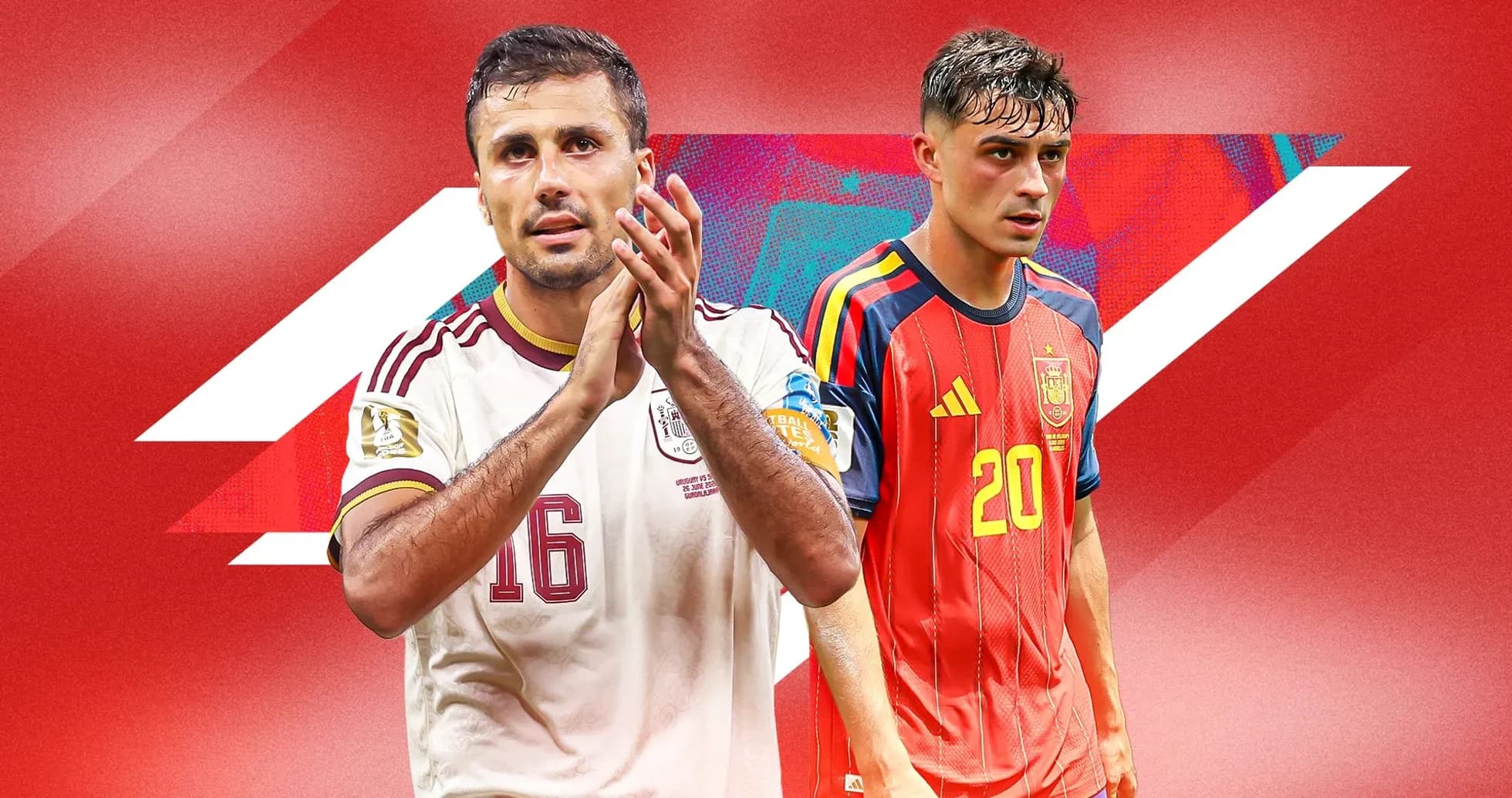
Spain arrived in North America with a midfield axis that looked ready-made for a dynasty. Rodri, the Ballon d'Or winner back to his imperious best, and Pedri, the boy wonder from Las Palmas, were supposed to be the pair that added a world title to the European crown claimed in Germany two years ago.
Only one half of that vision has truly materialised.
Rodri has cruised through this World Cup, dictating games with the authority of a man who knows he is the reference point in his position. Pedri, by contrast, has become the most debated player in Spain’s squad – and that is saying something in a country that dissects every touch, every selection, every substitution.
A genius under the microscope
On paper, Pedri’s tournament did not start badly. In the frustrating, scoreless opener against Cape Verde, he created five chances – more than any other player on the pitch. For most midfielders, that would be a neat statistic, a sign of influence in a sticky game.
For Pedri, it became part of the prosecution’s case.
The standard he set for himself at Barcelona and at Euro 2020 means anything short of match-winning brilliance now feels like underperformance. Cape Verde’s subsequent results have softened the glare on Spain’s draw, but not on Pedri’s lack of end product. As the competition has gone on, the question has hardened: where are the goals, where are the assists?
Across the border in Madrid, the comparison has been relentless. Jude Bellingham, a very different kind of midfielder operating higher up the pitch, has lit up this World Cup with decisive moments, one after another. Real Madrid fans have delighted in the contrast: their man delivering on the biggest stage while Barcelona’s principal playmaker struggles to stamp his authority.
It is a crude framing, but the scoreboard is unforgiving. Bellingham is scoring and creating. Pedri is doing neither.
The drop that shocked Spain
Against that backdrop, Luis de la Fuente’s decision to drop Pedri still jolted Spanish football. This is a player who had started five straight games at this World Cup, and nine in a row at the tournament stretching back to Qatar.
Yet De la Fuente did not blink. He reminded everyone that this Spain squad is loaded, especially in midfield, and that reputations alone do not guarantee a place.
If anyone had cause to complain, the coach argued, it was Mikel Merino. The Arsenal midfielder had come off the bench to score a late winner against Portugal, only to find himself sidelined again. He did not sulk. He came on against Belgium and did it again, another late goal in a 2-1 victory.
“It’s unfair that Mikel doesn’t play from the start, but it would also be unfair if someone else were left out,” De la Fuente said. “Only 11 can play, and they understand that – the role they have to play at any given moment.”
The message was clear: nobody is untouchable. Not even Pedri.
Pedri’s response and the Fabian factor
There has been no sign of tantrums from the Barcelona midfielder. Unai Simon made that point after the Belgium game, explaining that the entire squad lives with the reality of fierce internal competition.
“We all want to play but, in the end, there isn’t room for everyone,” the goalkeeper said, pointing to David Raya and Joan Garcia as two more elite players watching on. The priority, Simon stressed, is collective: everyone wants to win the World Cup.
When Pedri did get on against Belgium, he did little to strengthen his case. He wasted a late breakaway with an uncharacteristically sloppy pass, the kind of detail that sticks in the mind of a coach who obsesses over control.
At the same time, Fabian Ruiz has muscled his way into the conversation with performances that are impossible to ignore. The Paris Saint-Germain midfielder scored Spain’s opener in Los Angeles and has brought poise and punch to the side. Simon called him “an immense talent” and noted, pointedly, that he has just “won two Champions Leagues in a row.”
De la Fuente shares that admiration. When he talks about Pedri as “one of the best in the world, if not the best”, he puts Fabian in the same bracket. The coach sees two elite operators, not one automatic starter and one understudy.
Two Pedris, one decision
The nuance comes in how De la Fuente views Pedri’s role. He openly admits there are two versions of the player: the Barcelona Pedri and the Spain Pedri.
“Pedri can’t play like he does for Barca, because we play differently,” he explained. The structures are not the same, the personnel are not the same, and crucially, Spain have Rodri at the base. That changes everything about the profile of the man next to him.
For De la Fuente, Pedri is versatile enough to operate as a 6, 8 or 10. The choice is not about whether he is good enough, but about what each specific game demands. He talks about “very elaborate, very analysed” decisions, tailored to each opponent.
France is the next puzzle.
Midfield is arguably where Spain can hurt Didier Deschamps’ side most. A trio of Rodri, Fabian and Pedri would give La Roja a real chance of monopolising the ball, their best – perhaps only – route to blunting a devastating French front four. Three technically supreme midfielders, all comfortable under pressure, could smother the game.
Yet there is a cost. To play both Fabian and Pedri probably means sacrificing Dani Olmo, who has quietly made the No.10 role his own in the knockout rounds. His end product has not always matched his industry and intelligence, but he has knitted attacks together and found pockets of space that unsettle defences.
De la Fuente has often said he prefers Pedri “closer to the opposition box”, where his feints, flicks and one-twos can do maximum damage. He praises the way Pedri “always sets a very good tone, whether he’s in top form or not”. Those are not the words of a coach ready to discard a star.
Yet his recent comments hint at a different plan: use Fabian to grind opponents down, then unleash Pedri when legs are heavy and spaces appear.
“Pedri could benefit from Fabian’s work,” he said after the Belgium win. “It’s essentially teamwork.”
A luxury problem with a hard edge
That word – teamwork – defines this Spain. The squad’s selflessness is their greatest strength. Big names accept smaller roles. Match-winners sit on the bench and still come on with clear heads and sharp focus.
So while it feels strange, almost sacrilegious, to see Pedri’s place up for debate, it is also a sign of how strong and ruthless this Spain has become. De la Fuente is determined to squeeze every drop out of a golden group of midfielders, sentiment be damned.
“France have already shown some extraordinary, exceptional potential, but we have too,” he said. “It will require fresh, energetic players, and it will require us to be the best version of ourselves.”
Spain know what their best version looks like. They know what the Barcelona version of Pedri looks like as well.
The question, on the eve of a seismic semi-final, is simple and brutal: can De la Fuente find a way – or dare he risk not trying – to let that Pedri loose on France?