Spain's World Cup Draw: Mikel Merino Reflects on Mourning and Unity
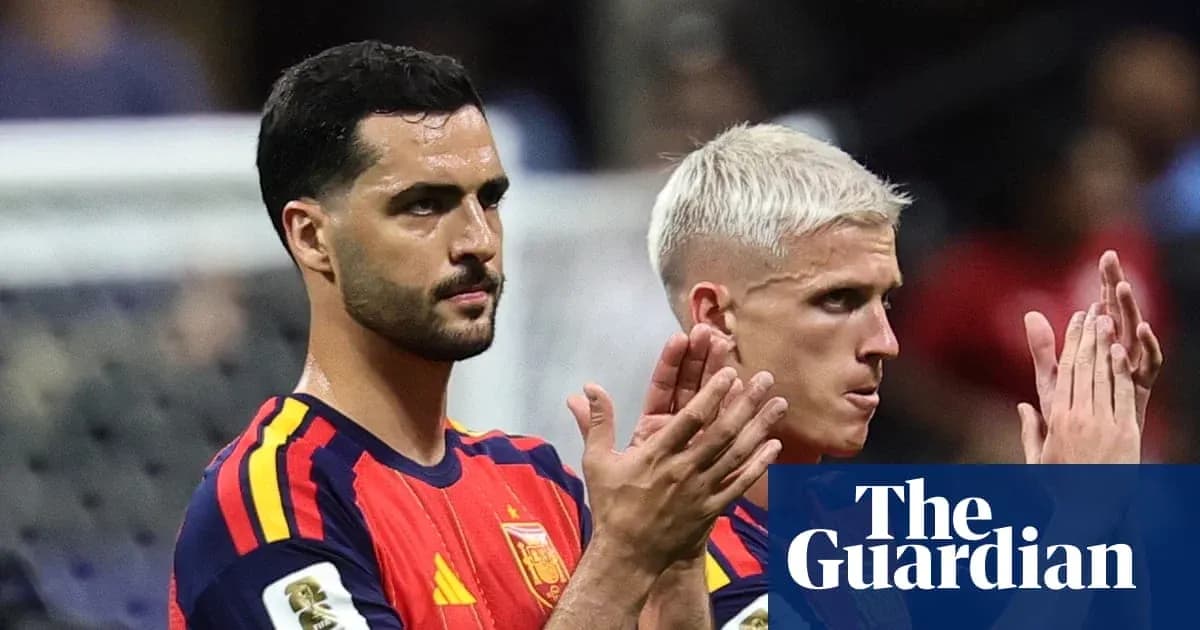
The morning after in Tennessee felt heavy. No defeat, no flight home, no suitcase half-packed in the corner of a hotel room. Just a 0-0 draw with Cape Verde. But for Mikel Merino, it still carried the weight of loss.
“The mourning after isn’t always easy,” he said, stressing the “u”. No one had died, he reminded everyone, yet the feeling lingered all the same. For Spain, this was not how a World Cup is supposed to begin.
Six long days now stretch between that flat opener in Atlanta and their chance to put it right. Six days to live with the noise, the doubts, the slow burn of frustration. Six days to remember that, once, Spain started worse and ended with a star on their shirt.
A lone voice in the firing line
At 11am the next day, the training pitch at Spain’s Tennessee base filled with players, boots thudding on grass, instructions cutting through the humid air. Only one member of the squad was missing: Merino, sent instead into a different kind of arena.
Seven desks of journalists faced him in the press room, cameras and microphones stacked up like a jury. Outside, the criticism had already begun. Inside, the midfielder sat alone behind a top table and called it what it was: part of the game.
“If there’s one thing that’s not good for us, it is for there to be panic,” he said. Thirty minutes later, he had navigated every question with a clarity and conviction that Spain badly needed to project.
He reached back to 2010, the last time Spain stumbled at the start. He was 14 then, a kid watching a team lose their opening match and still go on to win the World Cup. That memory now stands as both shield and blueprint.
“Like every game that doesn’t go as you’d like, every player lives with that mourning,” he said. Some players dive straight into the footage, replaying every touch. Others shut it all out, look for anything that isn’t football. “You have to swallow the disappointment. We have to recover as soon as we can.”
Luis de la Fuente’s message is drilled into them daily: be better tomorrow, even when you win. Especially when you don’t.
Merino doesn’t see his role as sending grand declarations to the fans. “Personally, I am not one to send messages; I think the best message is the next game, turning it around with a win.”
Family, ego and the thin line between them
The word “family” came up often. Easy to say, harder to prove. When the results flow, every squad is a brotherhood. When they don’t, the fractures show.
“It is easy to talk of ‘family’ but when things don’t go well, when they are difficult, is when you truly see that ‘family’ – and I see unity, enthusiasm and a will to play well,” Merino said.
He went deeper into what that actually means at this level. In every club side, these players are stars, pillars, first names on the team sheet. Then they arrive at the national team and discover a different reality: only a handful will start, some will barely play.
“It is important to have ego; as a footballer, with all the criticism from outside you need it to feel good on the pitch. But you also need the humility to know that this belongs to everyone.”
That tension lives inside every elite dressing room. You need players who believe they should play; you also need them to accept when they don’t. The trick is turning anger into fuel, not friction.
“That’s what the word ‘family’ is. We have to be united, support each other in every moment. You can be annoyed, angry, but that energy has to be positive.”
The metaphor that stuck
It did not take long for one word to dominate the conversation. Mourning. It was picked up, picked apart, questioned. Had he gone too far?
“Maybe I didn’t express myself well,” Merino replied. In truth, he had expressed precisely how it feels when a game goes wrong and the world watches. He circled back to the same term anyway.
“It was an attempt at a metaphor, a comparison,” he explained. The competitiveness runs so deep that a bad performance can follow you home. “Sometimes you go home and don’t even want to talk to your family. That’s why I say it’s like a mourning. Everyone deals with it differently.”
He prefers to face it head on, to watch the game back as soon as possible. Others need distance. Neither way is right or wrong; both are attempts to process the same sting.
“What you want after a bad game is to play again straight away to get the bad taste out of your mouth,” he said.
This World Cup, expanded and stretched, denies them that. The gap between matches is a mental minefield. Too much time to revisit missed chances, misplaced passes, tactical doubts. Too much time to scroll, read, listen.
“The risk is you have lots of time to go over it; it’s a mental challenge to deal with that, evade all that and be as free as you can mentally.”
Living inside the circus
There is no hiding place. Not at a World Cup. Not for Spain.
“That’s a reality; it’s part of the business, the reason we earn what we earn, why football is so big, so important,” Merino said, glancing across at the press pack. “Because you’re here to cover it, to create stories through which we explain things to fans.”
Some players thrive on that spotlight. Others endure it. Either way, it is not optional. “It’s part of the ‘circus’ and we have to accept it and live with it.”
Merino admits he struggles to digest a bad result. It sits in his stomach, heavy, stubborn. Over time, though, he has learned that the only way out is through.
“With time I’ve realised that it is best to [confront it] and start trying to turn it around as soon as possible,” he said. Four or five hours after the final whistle, the perspective starts to return. This World Cup has barely begun. There is still time to fix it.
Then the focus shifts from self to group. Who needs a word? Who needs a hug? Who needs space?
“Put a hand on the shoulder of whoever is hurt because they didn’t play, or missed a chance. Or know who needs space for that mourning.”
A reset and a reminder
Spain’s draw felt like a stumble, but not a fall. The group table confirmed that. When Saudi Arabia and Uruguay also shared the points, there was a quiet exhale in the Spain camp. No one had sprinted away. No one had slammed the door on them.
Merino called it a feeling of “start over”. A clean slate, or as close to one as a World Cup allows. “I like to see the positive side,” he said.
He did not have to look far for examples. The last world champions began their tournament with defeat to Saudi Arabia. Spain’s own golden generation lost their first game in 2010 and were hammered for it, only to lift the trophy a month later.
“In 2010 Spain lost the first game and there was lots of criticism and they turned it around; that is an example to follow from people who were idols,” Merino said. He still draws on them, on that team and that journey. “I often take inspiration from athletes who have lived my dreams before I did. That generation means so much for this one: we want to emulate them.”
The mourning, then, is not an ending. It is a phase to move through, a bruise to carry into the next fight. Spain have time, talent and a template from their own history.
Now they have to prove that this draw with Cape Verde was not a warning sign of something broken, but the jolt that wakes a contender.