Seattle Reign FC Falls to Washington Spirit W in Narrow 1–0 Defeat
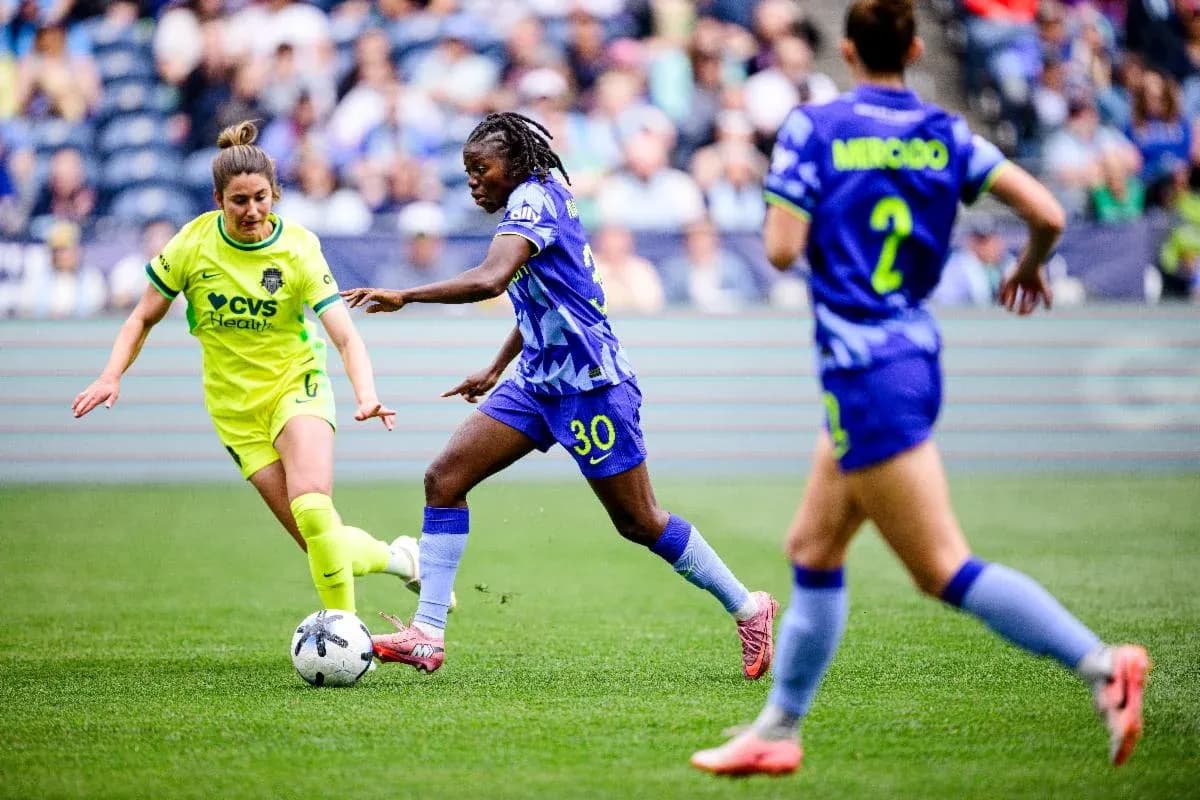
Under the lights at Lumen Field, a narrow 1–0 defeat to Washington Spirit W left Seattle Reign FC with the familiar taste of frustration. Following this result, the story of the night was less about a gulf in quality and more about a clash of identities: a Reign side still searching for attacking fluency against a Spirit machine that has turned consistency into an art form.
Washington arrived as the form team of the NWSL Women. Heading into this game, they sat 2nd with 18 points from 9 matches, built on a total goal difference of +9 (15 scored, 6 conceded). Seattle, by contrast, were 8th with 11 points from 8 games and a total goal difference of -1 (7 scored, 8 conceded). On their travels, Washington had been quietly ruthless: 5 away fixtures, 3 wins, 2 draws, 0 defeats, with 9 goals for and just 4 against. At home, Seattle’s record was more fragile: 5 played at Lumen Field, 2 wins, 1 draw, 2 defeats, 5 goals scored and 5 conceded.
I. The Big Picture: Systems and Seasonal DNA
The formations told their own story. Laura Harvey leaned into a 4-3-3, a shape that asked her front line to stretch Washington horizontally and attack the channels. C. Dickey anchored the side in goal, shielded by a back four of S. Huerta, E. Mason, P. McClernon and M. Curry. In front, a midfield trio of A. McCammon, M. Mercado and S. Meza was tasked with knitting play and screening transitions, while a fluid front three of N. Mondesir, M. Fishel and M. Dahlien tried to provide penetration and pressing triggers.
Adrian Gonzalez, meanwhile, stayed faithful to Washington’s season-long template: a 4-2-3-1 that has underpinned their rise. Sandy MacIver started in goal, behind a disciplined back line of G. Carle, E. Morgan, T. Rudd and K. Wiesner. The double pivot of H. Hershfelt and R. Bernal provided control and balance, freeing an attacking three of R. Kouassi, L. Santos and T. Rodman to roam behind central forward S. Cantore.
The statistical DNA of each team framed the contest. Heading into this game, Seattle’s attack had been modest: overall they averaged 0.9 goals for per match, with 1.0 at home. They had also failed to score in total 5 times across 8 games, a worrying indicator for a side trying to play front-foot football. Defensively, they conceded an overall 1.0 goals per match, a solid but not elite figure.
Washington’s profile was sharper at both ends. Overall, they averaged 1.7 goals for per match, rising to 1.8 on their travels, while conceding just 0.7 overall and 0.8 away. That blend of attacking threat and defensive parsimony explained their relentless form line of “LDDDWWWWW” coming into the night.
II. Tactical Voids and Discipline
There were no listed absentees, so both coaches had near full decks. The voids, then, were more structural than personnel-based.
For Seattle, the key issue was how to generate chances from a midfield that, statistically, has not yet produced a consistent supply line. The season data shows a team that has often struggled to turn possession into penetration, evidenced by those 5 total matches without a goal. The 4-3-3 here put a lot of creative responsibility on M. Mercado and S. Meza to connect with Mondesir and Fishel between the lines.
Washington’s main risk lay in managing intensity and discipline. Their yellow-card timing profile is revealing: 33.33% of their cautions come in the 76–90’ window, a late-game surge where their aggression can spill over. Seattle’s own yellow-card pattern is even more stretched into stoppage time: 27.27% of their cautions arrive between 91–105’, with another 18.18% in each of the 46–60’ and 76–90’ ranges. This is a team that tends to get dragged into scrappy, emotionally charged finales.
On this night, Washington’s control of territory and tempo meant those disciplinary fault lines never fully exploded, but they remain a tactical subplot for future meetings: both sides push their luck when legs and minds are tired.
III. Key Matchups
The headline duel was always going to be Washington’s multi-headed attacking threat against Seattle’s compact but occasionally brittle defence.
T. Rodman, top scorer and joint-top assister for the Spirit, arrived with 3 goals and 3 assists in 9 appearances, plus 23 shots (12 on target). Her role from the right side of the 4-2-3-1, drifting inside to attack the half-spaces, put her directly into the lanes patrolled by M. Curry and P. McClernon, with M. Dahlien and S. Meza asked to help double up.
Alongside her, L. Santos brought another 3 goals and 1 assist, with 13 shots and 10 key passes, while winning 43 of 80 duels. Her ability to receive between the lines and either combine or drive at the back four challenged Seattle’s central compactness. R. Kouassi, with 3 assists and 20 key passes, was the connective tissue: 33 dribble attempts, 15 successful, and 112 duels contested with 57 won, embodying Washington’s aggressive, front-foot pressing.
Seattle’s shield against this was collective. Dickey’s back line had conceded just 5 at home across 5 matches, an average of 1.0 per game. The plan was clear: narrow the gaps between the centre-backs and full-backs, force Washington wide, and trust the box defending.
Engine Room
The midfield battle was a quieter but decisive theatre. For Seattle, A. McCammon and M. Mercado had to provide both circulation and resistance. Without a standout statistical playmaker in the league-wide charts, the Reign’s creativity is more distributed – with Mondesir, notably, contributing 2 assists and 1 goal across 8 appearances. Her 9 key passes and 21 dribble attempts (4 successful) make her the closest thing to a conduit between midfield and attack.
Washington, by contrast, had a clearly defined engine. H. Hershfelt and R. Bernal offered the platform, but it was Kouassi’s two-way dominance that tilted the field. Her 20 tackles and 5 interceptions in league play underline how often she wins the ball back in advanced zones, immediately turning defence into attack. Against a Seattle side that has failed to score total 5 times, those turnovers in the Reign half were always likely to be decisive.
IV. Statistical Prognosis and xG Logic
Even without explicit xG numbers, the season data points towards a familiar pattern for this fixture: Washington generating the higher-quality chances through structured pressing and combination play, Seattle relying on moments rather than sustained waves.
Washington’s away averages – 1.8 goals for, 0.8 against – align almost perfectly with a narrow but controlled win like 1–0. Their 3 total clean sheets away from home heading into this game signalled a side comfortable defending a lead, compressing space, and trusting their shape.
Seattle’s overall average of 0.9 goals for and 1.0 against suggested that even a marginal deficit would be hard to overturn, especially against a defence as organised as Washington’s. The Reign’s tendency to collect late yellow cards also hints at a team that often ends games chasing, stretched, and emotionally invested – fertile ground for Washington to manage the clock and territory.
In narrative terms, this match felt like a microcosm of both seasons so far. Washington Spirit W, with their well-drilled 4-2-3-1 and a spine built on Kouassi’s duels, Santos’s craft, and Rodman’s end product, did just enough to turn superiority into points. Seattle Reign FC, brave in structure and honest in work rate, again discovered that without sharper final-third execution, even a solid defensive platform can be undone by a single, clinical moment.
The tactical verdict is clear: unless Seattle can convert Mondesir’s industry and Fishel’s movement into more consistent chance creation, nights like this – tight, attritional, but ultimately fruitless – will continue to define their campaign against the league’s elite.