Sassuolo's Tactical Triumph Over Como in Serie A Clash
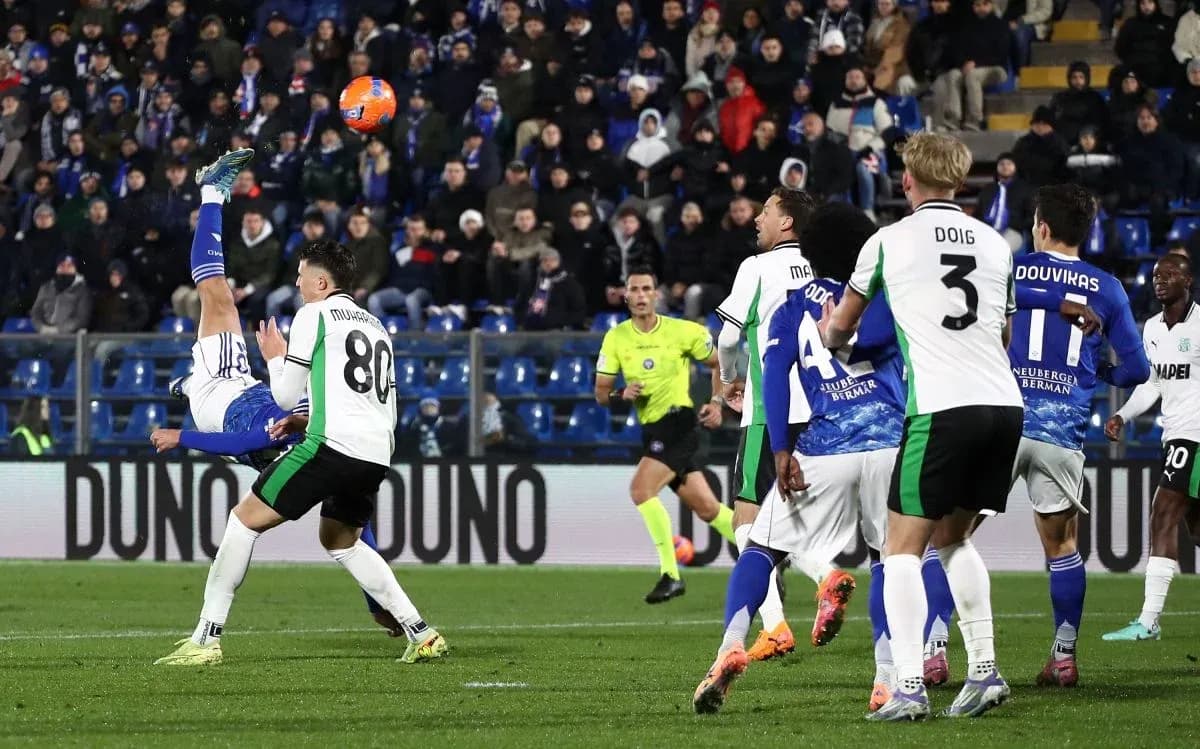
Under the grey April sky in Reggio Emilia, Sassuolo turned the MAPEI Stadium into a tactical laboratory and walked away with a 2–1 win over high‑flying Como – a result that felt like a statement as much as a scoreline. Following this result, the 10th‑placed hosts reminded Serie A that their mid‑table status hides a far more volatile, ambitious footballing identity, while 5th‑placed Como were forced to confront the limits of their usually watertight structure.
This was Round 33 of the Serie A regular season, and it carried contrasting emotional weights. Sassuolo came in with 45 points and a goal difference of -3, the profile of a side capable of bursts of brilliance but undermined by defensive leakage. Their overall record of 41 goals scored and 44 conceded across 33 matches, with home averages of 1.2 goals for and 1.4 against, underlined that duality. Como, by contrast, arrived as one of the league’s most balanced outfits: 58 points, a formidable overall goal difference of +29 (57 scored, 28 conceded), and a defensive record that had allowed just 13 goals on their travels at an average of 0.8 per away game. On paper, this was a clash between volatility and control.
The absences only sharpened the narrative. Sassuolo were stripped of some of their natural leaders and technical reference points: D. Bakola, D. Boloca, F. Cande, E. Pieragnolo and F. Romagna all missed out through various injuries, while J. Doig was suspended for yellow cards and D. Berardi – a key creative and scoring outlet – was sidelined by a red‑card ban. For a side already prone to conceding, losing defensive depth and one of Serie A’s most influential attackers forced a tactical re‑imagining.
Como’s list was shorter but not insignificant. J. Addai’s Achilles tendon injury and S. Roberto’s muscle problem removed two options that could have freshened the flanks and midfield rotations, particularly important in a system that leans heavily on the energy of its wide and half‑space operators. Yet the core of their 4‑2‑3‑1 remained intact.
Sassuolo responded to the attrition with a clear structural statement: a 4‑3‑3 built on control and vertical threat. Stefano Turati anchored the back, shielded by a back four of Woyo Coulibaly, Tarik Muharemović, Jay Idzes and Sebastian Walukiewicz. In front of them, Nemanja Matić, Ismael Koné and Kristian Thorstvedt formed a midfield triangle that mixed circulation, physicality and late box runs. Up front, Cristian Volpato and Armand Laurienté flanked M’Bala Nzola.
The selection carried a subtle shift in identity. Without Berardi, the creative load fell more squarely on Laurienté, already one of Serie A’s premier providers with 8 assists in 33 appearances. His season profile – 46 key passes and 69 dribble attempts, 26 of them successful – foreshadowed the role he would play: the primary conduit between buildup and final third. Nzola offered depth and physical presence, while Volpato’s positioning in the right channel created a quasi‑playmaker lane to compensate for the missing left‑footed maestro.
Como’s 4‑2‑3‑1, meanwhile, was almost textbook for a side that has leaned on stability all season. Jean Butez in goal, a back line of Alberto Moreno, Marc Kempf, Jacobo Ramón and Ivan Smolčić, a double pivot of Maxence Caqueret and Lucas Da Cunha, and an attacking trio of Martin Baturina, Nico Paz and Assane Diao behind Álvaro Morata. It was a structure designed to protect that elite defensive record – just 28 goals conceded overall at 0.8 per game – while channelling attacks through one of Serie A’s breakout stars.
Nico Paz, with 12 goals and 6 assists, was the game’s natural “hunter”, and this fixture pitted him directly against Sassuolo’s most fragile zone: a defence that concedes 1.3 goals per match overall and has managed only 6 clean sheets all season. Paz’s volume – 82 shots, 48 on target – and his ability to both create (48 key passes) and carry (113 dribble attempts, 61 successful) meant that any lapse between the lines risked immediate punishment. The Hunter vs Shield duel here was essentially Paz against a central pairing led by Walukiewicz, who has quietly compiled 47 tackles, 9 blocked shots and 24 interceptions. His 33 fouls committed and 7 yellow cards, however, hinted at the cost of operating constantly on the edge.
In the engine room, the confrontation was just as compelling. For Sassuolo, Matić remains the metronome and enforcer: 1 goal, 1 assist, but 1,478 passes at 85% accuracy, 42 tackles, 9 blocked shots and 20 interceptions. Across from him, Como could call on M. Perrone from the bench – a player with 3 goals, 4 assists, 1,882 passes at 91% accuracy and 52 tackles – and the tireless Caqueret. This was the true axis of the match: could Sassuolo’s midfield three disrupt Como’s typically serene progression, or would Como’s double pivot suffocate transitions and feed Paz between the lines?
Discipline loomed over everything. Sassuolo’s season card map shows a pronounced late‑game spike: 27.40% of their yellow cards arrive between 76–90 minutes, with red cards clustering in the 46–60 and 76–90 windows. Como are cleaner but still trend towards late bookings, with 20.83% of their yellows also in that final quarter‑hour, and all of their reds arriving from 76–90. In a match that finished 2–1 and remained alive into the closing stages, the risk of a chaotic finale was baked into both teams’ profiles.
From a statistical prognosis standpoint, Como’s underlying numbers – 1.7 goals scored per game overall, 1.4 on their travels, and those 15 clean sheets – would usually tilt any preview in their favour. Their penalty record is perfect this season, 4 from 4, while Sassuolo’s is solid but slightly more fragile, with 2 scored from 2 overall but a miss on Andrea Pinamonti’s ledger in league play. Yet Sassuolo’s home attack, modest at 1.2 goals per game, is balanced by a capacity for spikes: a biggest home win of 3–0 and a history of turning MAPEI into a stage for sudden surges.
In the end, the 2–1 scoreline felt like the meeting point of all these currents. Sassuolo’s retooled 4‑3‑3, forced by absences, found just enough incision and resilience to overcome one of Serie A’s most organised sides. Como, for all their structural strength and the individual quality of Paz and Morata, discovered that even a team built on control can be dragged into the kind of open, emotionally charged battle that suits Sassuolo’s chaotic DNA. The table may still show 5th against 10th, but this fixture underlined that, on the day, tactical courage and adaptability can bend the numbers to their will.