AS Roma vs Atalanta: Tactical Analysis of the 1–1 Draw
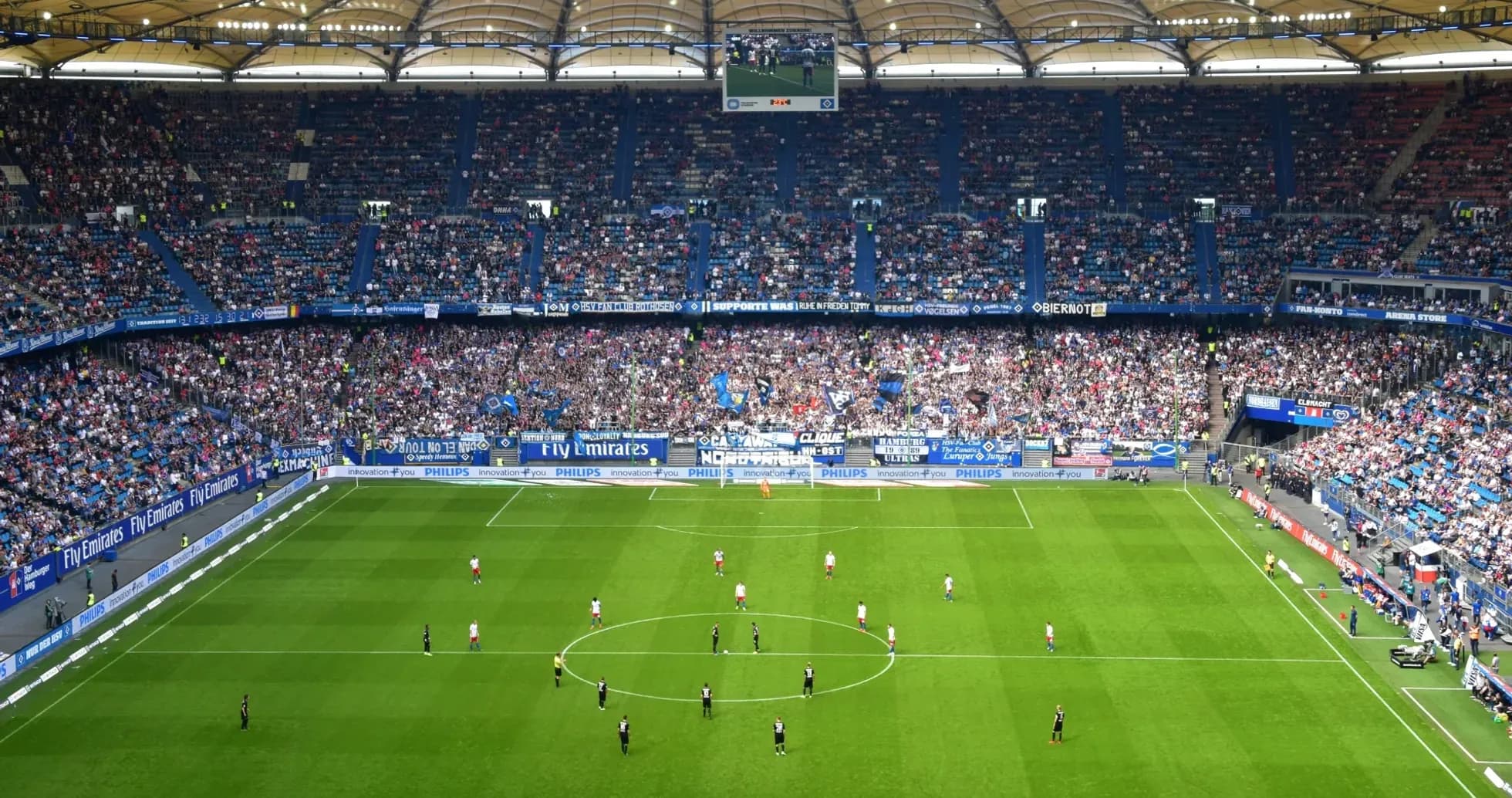
AS Roma and Atalanta shared a 1–1 draw at the Stadio Olimpico in a Serie A Regular Season – 33 fixture that was far more one-sided territorially than the scoreline suggests. Roma recovered from an early setback, equalised on the stroke of half-time, and then spent most of the second period trying to turn control into a winner. Atalanta, reshaped massively at the interval, accepted a deep defensive role and relied on structure and goalkeeping to protect their point. Roma’s 53% possession, 19 shots and 0.9 xG against Atalanta’s 8 shots and 0.68 xG underline a match where the hosts dictated the terms, but the visitors managed the risk.
First Half
The scoring opened on 12' when Atalanta exploited their front-three structure. Nikola Krstović finished a move orchestrated from midfield by Marten de Roon, whose pass found the striker in a favourable channel. Roma’s equaliser arrived at 45', a reflection of their growing territorial pressure. From a phase where the back three were already advanced, Mario Hermoso stepped into the final third and converted after Devyne Rensch’s delivery, levelling the game just before the interval. There is no indication of a VAR delay; the goal stands as a clean action.
Discipline was relatively controlled but tactically relevant. Atalanta’s Éderson received a yellow card on 65' for a foul, a signal of the strain in central areas as Roma accelerated their circulation and pressed second balls. Roma’s only booking came on 75', Niccolò Pisilli cautioned for a foul shortly after his introduction, reflecting his aggressive attempt to set the pressing tone from midfield. Atalanta’s Berat Djimsiti was shown a yellow card at 90+1' for a foul, emblematic of the visitors’ late-game defending under sustained pressure. In total: Roma 1 yellow, Atalanta 2 yellows, no reds.
Tactical Overview
The tactical story starts with the mirror 3-4-2-1 shapes. Roma, under Piero Gasperini Gian, built with Mile Svilar behind a back three of Mario Hermoso (left), Evan Ndicka (central), and Gianluca Mancini (right). The wing-backs, Zeki Çelik on the right and Devyne Rensch on the left, were effectively high midfielders, giving Roma a 3-2-5 in settled possession. Bryan Cristante and Neil El Aynaoui formed the double pivot, with Matías Soulé and Stephan El Shaarawy underneath central striker Donyell Malen.
Atalanta mirrored the structure but with a different intention. Marco Carnesecchi was protected by a back three of Sead Kolasinac (left), Berat Djimsiti (central), and Giorgio Scalvini (right). Raoul Bellanova and Davide Zappacosta played as wing-backs, with Marten de Roon and Éderson as the central pair. Charles De Ketelaere and Giacomo Raspadori supported Nikola Krstović in a fluid front line.
Match Dynamics
Atalanta’s early advantage came from their verticality. With Roma’s wing-backs high, de Roon and Éderson looked early into Krstović’s runs against a retreating back three. The opener at 12' encapsulated this: Roma’s first line was bypassed, de Roon found space to play forward, and Krstović attacked the channel before Roma’s centre-backs could compress.
Roma responded by pushing their defensive line higher and involving Hermoso and Mancini more aggressively in progression. Hermoso’s equaliser at 45' was not just an isolated set-piece-type moment; it was the logical outcome of Roma’s structural shift. With Rensch and Çelik stretching Atalanta’s wing-backs, Soulé and El Shaarawy occupied half-spaces, and Hermoso advanced into the zone vacated by Atalanta’s midfield stepping out. Rensch’s assist highlighted Roma’s width-to-inside dynamic: wide circulation to draw the block, then a diagonal into an underloaded channel.
Second Half Changes
Halftime brought a radical Atalanta recalibration. At 46', three substitutions reshaped their back line and flanks: Honest Ahanor (IN) came on for Sead Kolasinac (OUT), Odilon Kossounou (IN) came on for Giorgio Scalvini (OUT), and Nicola Zalewski (IN) came on for Charles De Ketelaere (OUT). The immediate effect was a more conservative back three and fresher legs wide, prioritising defensive solidity over front-line creativity. At 54', Lorenzo Bernasconi (IN) came on for Raoul Bellanova (OUT), further underlining the defensive emphasis on the flanks.
Roma’s response phase came on 60' with a triple change aimed at injecting energy and stabilising rest defence. Daniele Ghilardi (IN) came on for Gianluca Mancini (OUT), Niccolò Pisilli (IN) came on for Neil El Aynaoui (OUT), and Lorenzo Venturino (IN) came on for Stephan El Shaarawy (OUT). Pisilli’s introduction, later marked by his yellow card, was clearly about more aggressive counter-pressing in midfield. Ghilardi maintained the left-foot/right-foot balance in the back line, while Venturino offered fresh running ahead of Malen.
The pattern of the second half was Roma possession against an Atalanta block dropping progressively deeper. At 71', Robinio Vaz (IN) came on for Matías Soulé (OUT), adding a more direct, vertical threat between the lines. On 78', Konstantinos Tsimikas (IN) replaced Devyne Rensch (OUT), giving Roma a more natural left-footed crossing profile from wing-back as they chased a winner.
Atalanta’s final adjustment came on 80', when Mario Pašalić (IN) replaced Éderson (OUT) after the Brazilian’s yellow. This substitution added late-arrival threat on transitions but, more importantly, fresh legs to continue screening central spaces as Roma pushed numbers forward.
Goalkeeping Performance
Goalkeeper reality was decisive. Svilar registered 1 save, reflecting Atalanta’s limited shot volume (2 on target from 8 total). Roma’s Defensive Index on the night was strong: they allowed only 2 shots inside the box and forced Atalanta into 6 efforts from distance. Atalanta’s Defensive Index was more about last-line resilience. Carnesecchi made 8 saves against 9 shots on target, a high-impact performance that effectively overperformed his defence’s ability to limit shooting opportunities. With both keepers credited with 0 goals prevented by the model, the numbers suggest that the shots faced were broadly in line with the xG, but Carnesecchi’s volume of interventions underlined Roma’s territorial dominance.
Statistical Summary
Statistically, Roma’s 0.9 xG from 19 shots (15 inside the box) indicates a steady accumulation of medium-quality chances rather than clear-cut one-on-ones. Their 535 passes at 86% accuracy, combined with only 4 fouls committed and 1 yellow card, point to an Overall Form built on controlled possession and disciplined pressing rather than chaotic duels. Atalanta, with 0.68 xG from 8 shots, 491 passes at 80% accuracy, and 14 fouls plus 2 yellows, leaned into a more disruptive, containment-oriented plan after taking the early lead.
The card totals are exact: Roma 1 yellow (Pisilli 75'), Atalanta 2 yellows (Éderson 65', Djimsiti 90+1'). In synthesis, Roma’s Overall Form in this match was that of a proactive, structurally coherent side whose final-third execution did not fully match their control. Atalanta’s Defensive Index was defined by deep-block discipline, heavy defensive workload from the back three and wing-backs, and a goalkeeper whose 8 saves ensured that an early attacking success could be converted into a valuable away point.