Qarabag vs CSKA Sofia: UEFA Europa League 2nd Qualifying Round Preview
On 23 July 2026, the lights of Tofiq Bahramov Stadium in Baku will frame a familiar European scene: Qarabag welcoming CSKA Sofia in the UEFA Europa League 2nd Qualifying Round, with both clubs sensing a real opportunity to push toward the main stages of continental competition and to set the tone for their wider campaign.
Season Context
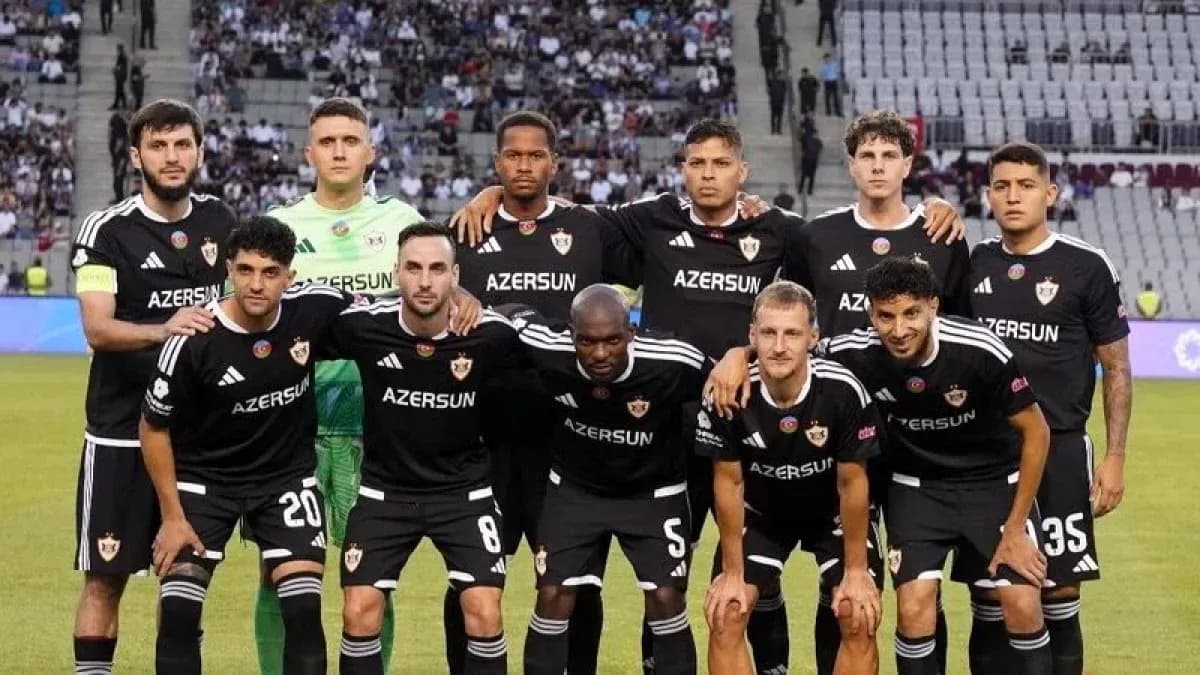
For Qarabag, early Europa League qualifiers are no longer an exotic adventure but a recurring proving ground. Two matches into their current continental run, they have been flawless: 2 games, 2 wins, 6 goals scored and none conceded. That blend of efficiency and control underlines their ambition to once again carry Azerbaijan’s flag deep into Europe and to turn Baku into a fortress opponents dread.
CSKA Sofia arrive with their own sense of purpose. The Bulgarian side have also started their Europa League journey with 2 wins from 2, scoring 5 and conceding 3. It is not as watertight as Qarabag’s record, but it shows an ability to outscore opponents and handle high‑stakes ties. Progressing from this round would be a strong statement that CSKA intend to be more than just early‑summer participants in Europe.
Form & Momentum
Both teams come into this clash riding identical official form lines of “WW” in the Europa League, but the nature of those wins differs. Qarabag’s momentum is built on dominance at both ends: across their 2 matches they average 3.0 goals scored and 0.0 conceded per game (6 for, 0 against), a ruthless combination that justifies describing them as both free‑scoring and defensively secure (3.0 scored and 0.0 conceded per match). That perfect defensive record adds psychological weight, especially at home in Baku.
CSKA Sofia’s “WW” tells a story of resilience and attacking edge. They average 2.5 goals per game going forward (5 in 2 matches), but they also concede 1.5 per match (3 in 2), suggesting a more open, risk‑embracing approach. Their ability to come out on top despite defensive leaks hints at a team that can hurt opponents in transition and in spells of pressure, but also one that may leave spaces for a side as clinical as Qarabag to exploit.
Head-to-Head Patterns
The recent history between these clubs has been shaped almost entirely by summer friendlies, and it leans clearly toward Qarabag. On 4 July 2023, they travelled to face CSKA Sofia and emerged with a 1-0 win (Friendlies Clubs, season 2023, July 2023), a tight contest settled by Qarabag’s greater sharpness in both boxes. Two years earlier, on 7 July 2021, Qarabag again beat CSKA Sofia 1-0 away from home at Kunstrasenplatz TSV Fulpmes (Friendlies Clubs, season 2021, July 2021), reinforcing a pattern of narrow but controlled victories. A scheduled meeting on 27 June 2026 was cancelled and never played (Friendlies Clubs, season 2026, June 2026), leaving those two completed fixtures as the clearest indicators: when these sides do meet, Qarabag have tended to edge low‑scoring encounters.
Tactical Preview
Qarabag’s recent European statistics and lineup data point toward a structured, ball‑dominant side most comfortable in a 4-2-3-1. That shape, used in both of their Europa League outings so far, supports a clear identity: a double pivot to control transitions, a creative band of three to overload pockets, and a lone striker to finish moves. Scoring 6 goals in 2 matches while keeping 2 clean sheets suggests they build patiently but strike with precision once they reach the final third (3.0 goals scored and 0.0 conceded per game). Players like Kady and Joni Montiel in midfield, alongside wide threats such as Leandro Andrade and Z. Sawo, give Qarabag the tools to combine between the lines and attack full‑back spaces, while an experienced defensive core has so far protected their goal impeccably.
CSKA Sofia, by contrast, have alternated between a 4-3-1-2 and a 3-5-2, each used once in their two Europa League matches. This tactical flexibility reflects a side willing to adjust to opponents and game states. Their 5 goals in 2 matches (2.5 per game) highlight a front line capable of quick combinations and direct running, with attackers like M. Phaëton, I. Pittas or J. Zwarts supported by a busy midfield including Bruno Jordão and M. Ebong. However, conceding 3 goals in the same span (1.5 per game) points to vulnerabilities when their wing‑backs or full‑backs are pushed high, particularly against teams that can counter quickly into the channels. In Baku, they may lean toward the more conservative 3-5-2, using an extra centre‑back to handle Qarabag’s wide play while hoping their forwards can punish any overcommitment.
The stylistic clash is clear: Qarabag’s controlled 4-2-3-1, built on balance and clean sheets, against CSKA Sofia’s more elastic systems that chase attacking superiority at the cost of some defensive stability. If Qarabag can pin CSKA’s wide players back and maintain their current defensive standards, the visitors may be forced into longer spells without the ball. Conversely, if CSKA can disrupt Qarabag’s build‑up and turn this into a more chaotic contest, their attacking variety could test even a defence that has yet to concede.
Statistical Snapshot
- Competition: UEFA Europa League, season 2026 — 23 July 2026.
- Venue: Tofiq Bahramov Stadium, Baku.
- Prediction: Win or draw — Double chance : Qarabag or draw.
- Win Probabilities: Home 45% / Draw 45% / Away 10%.
- Model: Qarabag 64.3 — CSKA Sofia 36.0.
Betting Verdict
The prediction model leans toward Qarabag avoiding defeat, and the numbers support that stance. Qarabag combine a perfect early Europa record with 6 goals scored and 0 conceded in 2 matches, while their head‑to‑head record includes two 1-0 wins away to CSKA Sofia in recent friendlies, underlining a consistent edge in tight games. CSKA Sofia’s attack is dangerous, but conceding 3 goals in 2 matches suggests they may struggle to keep Qarabag out over 90 minutes in Baku. With bookmakers pricing the home win around 1.60–1.61, the draw around 3.80–3.85 and the away win around 5.33–5.40, the safer value lies in the recommended “Qarabag or draw” double chance, aligning with both the underlying form and the historical pattern between these clubs.