Tactical Analysis of Qarabag vs CSKA Sofia: UEFA Europa League Qualifier
The goalless draw at Azərsun Arena was anything but sterile from a tactical perspective. Qarabag and CSKA Sofia produced a balanced, high‑level qualifying tie in the UEFA Europa League 2nd Qualifying Round, defined by contrasting structures and a gradual shift in control rather than by clear chances or chaos.
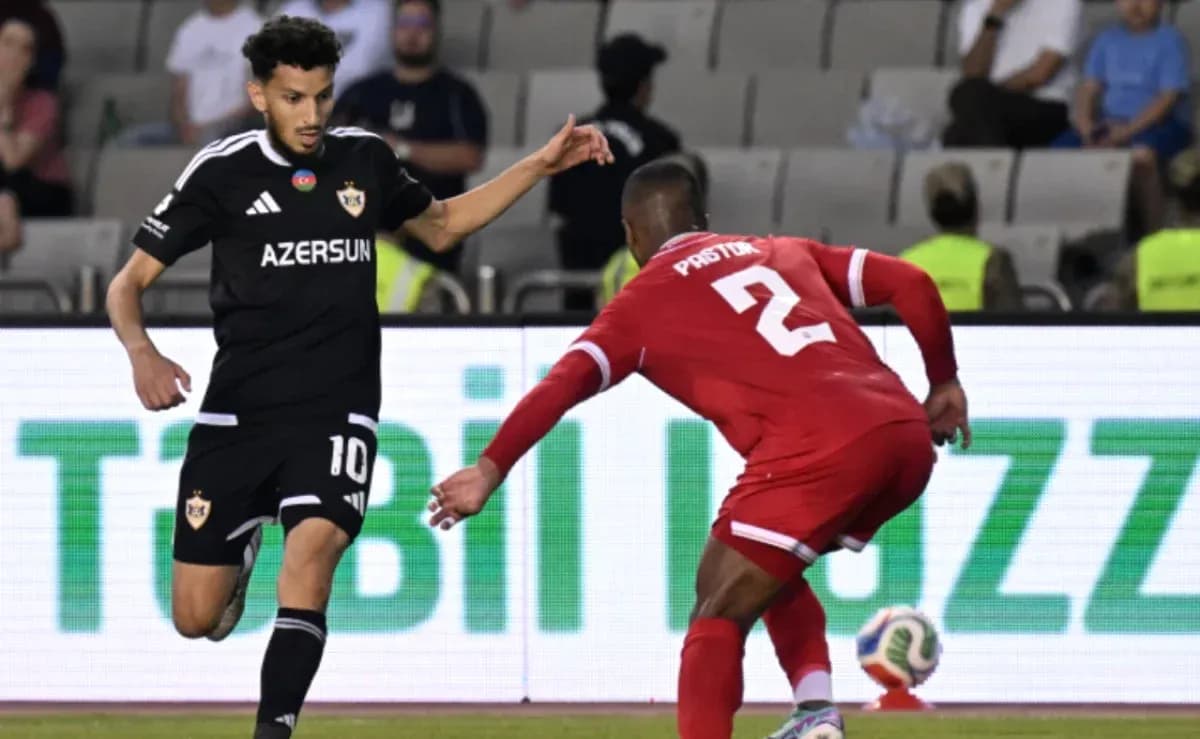
Qarabag set up in a 4‑2‑3‑1 under Qurban Qurbanov, with M. Kochalski in goal, a back four led by B. Huseynov and B. Langa, and a double pivot of Pedro Bicalho and M. Janković underpinning a fluid line of three: O. Kashchuk wide, Kady Borges central, and A. Zoubir drifting inside behind lone striker Z. Sawo. The intention was clear: use technical superiority between the lines and full‑back height to offset CSKA Sofia’s numerical advantage in central midfield.
Hristo Yanev responded with a 4‑4‑2 that was, in practice, a compact mid‑block. F. Lapoukhov started in goal, shielded by a back four of Pastor, F. Rodriguez, T. Ivanov and A. Martino. In front, M. Ebong and S. Sensi worked as shuttlers, B. Jordao and J. Gbamin provided central ballast, while L. Godoy and I. Pittas formed a mobile front two. CSKA Sofia’s plan was to control tempo through short passing and a narrow block, then break quickly through the forwards.
Possession numbers reflect that balance of ideas: CSKA Sofia edged the ball with 52% to Qarabag’s 48%, but the hosts turned slightly less possession into more territorial pressure and more shots. Qarabag finished with 12 total shots to CSKA Sofia’s 11, and crucially generated 5 shots on goal to the Bulgarians’ 4. With blocked shots at zero for both sides, those efforts were largely finding shooting lanes rather than being smothered before reaching the goalkeeper, which underlines the importance of both defensive lines’ last‑moment interventions and the goalkeepers’ positioning.
Qarabag’s 4‑2‑3‑1 gave them a natural overload in the half‑spaces. Kady Borges repeatedly dropped off the front line to receive between CSKA Sofia’s midfield and defence, dragging one of the centre‑backs with him and opening channels for Z. Sawo to run diagonally. The full‑backs, especially Matheus Silva on the right, pushed high to pin the wide midfielders and create 2v1s. That pattern helps explain Qarabag’s superiority in corner kicks (8 to CSKA Sofia’s 2): sustained pressure in wide areas forced clearances and defensive concessions in the final third, even if it did not translate into a breakthrough.
CSKA Sofia’s 4‑4‑2, meanwhile, was oriented toward control and counter‑threat rather than volume of entries. With J. Gbamin listed as a defender but effectively stepping into midfield, they often formed a situational 3‑5‑2 in buildup, allowing full‑backs to push and keeping passing options through the thirds. The slight possession edge suggests they were comfortable circulating the ball and slowing Qarabag’s pressing triggers. However, with only 11 total shots and 4 on goal, their attacks were more selective and often ended before reaching truly dangerous zones.
The disciplinary timeline also had tactical consequences. At 35', Leandro Godoy (CSKA Sofia) received a yellow card, followed two minutes later by Marko Janković (Qarabag) at 37'. With no reasons provided, the raw impact is in risk management: Godoy, as one of the forwards, had to temper his pressing aggression, reducing CSKA’s ability to jump on Qarabag’s first pass out. Janković, operating in the double pivot, had to manage his duels more carefully, which likely contributed to Qurbanov’s decision to adjust the midfield later.
The key structural shift came just before and after the hour. On 56', Qarabag made a double substitution: R. Cephas (IN) came on for M. Janković (OUT), and E. Cafarquliyev (IN) came on for B. Langa (OUT). Removing a central midfielder for an attacking player tilted Qarabag further toward a 4‑1‑4‑1 or even a 4‑3‑3 in possession, with Pedro Bicalho more isolated as the single anchor. Cafarquliyev’s introduction at left‑back added more thrust down that flank. This change aimed to convert territorial superiority and corners into clearer chances, accepting more defensive risk in transition.
CSKA Sofia responded later, at 73', with a double change aimed at refreshing both the press and the counter. J. Zwarts (IN) came on for L. Godoy (OUT), and I. Solet (IN) came on for M. Ebong (OUT). Zwarts offered fresh legs and vertical runs in behind, while Solet’s introduction in midfield provided energy to contest Qarabag’s increasingly aggressive central play. The yellow card for Facundo Rodríguez at 77' further constrained CSKA’s back line aggression, making their defensive block a touch deeper and more conservative.
Qarabag’s attacking intent was underlined by further substitutions at 74' and 78': J. Mouaddib (IN) came on for O. Kashchuk (OUT), and C. Makreckis (IN) came on for B. Huseynov (OUT) at 74', then J. Montiel (IN) for A. Zoubir (OUT) at 78'. Removing a centre‑back for a midfielder suggested a late‑game structural gamble, with Makreckis offering extra presence between the lines and in second‑ball zones. Qarabag effectively morphed into a back three in some phases, using Cafarquliyev and Matheus Silva as wing‑backs and flooding central channels with technical midfielders. The sustained pressure this created is consistent with their higher shot count and corner volume.
CSKA Sofia’s final wave of substitutions at 84' and 90+1' was more about preserving structure and legs than altering the game’s geometry. T. Ouorou (IN) replaced A. Martino (OUT) at 84', refreshing the left‑back slot, while at 90+1' M. Brahimi (IN) came on for Pastor (OUT) and P. Panayotov (IN) for S. Sensi (OUT). These late changes allowed Yanev to maintain compactness and cover the flanks against Qarabag’s wide overloads in the closing minutes, helping to see out the clean sheet.
Statistically, the match reads as narrowly tilted toward Qarabag in attacking output but balanced overall. Their 12 total shots to CSKA Sofia’s 11, and 5 on goal versus 4, point to a marginally higher volume of testing efforts. The 8–2 advantage in corner kicks confirms that more of the territorial battle was played in CSKA Sofia’s third. Yet CSKA’s 52% share of possession indicates they were not simply pinned back; instead, they managed phases of controlled buildup and slowed the tempo effectively.
With both teams recording 1 yellow card for Qarabag and 2 for CSKA Sofia, discipline did not tip the tactical scales. No red cards meant neither side had to radically reconfigure their shape. The absence of blocked shots and free‑kick data in meaningful numbers suggests that the game’s story was less about set‑piece bombardment or heroic last‑ditch defending and more about structural tweaks, controlled risk, and two well‑drilled sides cancelling each other out in open play.
In the context of a two‑legged Europa League qualifier, this 0‑0 in Baku leaves the tie finely balanced. Qarabag can take encouragement from their shot and corner superiority and the way their late attacking reshapes generated pressure. CSKA Sofia, meanwhile, will be satisfied with an away clean sheet, their slight possession edge, and the evidence that their 4‑4‑2/3‑5‑2 hybrid can blunt Qarabag’s positional play while still carrying a counter‑attacking threat. The return leg will hinge on whether either coach is willing to risk loosening that tactical equilibrium in search of a decisive goal.