PSG vs Arsenal: Champions League Final Showdown
Paris Saint-Germain are not just going to Budapest. They are marching there with a message.
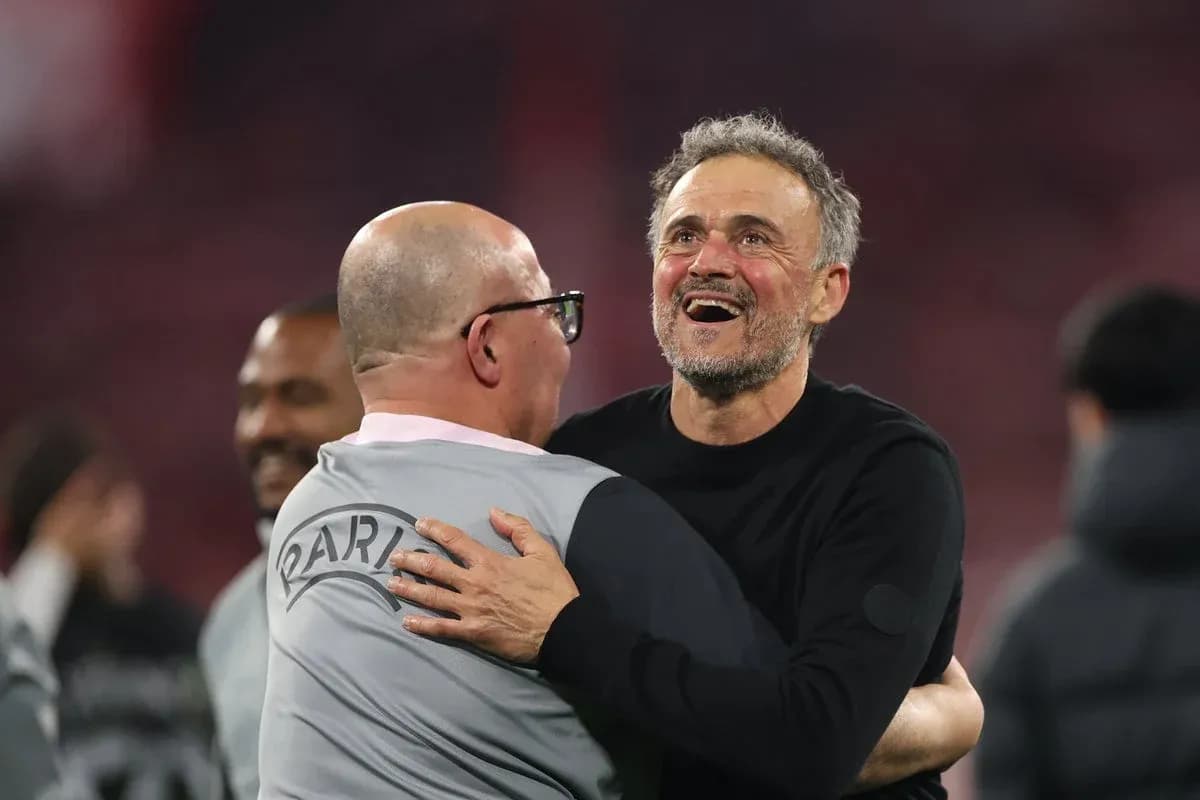
Luis Enrique walked into the press room in Munich sounding exactly like a coach who thinks his team own this competition. His side had just completed a 6-5 aggregate win over Bayern Munich, a wild, wavering semi-final that began with a nine-goal epic in Paris and ended with a controlled, almost cold-blooded draw in Germany.
“Do I believe we can win the final? Yes,” he said, reminding everyone of his words from months ago. “Do you remember what I said after group stage? I said I don't see any team being better than we are. The critics were saying that PSG are maybe not that great, but I was right.”
This is not the voice of a manager happy just to be there. It is a challenge, and the target is clear: Arsenal.
A measured sequel, a ruthless message
The Allianz Arena second leg never had a chance of matching the chaos of Paris, but it didn’t need to. PSG had already done the heavy lifting in that 5-4 first-leg win; in Munich they showed something different – control, calculation, a champion’s patience.
They struck first. Ousmane Dembele, again the man for the big European nights, needed only three minutes to quieten the stadium, his early goal giving PSG a two-goal cushion in the tie and forcing Bayern into a desperate chase that never quite caught fire.
Bayern pushed. Bayern raged. Bayern thought they had a route back when Joao Neves’ arm was struck in the box after a deflection off Vitinha. The appeals were instant and furious. Harry Kane led the protests, arms outstretched, demanding a penalty, demanding intervention.
Nothing came.
The explanation lay in a little-known corner of the Laws of the Game: when the ball strikes a player’s arm directly from a teammate, it is not considered handball unless it immediately creates a goal or a clear scoring chance. VAR stayed silent. The on-field decision stood. The anger in red shirts grew.
Kane did finally score, deep into stoppage time, but his goal arrived too late to truly disturb PSG’s stride. The holders had already done enough. They were back in the Champions League final, back on the stage they have come to see as theirs.
“A gift” for Paris – and a warning for Arsenal
Luis Enrique called it “a gift” for PSG’s supporters, and it is hard to argue with that. This is a club that last season finally lifted the Champions League, dismantling Inter Milan 5-0 in a brutal, one-sided final. Now they are 90 minutes away from becoming only the second team in the modern era to defend the trophy, after Real Madrid’s three-in-a-row from 2016 to 2018.
“Bayern are at our level and Arsenal have been one of the best teams this season,” Enrique said. “They have had an incredible year and are still chasing the Premier League. They are in the final, but I believe in my team and it is important to underline that.
“We showed over the last three years that we are ready to play against any opponents. This is a team you can count on because we are always fighting.”
Those are not empty words. PSG have evolved into a side that can win a nine-goal thriller one week and then strangle the life out of a second leg the next. The raw power of the “Qatari project” remains, but now it is wrapped in structure and steel.
Khvicha Kvaratskhelia, one of the stars of this version of PSG, kept it simple. “Very happy we're in the final. We know it will be difficult against Arsenal. Bayern is one of the best teams right now. It was very difficult. The hardest one in the season. We showed we can play against these teams. I will give everything for this badge."
Budapest awaits. Arsenal too.
Arsenal’s surge, and a nation watching
If PSG’s path to Budapest has been about confirming their dominance, Arsenal’s has been about rediscovering their place among Europe’s elite.
The Emirates shook on Tuesday night as Bukayo Saka’s close-range finish sealed a 1-0 win over Atletico Madrid and a 2-1 aggregate victory. The reaction told its own story. Players punching the air. Fans refusing to leave. A club that had spent 20 years looking at the Champions League final from the outside suddenly staring straight at it.
Mikel Arteta had gone with his gut. He picked the same XI that had beaten Fulham at the weekend, backing rhythm over rotation. It paid off. Arsenal collected their ninth clean sheet of the campaign in the competition, grinding Atletico down over two legs and showing a resilience that once felt alien to this club.
This is not just about Europe, either. Arsenal are still hunting the Premier League title. A domestic-European double, once fantasy, now sits within reach. You could feel that weight, and that possibility, in every roar at the final whistle.
You could also see it in the numbers at home. Virgin Media O2 recorded the highest broadband traffic in its history during that semi-final second leg. Peak downstream usage jumped 17 per cent above a typical Tuesday evening, surpassing even Liverpool’s Champions League clash with Real Madrid last November. Arsenal did not just captivate their own stadium. They gripped a country.
Declan Rice knows what this means. He has already turned his gaze to Budapest, and to the travelling support that has long been Arsenal’s emotional engine. He has urged 200,000 fans to flood the Hungarian capital, to paint it red and white and drag the club towards a first Champions League crown.
The plea is ambitious. It is also entirely in tune with the mood around Arsenal right now: bold, unapologetic, hungry.
A final of contrasts – and consequences
Strip away the noise and what remains is simple: the two best teams in Europe this season are meeting in Budapest on 30 May.
On one side, PSG: the reigning champions, the state-backed superpower, armed with a stellar attack and a manager who openly insists nobody is better. A club that could become the first state-owned team to defend the Champions League, and in doing so deepen the sport’s uncomfortable conversations about power, money and competitive balance.
On the other, Arsenal: the collective machine built under Arteta, a team defined by structure, pressing, and a core of home-grown talent. A club that still speaks of “revenge” after feeling they were the better side in last season’s semi-final defeat to PSG, and that now stands on the brink of a Premier League–Champions League double.
It is attack against organisation, imagination against order, moneyed might against methodical growth. It is also deeply personal. Arsenal have waited two decades to return to this stage. PSG believe it now belongs to them.
Luis Enrique has already fired his shot. He believes his team are the benchmark, the standard, the side nobody can surpass. Arsenal, driven by Saka, Rice and a manager who trusted his instincts on the biggest night of his career, will arrive in Budapest determined to prove him wrong.
One of them will leave with a story that defines an era.