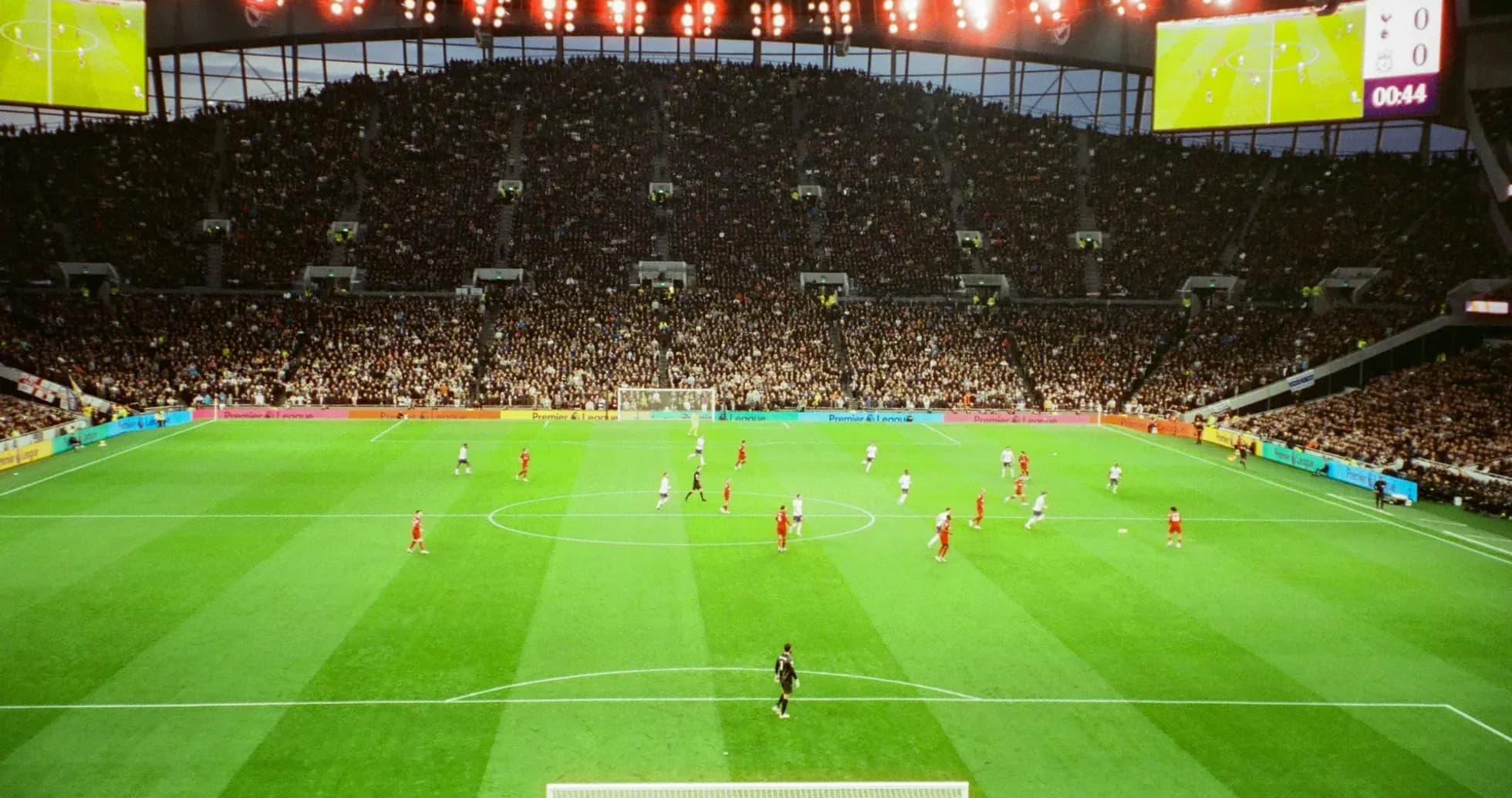
Aston Villa vs Liverpool: A Premier League Showdown
Villa Park under the lights, late in the Premier League season, and two Champions League-chasing sides went toe-to-toe in a game that felt more like a statement than a mere fixture. Following this result, Aston Villa’s 4-2 win over Liverpool not only underlined Unai Emery’s growing authority at this level, it also crystallised the contrasting identities of two teams separated by just three points in the table heading into this game: Villa in 4th on 62 points with a goal difference of 6, Liverpool in 5th on 59 points with a goal difference of 10.
Both managers trusted their season-long blueprint: matching 4-2-3-1 systems, high intensity, and aggressive pressing. For Villa, that shape has been the backbone of their campaign, used in 33 league matches. For Liverpool, Arne Slot has leaned on the same base formation in 33 games of his own, tweaking roles rather than structure.
I. The Big Picture – Structure and Season DNA
Emery’s Villa came into this contest with one of the league’s most reliable home attacks. At home they had scored 32 goals from 19 games, an average of 1.7, while conceding 22 (1.2 on average). Overall, their 54 goals for and 48 against across 37 matches paint the picture of a front-foot side that accepts risk for reward. The 4-2-3-1 here was textbook Emery: E. Martinez behind a back four of M. Cash, E. Konsa, P. Torres and L. Digne; a double pivot of V. Lindelof and Y. Tielemans; J. McGinn, M. Rogers and E. Buendia supporting lone forward O. Watkins.
Liverpool mirrored the shape but with a different flavour. On their travels this season they had scored 29 goals in 19 away games (1.5 on average) but conceded 33 (1.7 on average), a figure that betrays how open they can become when the press is broken. The back four of J. Gomez, I. Konate, V. van Dijk and M. Kerkez shielded G. Mamardashvili, with R. Gravenberch and A. Mac Allister in the double pivot. Ahead of them, C. Jones, D. Szoboszlai and R. Ngumoha supported C. Gakpo as the nominal striker.
The scoreline – 4-2 to Villa after a 1-0 half-time lead – reflected not just clinical finishing but the way Villa’s season-long attacking patterns meshed with Liverpool’s structural vulnerabilities away from home.
II. Tactical Voids – Absences and Discipline
Both squads were reshaped by key absences. Aston Villa were without Alysson, H. Elliott, B. Kamara and A. Onana, all listed as missing through injury or loan agreements. The most significant tactical void was B. Kamara: his absence forced Emery to repurpose V. Lindelof as a holding midfielder alongside Y. Tielemans, subtly changing the texture of Villa’s build-up. Instead of a pure destroyer, Villa fielded two players comfortable on the ball, encouraging shorter circulation through the centre and inviting Liverpool to press high.
Liverpool’s missing list was equally telling: Alisson, S. Bajcetic, C. Bradley, H. Ekitike, W. Endo and G. Leoni all sidelined. Without Alisson, G. Mamardashvili’s inclusion slightly altered Liverpool’s risk profile in possession; he is a capable goalkeeper but not the same sweeping, high-line insurance. The absence of W. Endo removed a natural defensive anchor in midfield, pushing R. Gravenberch and A. Mac Allister into a more responsible, screening role than either naturally prefers. And with H. Ekitike out, Liverpool lacked their top league scorer (11 goals) as a central reference point, placing even more weight on C. Gakpo and the creative trio behind him.
Disciplinary trends also framed the tone. Villa’s yellow card distribution this season shows a pronounced spike between 46-60 minutes, with 29.31% of their cautions arriving just after half-time, and another 17.24% between 61-75 minutes. It underlines how Emery’s side often walk a fine line as they ramp up intensity after the break. Liverpool, by contrast, are at their most combustible late: 30.91% of their yellows come in the 76-90 minute window, and their solitary red card in league play has arrived via D. Szoboszlai, whose blend of aggression and responsibility can tip either way.
III. Key Matchups – Hunter vs Shield, Engine Room Battles
The headline duel was always going to be O. Watkins against Liverpool’s defensive axis. Watkins, with 14 league goals and 3 assists in 36 appearances, is more than a finisher; 57 shots (36 on target) and 23 key passes speak to a forward who drifts, links, and occupies defenders. Up against V. van Dijk and I. Konate, his movement across the line – particularly into the right channel near M. Kerkez – repeatedly asked Liverpool’s back line to make decisions they have struggled with away from home, where they have conceded 33 times.
Behind him, M. Rogers was the game’s quiet conductor. With 10 league goals and 6 assists in 37 appearances, plus 47 key passes and 118 dribble attempts, Rogers has been Villa’s all-phase threat from the left half-space. His duel with R. Gravenberch and A. Mac Allister in the inside-left corridor tilted the “Engine Room” battle towards Villa. Whenever Rogers received between the lines, Liverpool’s pivot had to choose between stepping out – and leaving space behind – or holding their shape and allowing him to turn.
For Liverpool, the creative burden fell heavily on D. Szoboszlai and C. Gakpo. Szoboszlai’s season numbers are elite: 7 assists, 6 goals, 74 key passes, and 2125 completed passes at 87% accuracy. He is the side’s primary tempo-setter and set-piece specialist, but also their most combustible figure, with 8 yellow cards and 1 red. Here, his attempts to thread passes into Gakpo’s feet were often funneled into Villa’s compact central block, where V. Lindelof and Y. Tielemans held their ground.
Gakpo himself, with 7 goals and 5 assists this campaign, is a hybrid forward who likes to drop and drift. Against Villa’s back line, his tendency to vacate the penalty area suited E. Konsa and P. Torres, who prefer stepping into midfield rather than defending big spaces in behind. Without H. Ekitike’s more vertical threat, Liverpool’s front line became easier to compress.
IV. Statistical Prognosis – What This Game Tells Us
Following this result, the underlying season profiles of both teams feel reinforced rather than rewritten. Villa’s overall average of 1.5 goals scored per game and 1.3 conceded is the statistical footprint of a side comfortable in high-scoring contests, especially at home where they have 12 wins from 19. Their nine clean sheets overall are a respectable platform, but Emery’s Villa are built first and foremost to outscore you.
Liverpool’s season-long averages – 1.7 goals for and 1.4 against overall – tell a similar story, but their away defensive record remains the critical weakness. Conceding 1.7 goals per away game on average, and 33 in total on their travels, they are perpetually one mistake away from chaos when the press is broken.
In xG terms, this would likely have been a high-value contest for both sides: Villa’s layered attacking structure, with Watkins and Rogers as dual spearheads, consistently manufactures good shooting positions, while Liverpool’s volume of chances usually remains high even in defeat. But the balance of probability, when you marry Villa’s home scoring rate with Liverpool’s away concessions, always leaned towards a multi-goal Villa performance.
The tactical intersection is clear: a Villa team that thrives on sustained pressure and second-phase attacks against a Liverpool side whose late-game discipline frays, as evidenced by 30.91% of their yellow cards arriving between 76-90 minutes. Once Villa established a lead, the game tilted into exactly the kind of open, emotionally charged contest that suits Emery’s structured chaos more than Slot’s still-evolving control.
As the final whistle went at Villa Park, this 4-2 felt less like an upset and more like the logical endpoint of two season-long stories crossing paths: Villa, ruthless and expressive at home; Liverpool, brilliant in flashes but fatally porous on their travels.