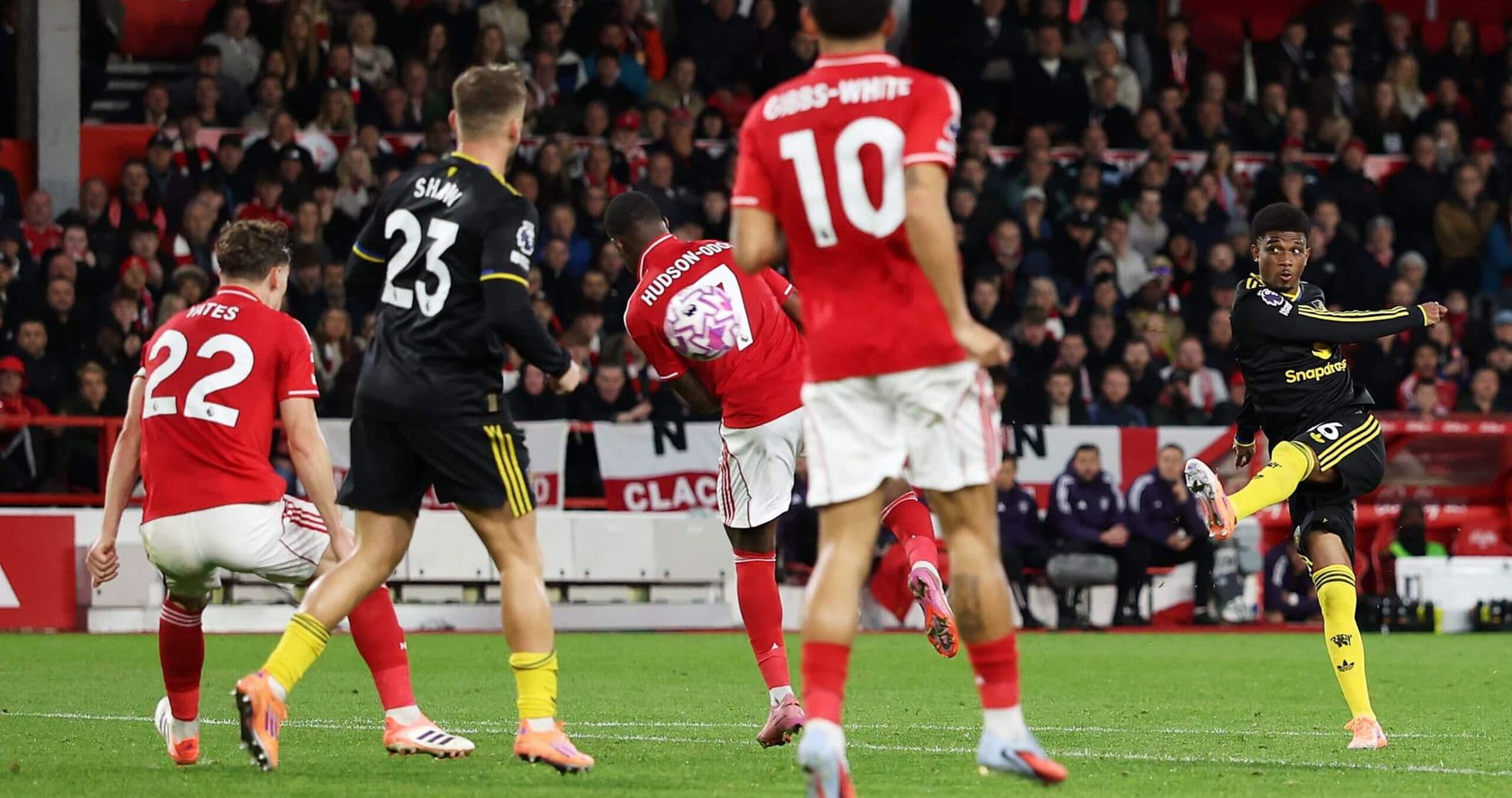
Manchester United Edges Nottingham Forest in Thrilling 3-2 Match
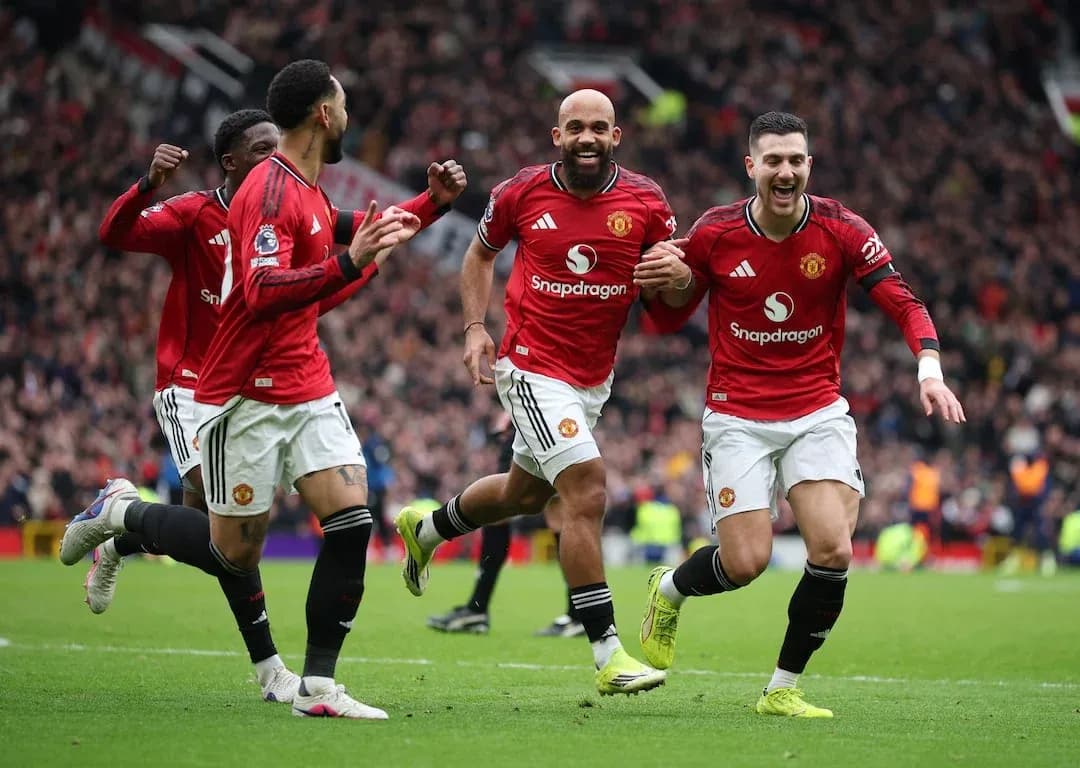
Old Trafford had the feel of a season’s verdict rather than a mere Round 37 fixture. Manchester United, already shaping as a Champions League side in waiting, edged a 3-2 thriller over a Nottingham Forest team still fighting to turn survival into something more stable. Following this result, United sit 3rd on 68 points, while Forest remain 16th on 43 – and the numbers from the campaign explain why the match unfolded as a high‑wire, high‑scoring affair.
The Big Picture – Structures and Seasonal DNA
Michael Carrick doubled down on United’s core identity by returning to the 4-2-3-1 that has been his most-used shape at Old Trafford. It suits the squad’s spine: S. Lammens behind a back four of D. Dalot, H. Maguire, L. Martinez and L. Shaw; Casemiro and K. Mainoo as the double pivot; a creative line of A. Diallo, Bruno Fernandes and Matheus Cunha behind lone forward B. Mbeumo.
Heading into this game, United’s home record was the platform of their top‑four push: 13 wins from 19 at Old Trafford, with 39 goals for and 24 against. That is an attacking average of 2.1 goals at home against 1.3 conceded, a profile that almost guarantees drama. Overall, their goal difference of 16 is the product of 66 goals scored and 50 conceded – a contender’s firepower with a contender’s vulnerabilities.
Forest arrived in Manchester with a more itinerant identity. Vitor Pereira has leaned heavily on a 4-2-3-1 across the season, but here he chose a 4-4-2, pairing Igor Jesus with C. Wood and building a narrow, industrious midfield of O. Hutchinson, N. Dominguez, E. Anderson and M. Gibbs-White. On their travels this campaign, Forest had been braver than their league position suggests: 7 away wins from 19, with 28 goals scored and 28 conceded – an away average of 1.5 goals for and 1.5 against. That symmetry hinted at a side willing to trade chances, and at Old Trafford they did exactly that.
Tactical Voids – Absences and Discipline
Both managers had to navigate notable absences. United’s attacking rotation was thinned by the loss of B. Šeško to a leg injury, removing an 11-goal option from the bench and forcing Carrick to trust Mbeumo as the central reference point. At the back, M. de Ligt’s back injury meant Maguire and Martinez were again the default pairing, a duo strong in the air but vulnerable if exposed in space.
Forest’s issues were more structural. O. Aina and W. Boly were both out, while Murillo’s muscle injury stripped Pereira of a key progressive defender. Without C. Hudson-Odoi’s direct threat on the flank and with N. Savona also missing, Forest’s bench was light on game‑changing wide players. That partly explains the choice of a compact 4-4-2, prioritising solidity over width.
Discipline shaped the risk profiles. United, as a team, have a pronounced yellow-card curve: 20.63% of their cautions arrive between 46-60 minutes and another 20.63% between 76-90, with a late spike of 17.46% in added time (91-105). Casemiro is the embodiment of that edge: 10 yellows and 1 yellow‑red in the league, a destroyer who lives on the disciplinary line. Forest, meanwhile, see 25.42% of their yellows between 46-60 and 22.03% from 61-75, meaning their aggression tends to rise just as legs tire.
At individual level, N. Williams is Forest’s red‑card warning light. He has already been sent off once this season and has 6 yellows, and he also conceded a penalty earlier in the campaign. That profile forced him to walk a tightrope against United’s wingers, especially when isolated against Cunha or Diallo.
Key Matchups – Hunter vs Shield, Engine Room Battles
The clearest “Hunter vs Shield” duel was Forest’s top scorer M. Gibbs-White against United’s defensive record. Gibbs-White came into the fixture with 14 league goals and 4 assists, a creative forward operating nominally from midfield but constantly arriving in the half‑spaces. His 57 shots, 31 on target, and 47 key passes underline a player who both finishes and creates.
He was running into a United defence that, overall, had conceded 50 goals in 37 games – 1.4 per match – but at home allowed just 24 in 19. Martinez’s front-foot defending and Maguire’s aerial dominance are the core of that shield. The tactical question was whether Casemiro and Mainoo could screen the pockets where Gibbs-White thrives. Casemiro’s 90 tackles, 27 blocked shots and 32 interceptions this season show how often he steps into danger; against Forest, his timing in those interventions was critical in preventing Gibbs-White from turning on the half‑turn and feeding Igor Jesus or Wood.
On the other side, United’s attacking “Hunter” was more of a trident. Mbeumo (10 goals, 3 assists), Cunha (10 goals, 2 assists) and Bruno Fernandes (8 goals, 20 assists) formed a line of constant movement. Bruno is the league’s leading creator with 133 key passes and 20 assists; he is also United’s penalty specialist, having scored 4 but missed 2 – a 100% conversion rate is impossible to claim, and Forest knew that conceding a spot-kick to him still carried a sliver of hope.
Forest’s “Shield” was a makeshift but rugged unit: N. Milenkovic and Morato at centre-back, flanked by Williams and L. Netz. Without Boly and Murillo, Milenkovic’s dominance in duels and Morato’s positioning had to hold under constant strain from Bruno’s through-balls and Cunha’s dribbling (91 attempts, 44 successful). The plan was clear: compress the central lane, trust Williams and Netz to handle 1v1s, and rely on M. Sels’ shot-stopping to survive the inevitable waves.
In the “Engine Room”, Casemiro versus N. Dominguez offered a duel of enforcers with different flavours. Casemiro is volume: 358 duels, 189 won, 46 fouls committed, and a willingness to accept cards to break rhythm. Dominguez, more subtle, had to balance pressing Bruno with protecting the space in front of Milenkovic and Morato. K. Mainoo’s calm distribution complemented Casemiro’s aggression, while E. Anderson’s energy tried to drag Forest up the pitch when they broke.
Statistical Prognosis – Why the 3-2 Made Sense
Following this result, the scoreline felt like a crystallisation of both teams’ seasonal profiles rather than an anomaly. United’s home average of 2.1 goals for and 1.3 against, combined with Forest’s away average of 1.5 for and 1.5 against, points naturally toward a multi‑goal contest. United’s overall goal difference of 16, Forest’s of -3 (47 scored, 50 conceded), and the visitors’ willingness to attack on their travels all fed into a game where neither side could, or would, shut the door.
In xG terms – even without explicit figures – the patterns are clear. United, with Bruno’s volume of chances created and Cunha and Mbeumo’s shot output, are a high‑xG machine at Old Trafford. Forest, with Gibbs-White’s dual role as scorer and provider and a front line of Igor Jesus and Wood, generate enough danger to punish any lapses. The defensive solidity edge, however, lies with United: more clean sheets at home, fewer home defeats, and a structure that, while imperfect, is more rehearsed.
The 3-2 finale at Old Trafford was thus less a wild outlier and more a statistical and tactical inevitability: a top‑three side whose attacking ceiling is higher than its defensive floor, against an away‑bold Forest team missing key defenders but still armed with a top‑tier creator. In that intersection of firepower and fragility, United simply had more ways to win.