
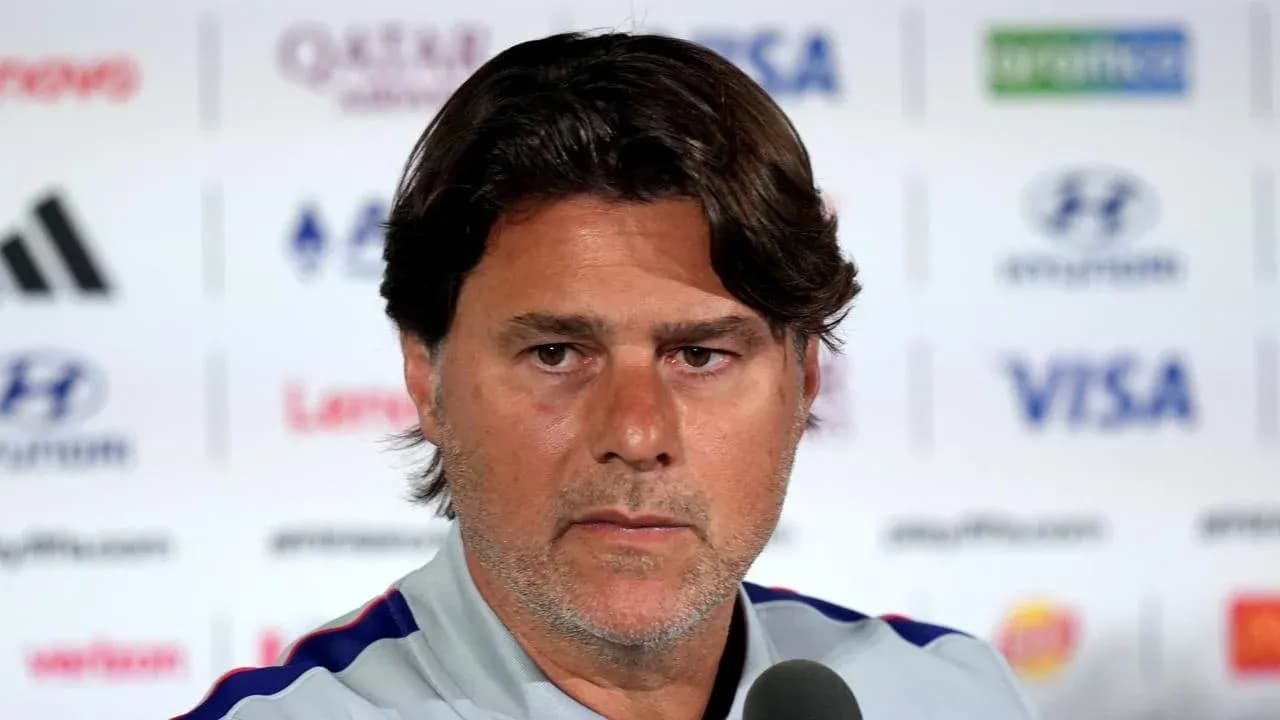
Pochettino Defends USMNT After Loss to Turkiye
Mauricio Pochettino didn’t sound like a coach who had just seen his team lose 3-2. He sounded like a man tired of being told the sky is falling when his team is standing on top of the group.
In the wake of the United States’ defeat to Turkiye on Thursday, the USMNT boss bristled at the tone of the post-match inquest. The questions were about lost momentum, about doubts creeping in before the World Cup knockout rounds. No one in the room, he felt, seemed remotely interested in the simple fact that the United States had already won the group.
“The mood is like we [are going] home tonight and Turkey is staying,” Pochettino snapped. “I need to [remind] you and everyone that we won the group. Sorry guys, we won.”
That line hung in the air. The coach of a group winner having to remind everyone they’d actually finished top.
Rotation, risk and a missed slice of history
Pochettino had talked pre-game about going for another win, about pushing to keep the run going. On the teamsheet, though, the calculation was clear. He rolled out a heavily rotated side, nine changes from the XI that beat Australia, resting key names and trusting his squad players to manage a dead rubber that still carried a sliver of historical weight.
Had the USMNT found a way past Turkiye, they would have become the first American side ever to win all three group games at a World Cup. That marker has been dangled in front of this generation for months.
Pochettino, blunt as ever, wasn’t buying the significance.
“Making history is winning the World Cup,” he said. “It’s not winning three matches only within the World Cup. I don’t really understand. It’s a little bit petty if you will — you’re thinking a little too small. You’re telling me you could make history — what does it mean to win three matches if you lose the next one?”
For him, the story isn’t about a perfect group stage. It’s about still being alive when the serious football starts.
He pointed to Germany’s stumble earlier in the day as a cautionary tale. The Germans, he noted, had started many of their regulars and still fell to a desperate Ecuador side chasing survival. Strongest XI or not, World Cups punish any team that gets the details wrong. On that evidence, Pochettino clearly felt his decision to rotate was a calculated gamble, not a surrender.
The defeat, he insisted, didn’t rattle the core of what the United States are building. On the contrary, he argued that his players managed the scenario properly, banked the minutes they needed and, crucially, got their star man back on the pitch.
Christian Pulisic, the AC Milan forward and heartbeat of this side, returned after missing the Australia match with a calf problem that had forced him off at half-time in the win over Paraguay. Getting him back into competitive action before the knockouts may prove far more valuable than a clean sweep of group victories ever could.
The Americans walk into the next phase bruised on the night but armed with the one thing that really matters at this stage: top spot, a knockout berth, and their difference-maker back in the fold.
Arnold’s Iraq torn apart and left in limbo
While the United States wrestled with questions of narrative and ambition, Graham Arnold’s Iraq were left dealing with something far more brutal: the end.
A 5-0 hammering by Senegal closed their World Cup campaign and cast immediate doubt over Arnold’s future in charge. The match turned ugly early. Rebin Sulaka’s red card in the 13th minute left Iraq with a mountain to climb, and they never got close.
Arnold didn’t hide behind the dismissal, but he knew its impact.
“The early red card was mentally tough on the players. Against a team like Senegal, mistakes are always punished,” he said.
He went further, laying bare the self-inflicted nature of Iraq’s collapse across the tournament. Of the 11 goals they conceded, he told reporters, nine came directly from individual errors.
“I told the players after the match that we conceded 11 goals at this World Cup, and nine came from our own individual mistakes. We have to learn from that.
“In the second half, we ran out of energy. I also made changes to give more players the chance to experience representing Iraq at the World Cup, and I take full responsibility for that.”
Group I, with France and Norway alongside Senegal, was always going to be unforgiving. Iraq arrived as the last team to qualify, dragged there by Arnold through an intercontinental playoff that ended a 40-year absence from the global stage.
That journey still matters to him.
“Everyone in Iraq should be proud of the fact that we made it here and we performed very well in two out of the three games,” he said in Toronto.
But pride now shares space with uncertainty. Arnold’s contract expires at the end of the tournament, and the question of whether he will lead Iraq into a looming Asian Cup group-stage reunion with the Socceroos in Saudi Arabia hangs in the air.
“I’ve just asked them to leave it until after World Cup, then we can have a chat then,” he said.
For Iraq, the next conversation may be as defining as any match they’ve played in Canada.
Fire on the training pitch keeps Panama alive
At Panama’s camp, the tension took a different form: a flash of anger on the training ground between Cecilio Waterman and Jose Luis Rodriguez.
Already eliminated after successive 1-0 defeats to Ghana and Croatia in Group L, Panama could easily have drifted towards their final game against England in New Jersey. Instead, tempers flared.
Coach Thomas Christiansen didn’t rush to cool it. He welcomed it.
“What happened today in training, this is a normal situation,” he said. “I would’ve liked to see these situations more often, that means the team is alive. They are willing to do a good effort... to be in the first XI for the game.
“If this happens another time, it’s a good sign that they are alive.”
Panama are still chasing their first World Cup point after five straight defeats at the tournament, including that 6-1 mauling by England in 2018. Now they face England again, with nothing tangible on the line but pride and progress.
“Now we have the last game against England, a good way to finish a World Cup if it goes our way,” said Christiansen, who has led Panama since 2020 but is out of contract once this competition ends.
“I think we have made changes from the last time they faced Panama eight years ago, but we need to show it tomorrow.
“It will be a tough one but I’m thinking that the team will be able to compete and do a good game.”
For Panama, one point would be a breakthrough. For Christiansen, it could be a final argument for continuity.
France win big on the pitch, stumble in the stands
France, by contrast, cruised to a 4-1 win over Norway on Saturday morning. Yet their head coach, Didier Deschamps, wasn’t there to see it.
He had flown home to attend his mother’s funeral, leaving his staff to steer the world champions through their group assignment. The players wanted to mark the occasion with a visible gesture, requesting permission to wear black armbands in tribute.
The French Football Federation later told The Athletic that FIFA rejected that request.
Confusion deepened around a planned pre-match minute’s silence. It had initially been briefed that the silence would honour Deschamps’s mother. The FFF then clarified that it was instead dedicated to the victims of the Venezuelan earthquake.
FIFA have been contacted by the media but have yet to respond.
On a day when France showed their usual authority with the ball, the story off it was one of bureaucracy, mixed messages and a coach mourning at distance. The tournament rolls on, indifferent, as teams juggle form, fatigue, grief and futures all at once.
For Pochettino’s United States, that reality now sharpens into a simple question: with the group won, the star man fit and the noise swirling, can they turn irritation into edge when the knockouts begin?



