England's Left Flank Struggles: Tuchel's Blunt Assessment
Thomas Tuchel did not bother dressing it up. England’s left side, he said, simply is not good enough.
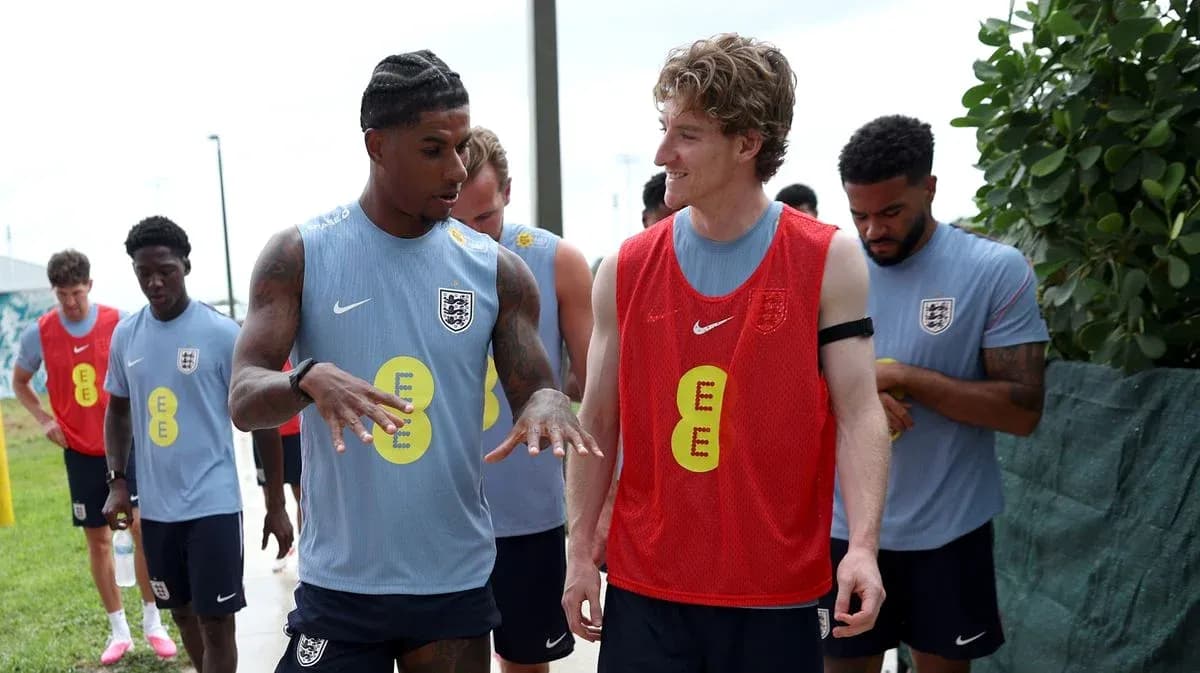
The Three Lions manager delivered a blunt assessment of Anthony Gordon, Marcus Rashford and his rotating cast of left-backs, admitting the entire flank has dropped off a cliff since that eye-catching warm-up win over Costa Rica.
“The unit on the left side hasn’t provided the same quality as they did against Costa Rica,” Tuchel said, his frustration obvious. “They were so good, I saw the game against Costa Rica and thought: ‘OK, left side is solved, this unit, they find their link.’”
That belief has evaporated across England’s opening two Group games.
Left flank under fire
Tuchel thought Gordon had cracked the code in that final friendly, the winger buzzing with “connection and penetration” down the left. Instead, the World Cup has brought a jarring reality check.
He has been just as scathing about his full-backs as his wingers. Nico O’Reilly paid the price after the opener, dropped for Djed Spence against Ghana as Tuchel searched for any combination that might click.
It has not.
“It turns out we played the first match and they’re not clicking, I’m not even sure why,” he admitted. “It was not the same amount of connection, not the same amount of penetration, not the same amount of verticality, and this was the same in the second match.”
Rashford, meanwhile, sits at the heart of the debate. The forward remains firmly in Tuchel’s plans, but the manager did not hide from the numbers or the performances.
“Marcus is in a good place, but when he started he was not as decisive as Anthony, that’s just it,” Tuchel said. “He struggled to have the same influence for us from the start, and yet from the bench he was always pushing.”
Rashford’s cameos, particularly when he joined forces with Eberechi Eze and Spence on that left side, had given Tuchel hope of two functioning “units” on that flank.
“Then Marcus came on the left side, together with Eberechi Eze and Djed Spence, and they did so well. So I thought: ‘Oh, we have two units. They know what they’re doing and they’re clicking.’”
The tournament has ripped up that script. The chemistry has gone missing just when England need it most.
“The left side in general, no matter who plays, needs to click a bit more and provide a bit more threat,” Tuchel insisted. “I still trust all of them, I still trust them to get better. Marcus is just also very good from the bench, and it’s sometimes nice to hold someone back.”
England hit the low block wall
The 0-0 stalemate with Ghana has left England’s place as Group winners on the line and exposed an old problem: breaking down a deep, disciplined defence.
Tuchel knows the script. He has seen it in the Champions League, he has lived it in the Premier League. Possession, territory, pressure – and then that one missing moment.
“It is difficult to accelerate the match against these low blocks,” he said. “It needs this one moment of quality and a bit more precision with the crossing. A bit more timing with the crosses, maybe a bit more awareness with the crosses.”
The questions he rattled off were the ones England failed to answer in New Jersey.
“Who is arriving with the cross? Are we arriving aggressively enough with the cross? How can we shoot more from outside the box, have a deflection and force this goal in?”
Ghana, under Carlos Queiroz, revelled in the grind. They celebrated every foray over the halfway line. At full-time, they greeted the whistle like a winning goal. England trudged off, deflated, with Tuchel adamant his side had still done enough to edge it.
“We did enough to win the Ghana game and we also had to control their counter attacks. Twice they were dangerous,” he said. “Once Ghana came over the halfway line they celebrated like it was a goal. It was like that.”
Tuchel has not found a magic formula for this kind of game, and he is not pretending otherwise.
“I haven’t found the recipe where ‘they do this, then we do this – and then we are fine,’” he said. “Maybe I am proven wrong but I don’t think anyone likes to play against Ghana.”
Panama next – and no room for naivety
Now comes Panama at the MetLife Stadium, ranked 42nd in the world, 23 places above Ghana. On paper, that should sharpen the nerves. On the pitch, Tuchel expects more of the same: another deep block, another long night of probing.
“We will try to find a very active and aggressive approach now against Panama but we cannot just be stupid and naive,” he warned. “We will face another deep block in another kind of formation. We now see a back five. For many moments in the match we see a back six, we see a back seven.”
The margins are tight. The patience will be tested again. And all the while, the noise grows outside the England camp.
Palmer, Foden, Alexander-Arnold – and a different warning
As soon as the Ghana game ended, the familiar chorus began. Why no Cole Palmer? Why no Trent Alexander-Arnold? Why not a technician like Phil Foden to unpick the lock?
Tuchel has heard it all before. For him, the story of the night lay not in who stayed at home, but in who stood in the opposite dugout.
“Honestly, we had a message from a very famous colleague, a very well respected colleague, after Ghana changed their coach,” he revealed. “He texted us: ‘Your most difficult game is now the second game, I tell you that.’”
That warning, about Queiroz and his well-drilled block, framed Tuchel’s reading of the draw. He pushed back hard at the idea that one result should trigger a rewrite of the squad list.
“I cannot engage this after a draw. Spain had a draw. Brazil had their draw. Portugal had their draw,” he said. “We selected a group from the evidence that we had. It cannot be that you’re not selected as a player and suddenly you will be. This is not how it works.”
He knows the reflex. When the attack stalls, the players not on the pitch – or not even on the plane – become the easy answer.
“It’s a reflex, things don’t go well and then the guys on the bench are suddenly the winners or the guys at home are the winners. That’s not it. The game needs to be played how it’s played. It played out to be difficult.”
Tuchel insists the mood inside the camp is calmer than the noise outside. No wild swings, no crisis talk.
“The highs should not get too high. The lows should not get too low. I don’t think it was a low,” he said. “It is time to believe and time to keep on going. We want to step up in the next game.”
For that to happen, one thing is clear. England’s World Cup ambitions may yet depend on whether that troubled left flank finally catches fire – or continues to drag them back towards the pack.