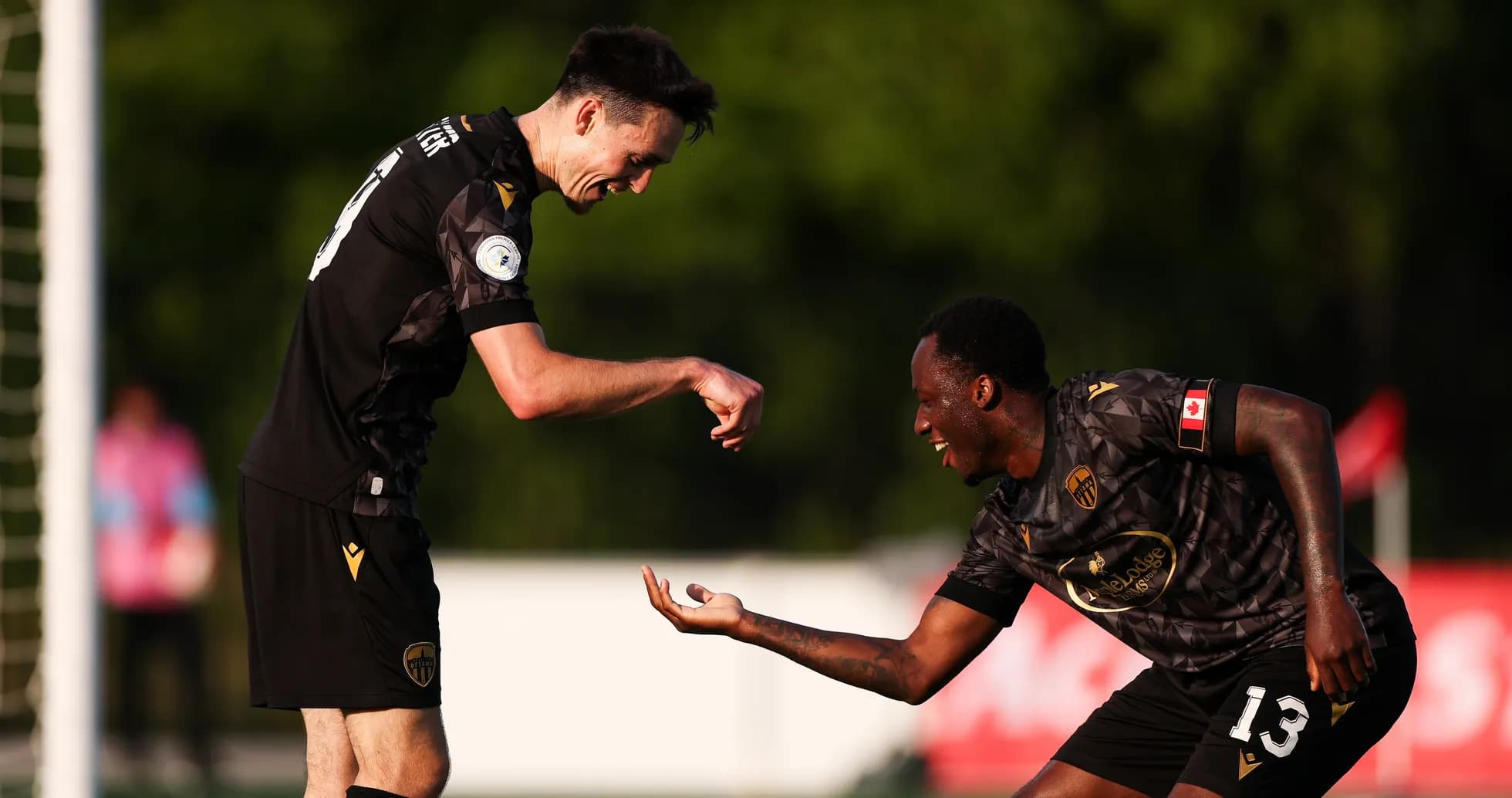
Ottawa's Landmark Win Against Forge in Canadian Premier League
Under the lights at TD Place Stadium, this Group Stage meeting in the Canadian Premier League felt bigger than an ordinary league fixture. Forge arrived as the polished contender, ranked 2nd with 16 points and a total goal difference of 6, their season shaped by control and clean sheets. Atlético Ottawa, 4th with 10 points and a total goal difference of -4, came in as the restless challenger: unbeaten at home, fragile on their travels, still trying to define their 2026 identity.
Following this result, the 2-1 home win will be remembered as a statement of intent from Diego Mejia’s side. Ottawa had already shown a split personality this campaign: at home they had scored 4 goals and conceded 2, averaging 1.3 goals for and 0.7 against; away, they had been far more porous, conceding 9 with an away average of 2.3 goals against. Forge, by contrast, had built their reputation on defensive rigour. Overall they had allowed just 3 goals in 7 matches, with an away average of 0.8 goals conceded and 2 clean sheets on their travels. To pierce that armour twice in one night changes the conversation around Ottawa’s ceiling.
Lineups and Tactics
The lineups hinted at contrasting blueprints. Mejia’s season-long preference for a 3-4-3 had given Ottawa a platform to be compact yet aggressive in wide areas, and the selection reflected that balance between steel and flair. T. Crampton anchored the side in goal, with D. Aguilar and A. S. Abatneh N. among those providing defensive structure. Ahead of them, M. Aparicio and J. Villal were tasked with threading the game together, while the front line of E. Garcia, G. Antinoro and B. Tabla carried the creative burden.
Across from them, Bobby Smyrniotis leaned into Forge’s familiar control-first identity. Their season had alternated between a 4-2-3-1 and a 4-3-3, both built on a disciplined back line and a double pivot that strangles transitions. D. Bertaud started in goal, shielded by a back unit featuring R. Rama, D. Nimick and M. Jevremovic. In midfield, B. Paton and A. Aromatario provided the metronome and the bite, while T. Borges and the league’s in-form striker B. Wright gave Forge their cutting edge.
Disciplinary Patterns
The tactical voids in this match were less about absences and more about discipline and emotional control. There were no officially listed injuries or suspensions, but both sides carried card histories that shaped how they approached the duels. For Ottawa, Aparicio’s season profile is telling: 3 yellow cards in just 270 minutes, with the team’s yellow-card timing peaking between 46-60 minutes at 30.77% and again late, with 23.08% in both the 76-90 and 91-105 windows. This is a side that tends to grow more combative as matches wear on.
Forge’s disciplinary pattern is different but equally revealing. Their yellow cards are most concentrated between 46-60 minutes at 33.33%, and they have already seen a red card in that same 46-60 band, accounting for 100.00% of their reds. Players like Aromatario and Rama, each on 3 and 2 yellows respectively, personify a Forge team that walks a fine line between aggression and overreach. In a tight contest decided in regular time, that underlying volatility always threatened to tilt the balance.
Key Matchups
Within that framework, the key matchups were clear. The “Hunter vs Shield” duel centred on B. Wright against Ottawa’s defence and Crampton. Wright entered this fixture with 2 goals in 6 appearances, having converted his only penalty attempt and drawn 6 fouls. Forge’s total attacking output of 9 goals, with an away average of 1.5 goals scored, is built significantly around his movement and presence. Ottawa’s total defensive record of 11 goals conceded looks shaky on paper, but at home they had allowed just 2 in 3 matches. The question was whether Wright’s efficiency could crack a home unit that becomes far more secure in familiar surroundings.
The “Engine Room” confrontation was equally intriguing. On one side, Paton and Aromatario formed a Forge axis that blends distribution and disruption. Paton’s 106 total passes at 80% accuracy, with 4 key passes and 14 tackles, mark him as one of the league’s most complete deep operators. Aromatario adds 186 passes at 80% accuracy, 11 tackles and 12 interceptions, plus 3 yellow cards that underline his willingness to live on the edge. On the other, Aparicio and Villal had to fight for control while threading quick service to Garcia and Tabla. Aparicio’s 180 passes at 82% accuracy and 8 interceptions show a player who can both build and break, but his card record meant he had to manage his aggression carefully.
Impact of Substitutes
Mejia’s bench options also mattered. W. Timoteo, one of the league’s top-rated defenders, offers both defensive security and attacking thrust: 3 blocked shots, 80 passes at 83% accuracy and 1 goal from limited minutes. K. Habibullah, with 3 successful dribbles from 3 attempts and 1 assist in just 39 minutes, gives Ottawa a late-game injection of unpredictability between the lines. Their presence allowed Ottawa to tilt the game’s rhythm in the final half-hour.
Forge’s depth, meanwhile, is defined by experience and technical quality. Bringing on someone like K. Bekker or M. Babouli from a bench that also includes I. Oketokoun offers Smyrniotis multiple ways to chase or protect a result. But the more they opened up, the further they drifted from the defensive template that had yielded 5 clean sheets in 7 matches overall.
Statistical Outlook
From a statistical prognosis standpoint, Forge still look the more stable side across the season. Overall they average 1.3 goals for and only 0.4 against, an elite defensive platform that usually keeps xG against low and predictable. Ottawa, with a total average of 1.0 goals scored and 1.6 conceded, remain more volatile. Yet matches are not played in aggregate—they are lived in 90-minute chapters, and at TD Place Stadium Ottawa once again wrote a different story than their total numbers suggest.
The late-game disciplinary surges for both teams, combined with Ottawa’s home resilience and Forge’s occasional red-zone indiscipline around the 46-60 minute mark, created a knife-edge narrative. In that tension, Mejia’s side found just enough incision to outscore the league’s most miserly defence and turn a cautious tactical preview into a landmark home win.