Nottingham Forest vs Burnley: Premier League Relegation Clash
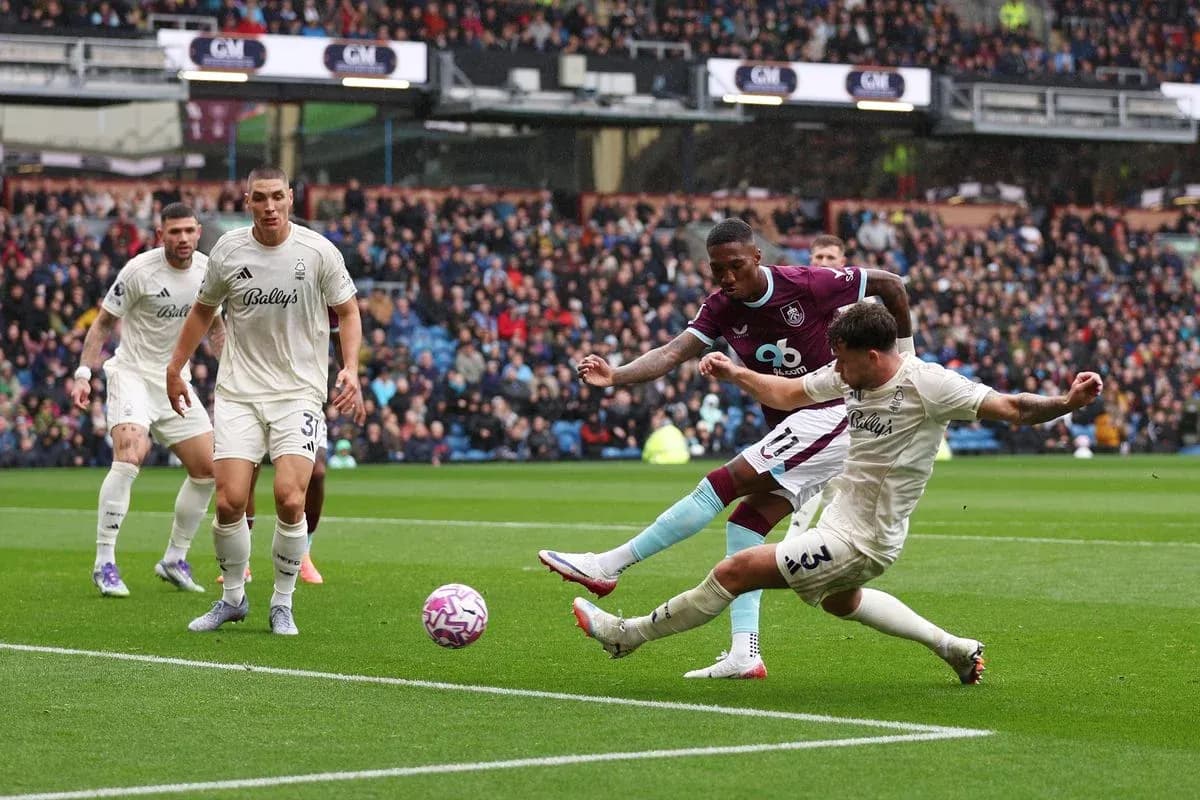
Relegation tension hangs over the City Ground as Nottingham Forest host Burnley in the Premier League on 19 April 2026. With the season deep into its run-in (round 33), Forest sit 16th on 33 points, while Burnley are 19th on 20 points and currently in the relegation places. Survival, momentum and the psychological blow of losing to a direct rival are all on the line.
Context and stakes
In the league across all phases, Forest have taken 33 points from 32 matches (8 wins, 9 draws, 15 defeats) with a goal difference of -12. Their cushion over the drop zone is fragile, built more on resilience than dominance. Burnley, by contrast, have only 4 wins and 20 defeats from their 32 games, with a goal difference of -30 and a clear relegation tag in the standings.
Form tells its own story. Forest’s last five in the league read “DWDDL” – only one defeat in that spell, but also just a single win, keeping them hovering above danger rather than escaping it. Burnley’s “LLDLL” is the pattern of a side in freefall: four losses in their last five, with points slipping away week after week.
At home, Forest have struggled to turn the City Ground into a fortress. In the league they have won just 3 of 16 home matches, drawing 6 and losing 7, scoring 14 and conceding 20. Burnley’s away record is even worse: 2 wins, 3 draws and 11 defeats from 16, with 18 goals scored but a bruising 38 conceded. On paper, this is a meeting of two flawed sides, but Forest’s relative stability and Burnley’s defensive fragility sharpen the sense that this is a must-win for the hosts.
Tactical outlook: Forest
Across all phases, Forest’s numbers underline their identity: 32 goals scored and 44 conceded in 32 league matches – roughly 1.0 scored and 1.4 conceded per game. They have kept 8 clean sheets but failed to score in 14 matches, including 9 at home, which hints at recurring problems breaking teams down at the City Ground.
The tactical backbone is clear: Forest have lined up in a 4-2-3-1 in 28 league matches. That shape naturally centres the creative burden on the No.10 role, and nobody embodies that more than Morgan Gibbs-White. The 25‑year‑old midfielder is Forest’s standout attacking figure this season: 9 league goals and 2 assists from 32 appearances, averaging 2 shots per game (48 total, 24 on target) and 44 key passes. His passing volume (1,073 total, 81% accuracy) and dribbling output (49 attempts, 24 successful) show how often Forest funnel possession through him between the lines.
Expect Forest to build around Gibbs-White drifting into pockets behind the striker, combining with wide players and full-backs to overload Burnley’s flanks. His ability to win fouls (38 drawn) is also important against a Burnley side that accumulates cards and can lose discipline late in games.
Defensively, Forest concede at a moderate but persistent rate: 20 goals at home (1.3 per game) and 24 away (1.5 per game). They have shown they can shut teams out (4 home clean sheets), but the balance is delicate. The card profile suggests they can be stretched: yellow cards are spread across the match, with a particular spike between 61 and 75 minutes (12 yellows, 24%), hinting at fatigue and pressure phases after the hour mark.
In attack, Forest’s penalty record is a small but notable weapon: 2 penalties awarded, both scored, 100% conversion. While no individual penalty specialist is highlighted beyond Gibbs-White’s 1 scored from 1, the collective reliability from the spot could matter in a tight relegation battle.
Tactical outlook: Burnley
Burnley’s season has been defined by defensive collapse. Across all phases they have conceded 63 league goals in 32 matches – 2.0 per game – and a staggering 38 away from home (2.4 per away match). Their attack is not completely blunt (33 scored overall, 18 away), but the back line has undermined almost every tactical plan.
They have experimented heavily with systems: 4-2-3-1 (9 matches), 3-4-2-1 (8), 5-4-1 (7), 4-3-3 (3), 4-4-2 (2), 3-4-3 (2) and 4-5-1 (1). That tactical churn suggests a coach searching for solutions rather than refining a settled structure. Away from home, that instability has been punished: 11 defeats from 16, only 3 clean sheets in total on the road (in fact, 0 away clean sheets across all phases – all 4 shutouts have come at Turf Moor).
Burnley’s disciplinary record is another concern. Yellow cards cluster in the middle and late phases of games, and they have seen red cards in three different ranges (31-45, 76-90, 91-105), which points to a team that can lose composure, especially under sustained pressure.
On the positive side, Burnley do carry some attacking threat. Their “goals for” averages mirror Forest’s (1.0 per game overall, 1.1 away), and they have produced away wins with scorelines like 2-3, indicating that when they do click, they can trade punches in open games. Their penalty record is also perfect as a team (2 from 2), though they arrive at the City Ground without key attacker Zeki Amdouni, ruled out with a knee injury.
Team news and selection issues
Forest’s defensive resources are stretched. Centre-back W. Boly is out with a knee injury, along with John Victor and N. Savona, also sidelined by knee problems. There are further doubts over Murillo, listed as questionable with an injury. If he fails to make it, Forest may be forced into a makeshift back line, which is a risk even against a struggling Burnley.
In attacking zones, there is uncertainty too: C. Hudson-Odoi and C. Wood are both questionable through injury, while E. Anderson is doubtful due to personal reasons. If Hudson-Odoi and Wood are unavailable, the burden on Gibbs-White to both create and score becomes even heavier, and Forest may have to lean on less proven options in wide and central forward roles.
Burnley’s absentee list is equally damaging. Z. Amdouni (knee), J. Beyer (hamstring), J. Cullen (knee), H. Mejbri (hamstring) and C. Roberts (muscle injury) are all ruled out. That strips Burnley of attacking guile, midfield control and defensive depth simultaneously. With such a depleted spine, any tactical plan will be compromised by the need to plug gaps.
Head-to-head picture
Looking only at competitive meetings (excluding the cancelled 2021 friendly), the last four fixtures between these sides are finely balanced but with a subtle tilt towards Burnley:
- In September 2025 at Turf Moor, Burnley and Forest drew 1-1 in the league.
- In May 2024, Forest won 2-1 away at Turf Moor in the Premier League.
- In September 2023 at the City Ground, the league meeting finished 1-1.
- In August 2023, Burnley won 1-0 at the City Ground in the League Cup 2nd Round.
Across these four competitive games: Forest have 1 win, Burnley have 1 win, and there have been 2 draws. Notably, both league encounters at the City Ground in this period ended level or with Burnley on top (a draw in the league and a Burnley win in the cup), suggesting Forest have not found this fixture straightforward at home.
The verdict
Data and context point towards a tense, scrappy match rather than a spectacle. Forest are marginally more solid, with a better league position, slightly stronger form and a defence that, while leaky, is far less chaotic than Burnley’s. Burnley’s away record – 11 defeats from 16, 38 goals conceded – is the standout red flag, especially given the number of key injuries.
Forest’s main risk is their own inconsistency in front of goal at home and the potential disruption in defence due to injuries. Burnley, however, arrive with an even thinner squad and a tactical identity that has shifted repeatedly without resolving their defensive issues.
On balance, Forest should have enough control, especially through Morgan Gibbs-White in the No.10 role, to edge a low-to-medium scoring contest. Burnley’s need for points may force them to open up, but their vulnerability at the back makes a sustained comeback unlikely if they fall behind.
A narrow Forest home win, perhaps by a single goal margin, looks the most logical outcome given the numbers and the trajectory of both teams.