Norway Outplays Brazil in Tactical Clash: A Round of 16 Analysis
Brazil’s Round of 16 exit at MetLife Stadium was defined by a sharp tactical contrast: territorial and structural control from Norway against Brazil’s more transition‑driven, star‑centric approach. Despite losing 2-1, Brazil actually generated far higher attacking quality (2.73 xG to Norway’s 0.84), but the game’s strategic story explains how Stale Solbakken’s side bent without breaking and then punished Brazilian imbalances late.
Norway's Tactical Blueprint
Norway’s blueprint was clear in the numbers: 66% possession, 680 total passes with 617 accurate (91%). They built patiently through Kristoffer Ajer and Torbjørn Heggem, using Sander Berge and Patrick Berg as dual pivots to secure circulation and keep Brazil chasing. Martin Ødegaard operated as the advanced connector, receiving between Brazil’s lines and helping create the conditions for Erling Haaland and Antonio Nusa to threaten vertically once Brazil’s midfield stretched.
Brazil's Approach
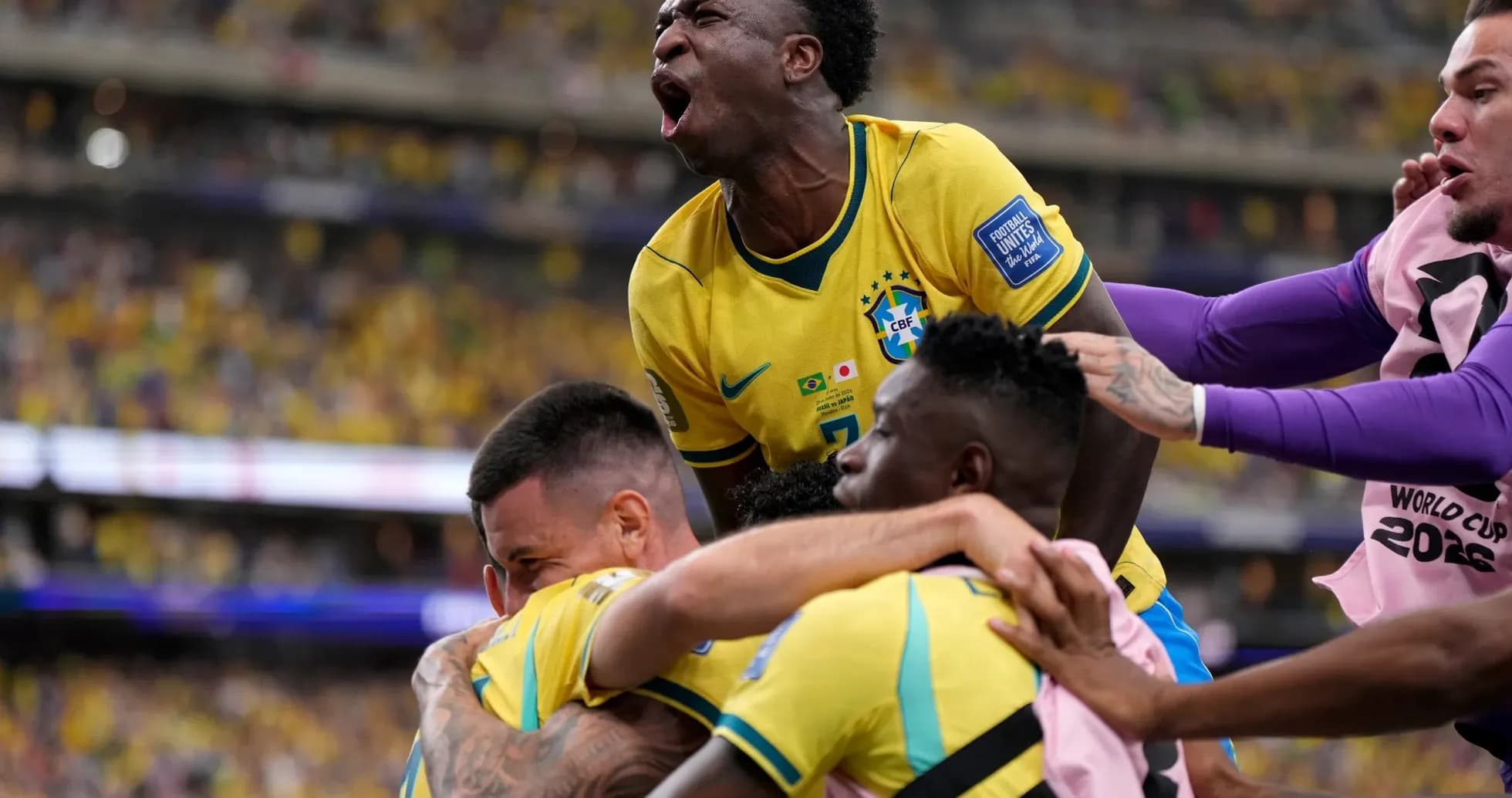
Carlo Ancelotti’s Brazil, by contrast, accepted long phases without the ball. With no recorded formation, the personnel suggest a flexible 4‑3‑3/4‑2‑3‑1: Alisson in goal; a back four of Danilo, Marquinhos, Gabriel Magalhães and Douglas Santos; Casemiro and Bruno Guimarães as the central platform; Rayan slightly higher; Gabriel Martinelli and Vinícius Júnior flanking Matheus Cunha. Their 34% possession and 329 passes (279 accurate, 85%) underline a plan built on directness, pressing triggers and rapid attacks once the ball was recovered.
That approach still produced 14 total shots to Norway’s 9, with Brazil taking 10 efforts inside the box and forcing 4 blocks. The early pattern was decisive: at 12', VAR confirmed a penalty for Brazil after Matheus Cunha’s involvement, only for Bruno Guimarães to fail to convert at 14' (logged as a “Missed Penalty”). Tactically, that miss had two effects: it emboldened Norway to maintain their high-possession approach without scoreboard pressure, and it pushed Brazil to lean even more on individual accelerations from Vinícius Júnior and overlaps from Douglas Santos rather than patient combinations.
Norway's Defensive Structure
Norway’s defensive structure was compact and narrow, designed to funnel Brazil wide and then protect the box. With only 1 blocked shot recorded, their back line generally met danger earlier, preventing many shooting lanes from becoming clear looks rather than relying on last-ditch blocks. Ørjan Nyland (Norway) made 4 saves and, combined with 0.76 goals prevented, underpinned a performance where the defensive unit accepted Brazil’s bursts but largely kept them to manageable situations.
Brazil's Substitutions
Brazil’s substitutions reveal Ancelotti’s attempt to re-balance energy and add penalty‑box presence. At 58', Endrick (IN) came on for Matheus Cunha (OUT), shifting the attacking reference point to a more pure finisher and freeing Neymar, who later entered, to roam as a second striker or advanced playmaker. At 68', Danilo Santos (IN) for Rayan (OUT) and Neymar (IN) for Gabriel Martinelli (OUT) tilted Brazil further towards creativity and risk, with Neymar expected to knit together transitions and exploit half‑spaces. At 79', Éderson (IN) replaced Bruno Guimarães (OUT), sacrificing some control in the first phase for more verticality and late runs.
Those changes helped Brazil maintain attacking threat – they still ended with more shots on goal (4 to Norway’s 5 is close, but Brazil had the volume and xG edge) – yet they also loosened the midfield screen. Casemiro increasingly had to cover large spaces alone against Norway’s rotations, especially once Oscar Bobb (IN) replaced Alexander Sørloth (OUT) at 46' and Andreas Schjelderup (IN) replaced Antonio Nusa (OUT) at the same minute. Those twin changes gave Norway fresher legs between the lines and a more fluid support structure around Haaland.
Final Minutes and Key Moments
The game’s key tactical swing came in the final 15 minutes. Norway’s third substitution at 63' — Fredrik Aursnes (IN) for Julian Ryerson (OUT) — effectively moved them towards a more control‑oriented, midfield‑heavy shape to manage transitions and secure second balls. With Brazil committing numbers forward, the space for direct attacks into Haaland widened. At 80', that plan paid off: Erling Haaland finished a “Normal Goal” assisted by Schjelderup, a classic pattern of Norway exploiting Brazil’s stretched rest‑defence and the weakened double pivot.
Even as Norway dropped slightly deeper after going 1-0 up, they remained composed on the ball. Brazil’s response was to push their full-backs higher and commit central runners, which eventually earned another penalty, converted by Neymar at 90+9' to level the match. That goal reflected Brazil’s enduring ability to generate high‑value chances despite having less of the ball.
However, the structural trade‑offs were severe. Neymar’s yellow card at 90+6' — explicitly for “Foul” — illustrated Brazil’s increasingly desperate counter‑pressing as they chased the game. And with the team emotionally and positionally open immediately after equalising, Norway struck again: at 90', Haaland scored his second “Normal Goal”, once more assisted by Schjelderup. The timing is crucial tactically: Norway did not retreat into a pure low block after conceding; instead, they kept a clear outlet pattern into Haaland, trusting their passing quality and Haaland’s movement against an exposed Brazilian back line.
Statistical Analysis
Defensively, Alisson (Brazil) made 3 saves and, with 0.76 goals prevented, still delivered a statistically solid performance; the damage came more from the quality of Norway’s final actions than from goalkeeping errors. Brazil’s back four had to defend large spaces, particularly once the midfield was reshaped by substitutions, and Haaland’s two goals were the logical endpoint of those structural stresses rather than isolated incidents.
In statistical terms, the match is a classic example of outcome versus process. Brazil’s 2.73 xG from 14 shots, many inside the box, suggests their attacking process was strong enough to win on most days. Norway’s 0.84 xG from 9 shots, with only 1 blocked, indicates a more selective, efficiency‑driven approach, maximising the presence of an elite finisher in Haaland. The possession and passing dominance (66% and 680 passes) gave Norway the platform to dictate tempo and limit Brazil’s transition volume, even if they conceded the better chances overall.
Ultimately, the tactical verdict is that Norway’s structural control and ruthless exploitation of Brazil’s late‑game imbalances outweighed Brazil’s superior chance quality. Ancelotti’s side built enough to progress but were punished for loosened rest‑defence and a missed early penalty, while Solbakken’s Norway showed how a high‑possession, Haaland‑centric plan can win knockout football even when the underlying xG tilts the other way.