Morocco Dominates Canada in World Cup Round of 16 Clash
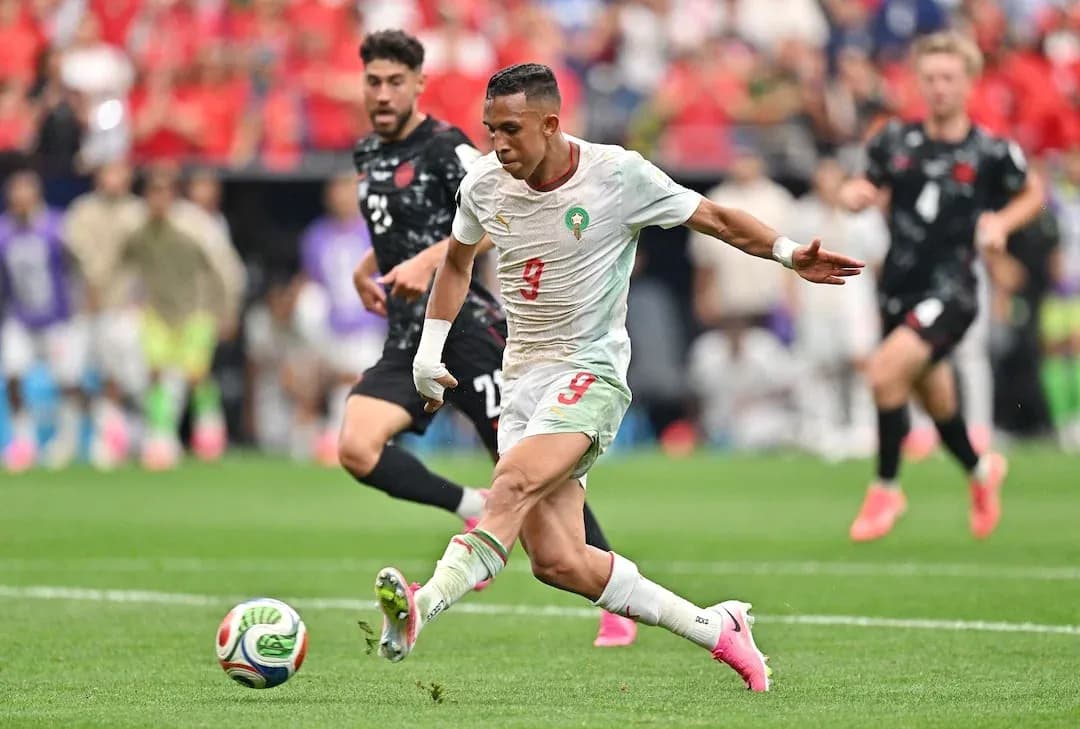
Under the closed roof of NRG Stadium, this Round of 16 tie pitched two contrasting World Cup stories against each other. Canada arrived as Group B’s adventurous second-place side, ranked 2nd in their pool with 4 points and a bold attacking profile. Morocco, also 2nd in Group C with 7 points, came in as a hardened tournament team: unbeaten, efficient, and increasingly ruthless in both boxes. Over 90 minutes, that contrast hardened into a brutal lesson, as Morocco’s 4-2-3-1 dismantled Canada’s 4-4-2 in a 3–0 win that felt as much about structure and maturity as it was about talent.
From the opening whistle, the shapes told the story. Jesse Marsch stayed loyal to Canada’s tournament identity: a 4-4-2 with M. Crepeau behind a back four of A. Johnston, M. Bombito, L. De Fougerolles and R. Laryea, a hard‑running midfield band of T. Buchanan, N. Sigur, S. Eustaquio and A. Ahmed, and a front two of J. David and T. Oluwaseyi. This was the same broad framework that had helped Canada score 9 goals in total this campaign, with 7 of those at home and an overall average of 1.8 goals per match. But it is also a system that had left them conceding 6 in total and failing to keep more than 2 clean sheets.
Morocco, by contrast, looked like a side that knew exactly what it was: a 4-2-3-1 that has started in all 5 of their matches, with Bono in goal, a back line of A. Hakimi, I. Diop, R. Halhal and N. Mazraoui, a double pivot of A. Bouaddi and N. El Aynaoui, and a fluid attacking trio of B. Diaz, A. Ounahi and B. El Khannouss behind lone forward I. Saibari. Heading into this game, Morocco had 11 goals in total at this World Cup, averaging 2.2 per match, while conceding only 4 in total at 0.8 per game. It is the profile of a side that can control risk while still landing decisive blows.
Canada’s seasonal DNA is high-variance. At home they have averaged 2.3 goals for and 1.3 against, powered by a 6–0 home win at their most explosive and a 0–3 home defeat at their most vulnerable. Their 4-4-2 is built to stretch the pitch: Buchanan wide, Ahmed tucking inside, Eustaquio as the metronome, and David as the reference point. David’s 3 goals in total this tournament, from 12 shots with 8 on target, have made him Canada’s primary hunter. He also brings defensive work, with 4 tackles and 3 interceptions, and even 1 blocked shot. But against Morocco’s compact mid-block, he often found himself isolated, forced to drop into zones where Bouaddi and El Aynaoui could smother him.
Morocco’s defensive shield is anchored by Diop. Across the tournament he has blocked 4 shots and made 5 interceptions, while completing 288 passes at 88% accuracy. His reading of the game and timing in the air gave Morocco a built‑in answer to Canada’s direct balls toward David and Oluwaseyi. When Canada tried to push Laryea and Buchanan high to overload the flanks, Hakimi and Mazraoui simply turned those spaces into launchpads for transition.
The absence of I. Koné, ruled out with a fracture of the lower leg, subtly reshaped Canada’s midfield. Without his vertical carries and late surges, the responsibility for linking play fell heavily on Eustaquio and Ahmed. Sigur’s inclusion alongside them added energy but not the same ball-carrying threat between the lines. That lack of a true conduit became more glaring as Morocco’s structure tightened.
Discipline was always going to be a fault line. Canada entered this tie with a clear yellow-card pattern: 27.27% of their cautions had come between 31–45 minutes and another 27.27% between 46–60, with an additional 18.18% in both the opening and 61–75-minute windows. It paints the picture of a team that rides the edge of control either side of half-time. L. De Fougerolles and C. Larin embody that edge: both have collected 2 yellow cards in total, and both appear among the leading disciplinary figures of the tournament. De Fougerolles’ aggression has also been an asset—8 tackles, 2 interceptions, and 30 duels won out of 55—but in a knockout match against Morocco’s elusive technicians, that same front‑foot instinct risked being turned against him.
Morocco’s card profile is different: all of their yellows in this competition have been concentrated between 16–60 minutes, split evenly at 33.33% in each of the 16–30, 31–45 and 46–60 windows. They foul when they need to disrupt rhythm, then settle into control. Hakimi, with 1 yellow card in total, personifies that balance: 11 tackles, 1 blocked shot, 5 interceptions, and 72 duels contested with 35 won. He can both shut down a flank and launch attacks, having already contributed 1 goal and 2 assists in total with 15 key passes.
In attack, the “Hunter vs Shield” duel was always going to be David versus Morocco’s central block, but the broader attacking edge belonged to Morocco. Saibari, with 3 goals in total from 6 shots, is a penalty-box predator who also does the dirty work: 36 duels contested, 3 tackles, and a willingness to press from the front. Behind him, Diaz has been one of the tournament’s premier creators, with 4 assists in total, 8 key passes, and 11 successful dribbles. His ability to drift between lines and combine with El Khannouss and Ounahi gave Morocco a three‑dimensional threat Canada struggled to track.
Canada’s own creative spark has often come from deeper in the squad. N. Saliba, despite starting this match on the bench, arrived in the tournament with 1 goal and 2 assists in total from just 182 minutes, plus 6 tackles and 4 interceptions. His profile—press-resistant, progressive, and defensively diligent—felt tailor‑made for a contest where Canada needed someone to break Morocco’s first line and feed David between the centre‑backs. The timing and extent of his involvement were always going to be a key tactical lever for Marsch.
In the end, the statistical prognosis that hung over this tie was clear. Canada came in scoring freely but conceding 1.2 goals on average overall, with a taste for chaos and a disciplinary record that spikes at emotionally volatile phases of the game. Morocco arrived with 4 wins and 1 draw in total, 11 goals scored at 2.2 per match, and only 4 conceded at 0.8, underpinned by a structure that has already produced 2 clean sheets. Add in Morocco’s penalty profile—5 taken in total, with 3 scored and 2 missed, a 60.00% conversion that warns of both danger and fallibility—and you get a picture of a side that consistently reaches high‑value zones, even if not always clinical from the spot.
On this night, the numbers and the narratives converged. Morocco’s 4-2-3-1 suffocated Canada’s wide 4-4-2, their creators outmanoeuvred Canada’s carriers, and their defenders won the duels that mattered. For Canada, this campaign will still be remembered for its attacking ambition and the emergence of figures like David, De Fougerolles and Saliba. For Morocco, this was confirmation: a team with an elite right flank, a disciplined spine, and the tactical maturity to turn group‑stage promise into knockout authority.