Nigeria prepares for WAFCON 2023 in Morocco without Plumptre
Nigeria will go to Morocco with something they almost never leave home without: expectation. A record 10 Women’s Africa Cup of Nations titles, a World Cup ever-present tag, and now a squad that reads like a roll call of modern Super Falcons royalty.
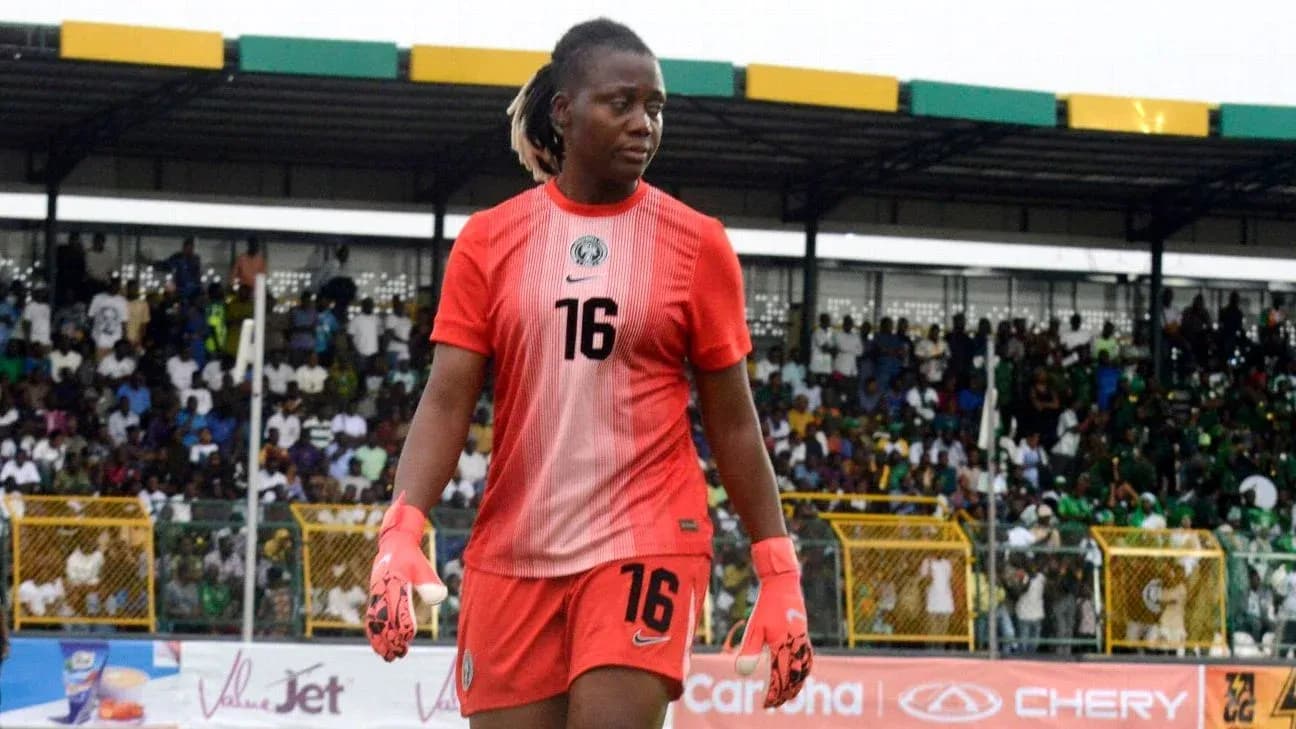
Justine Madugu has resisted the temptation to tinker. He has kept the spine that conquered Africa last year and silenced the hosts in that breathless 3-2 final against Morocco. Rasheedat Ajibade wears the armband again. Chiamaka Nnadozie, as commanding as any goalkeeper on the continent, anchors the back. Asisat Oshoala, the standard-bearer of Nigerian attacking excellence, returns to lead from the front.
The mission, though, is doubled this time.
Two trophies, one route
The next WAFCON is not just about a crown; it is a gate to the world stage. The expanded 16‑team tournament in Morocco doubles as the qualifying path to the 2027 FIFA Women’s World Cup in Brazil. Reach the semifinals and Nigeria’s streak – every World Cup since 1991 – stays alive automatically. Miss out, and the record that has defined them for three decades comes under threat.
Madugu has been clear about the order of business. First, secure that World Cup ticket. Then, think about polishing the trophy again.
He knows what comes with being the hunted.
Nigeria are the most successful women’s national team in Africa, yet no one has ever defended the title in this new 16‑team era. To do it, they must carry the weight of history and the target on their backs, all while navigating a tournament that is deeper and more unforgiving than before.
Plumptre missing, but experience everywhere
One big name will not be there when the anthem plays in Rabat. Ashleigh Plumptre, a pillar in defence and a fan favourite, has lost her race against time after the injury she suffered in March. She confirmed on social media that her body “is asking for more time” and that she is listening to it.
Her absence strips Nigeria of a calm, left‑sided defender with big‑game experience. It also forces Madugu to trust the depth he has chosen.
Even without Plumptre, this is no makeshift group. It is a squad stacked with veterans who have lived the pressure and a young core that has begun to demand more responsibility.
Ajibade returns not just as captain but as emotional barometer, while Nnadozie, now widely regarded as Africa’s standout goalkeeper, brings authority and presence. Around them, Osinachi Ohale, Michelle Alozie, Christy Ucheibe, Halimatu Ayinde and Oshoala form a hardened core that has been through World Cups, continental finals and everything in between.
Behind that layer of experience, a new generation is pushing through. Jennifer Echegini and Deborah Abiodun in midfield, and forwards Gift Monday, Esther Okoronkwo and Omorinsola Babajide, are no longer just “promising”. They are expected to carry real minutes and real responsibility in Morocco.
One home-based hope, a global cast
The squad again underlines how global the Super Falcons have become. Twenty‑four of the 25 players are based abroad, spread across Europe, North America, Asia and the Middle East. The lone home-based player is Abia Angels goalkeeper Fatima Oloko, a rare domestic inclusion in a team that increasingly draws from foreign leagues for its edge and sharpness.
At the back, Ohale (Pachuca Tuzas), Alozie (Chicago Stars), Shukurat Oladipo (AS Roma), Rofiat Imuran (London City Lionesses), Glory Ogbonna (FC Kiryat Gat), Oluwatosin Demehin (Galatasaray Sportive), Sikiratu Isah (Bnot Netanya) and Ucheibe (SL Benfica) give Madugu a blend of aerial strength, pace and versatility across the line.
In midfield, Ajibade and Echegini – both listed with Paris Saint Germain – join Ayinde (BK Hacken), Abiodun (Washington Spirit) and Toni Payne (Everton Ladies) to form a unit that can both scrap and create, switching quickly from containment to incision.
Up front, Oshoala remains the headline act, flanked by the likes of Monday, Okoronkwo and Babajide, who bring direct running and goals to a side that has rarely lacked attacking intent.
Group C and the road ahead
Nigeria have been drawn into Group C alongside Egypt, Zambia and debutants Malawi, with all three matches set for Rabat. On paper, it is a group the champions will expect to control. Zambia arrive with growing confidence and Olympic experience, Egypt with technical flair, Malawi with the unpredictability of a first‑time participant.
For Nigeria, there is no hiding place. Anything less than the semifinals would be a failure against their own standards and would leave their World Cup record hanging by a thread, forcing a detour through the intercontinental playoff route reserved for the fifth‑placed team.
The expanded format raises the stakes. Four semifinalists book automatic tickets to Brazil 2027. The margin for error tightens, the room for complacency vanishes.
Madugu has chosen continuity over revolution. He trusts the core that delivered title number 10, reinforced by a new wave ready to step into the spotlight. The Super Falcons arrive in Morocco holding, as he put it, “something precious that everybody wants”.
The question now is simple and brutal: can Africa’s most decorated side keep it, and at the same time protect a World Cup streak that has defined generations of Nigerian women’s football?