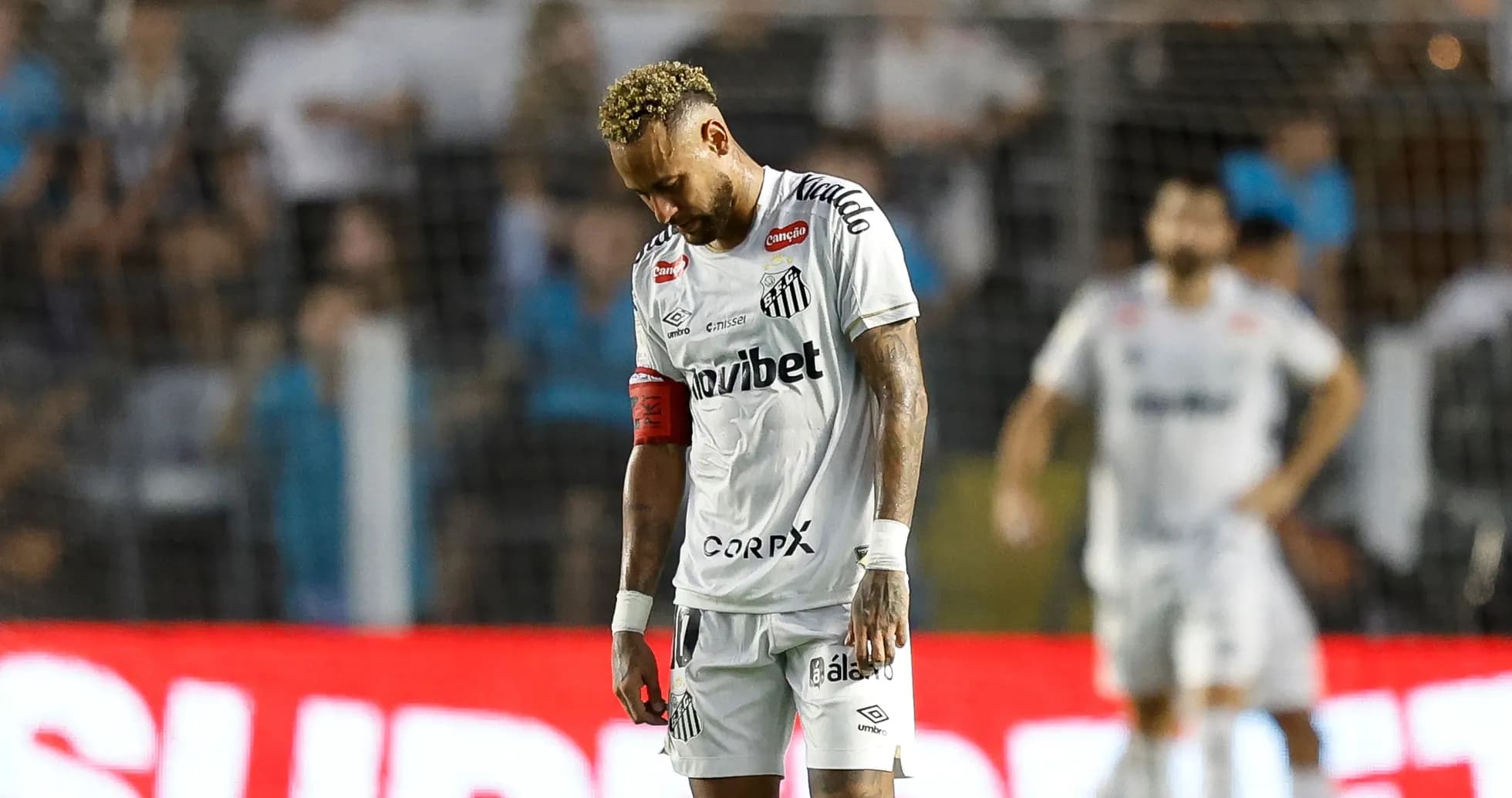
Neymar's Future with Brazil: Ancelotti's Tough Decision Ahead of World Cup
The debate over Neymar’s place in the Brazil national team has moved into a harsher, more unforgiving phase. It is no longer about reputation, legacy, or highlight reels. It is about whether his body can still keep pace with a game that refuses to slow down for anyone.
And one of Brazil’s own World Cup winners has publicly cast doubt on that.
Rai’s Stark Verdict
Speaking on French programme Rothen S'enflamme, 1994 World Cup champion Rai cut through the nostalgia. He recognised Neymar’s brilliance, but he did not hide from the reality of the present.
“If he comes, he'll have an impact on the team,” Rai said, before turning to the issue that now defines every conversation around the 34-year-old. Carlo Ancelotti, he pointed out, is “gauging the players to see what they think,” and will decide whether Neymar is a “positive influence on the team.”
Then came the blunt assessment: Neymar is “not at his best,” has had “a lot of physical problems,” and “can't get back to his top form.” The key line for a player who once shredded defences with a feint and a burst? “He's lost speed.” The vision remains, the passing remains, the star aura remains. But Rai’s conclusion was unforgiving: “Right now he's not at the level he needs to be.”
For a decade, Neymar has been the face of the Selecao. Now, he is the subject of its most uncomfortable question.
From Al-Hilal to the Treatment Room
The last few years of Neymar’s career read less like the story of a superstar and more like a medical file.
His move to Al-Hilal in 2023 was billed as a new chapter, a marquee arrival in the Saudi Pro League. It never became that. In October 2023, during a World Cup qualifier against Uruguay, he suffered a devastating knee injury. That night remains his last appearance for Brazil.
The injury did more than halt a season; it stalled a career already punctured by recurring physical setbacks. By the time he returned to Santos in January 2025, it felt less like a triumphant homecoming and more like a search for shelter.
Back at his boyhood club, the numbers are respectable on paper: four goals and four assists in nine appearances across league and continental competitions. They show that his talent still cuts through games. They do not show the careful management, the missed matches, or the constant calculation over risk and reward.
A Body Managed, Not Unleashed
Santos have treated Neymar not as a guaranteed starter but as a fragile asset. He has already sat out several domestic fixtures as a precaution. Recently, he underwent a regenerative surgical procedure using platelet-rich plasma, a treatment aimed at strengthening his joints and accelerating his path back towards something resembling peak condition.
This is not the profile of a player rolling into a World Cup cycle at full throttle. It is the profile of a player being protected, patched up, and rationed.
That tension is laid bare in the immediate schedule. Head coach Cuca has confirmed Neymar will not feature in Santos’ next Serie A match against Bahia. The hope is that rest now will allow him to be ready for a crucial Copa Sudamericana tie away to San Lorenzo in Argentina. Every minute he plays is weighed against the risk of another setback.
For a club, that is sensible management. For a national team preparing for a World Cup, it is a red flag.
Ancelotti’s New Brazil, and a Ruthless Standard
Into this landscape walks Carlo Ancelotti, charged with leading Brazil into the 2026 World Cup in North America. His message has been clear: only players in peak physical condition will make the cut.
That principle places Neymar in a brutally uncertain position. He is Brazil’s all-time leading goalscorer, the iconic No.10, the man many expected to carry the shirt from the age of 21 to the end of his career. Now, his place is not just under review; it is genuinely at risk.
Ancelotti is set to announce his final World Cup roster on May 18. Between now and then, every training session, every sprint, every appearance for Santos will be monitored. The staff will not just be asking whether Neymar can still unlock a defence. They will be asking whether he can survive the intensity of a month-long tournament played at maximum speed.
The dilemma is cruel but simple: can Brazil afford a diminished version of their talisman?
One Last Dance, or the End of an Era?
Rai’s comments cut to the heart of that dilemma. Neymar’s vision, touch, and passing remain elite. He can still play the killer ball, still see angles others do not. But modern international football is built on pressing, transitions, and repeated high-intensity sprints. If his explosive acceleration has gone, he is no longer the same weapon.
For the Selecao, the choice is strategic as much as emotional. Do they take a legend who might only be available in bursts, or do they build fully around a new generation and leave a giant of Brazilian football at home?
The calendar offers no mercy. May 18 is closing in. Neymar continues to chase rhythm and resilience with Santos, his minutes carefully managed, his every appearance a test he must pass.
The football world waits to see whether Ancelotti will hand him one final World Cup stage—or draw a line under one of the most mercurial, maddening, and brilliant careers Brazil has ever produced.