Netherlands vs Japan: Tactical Insights from World Cup Opener
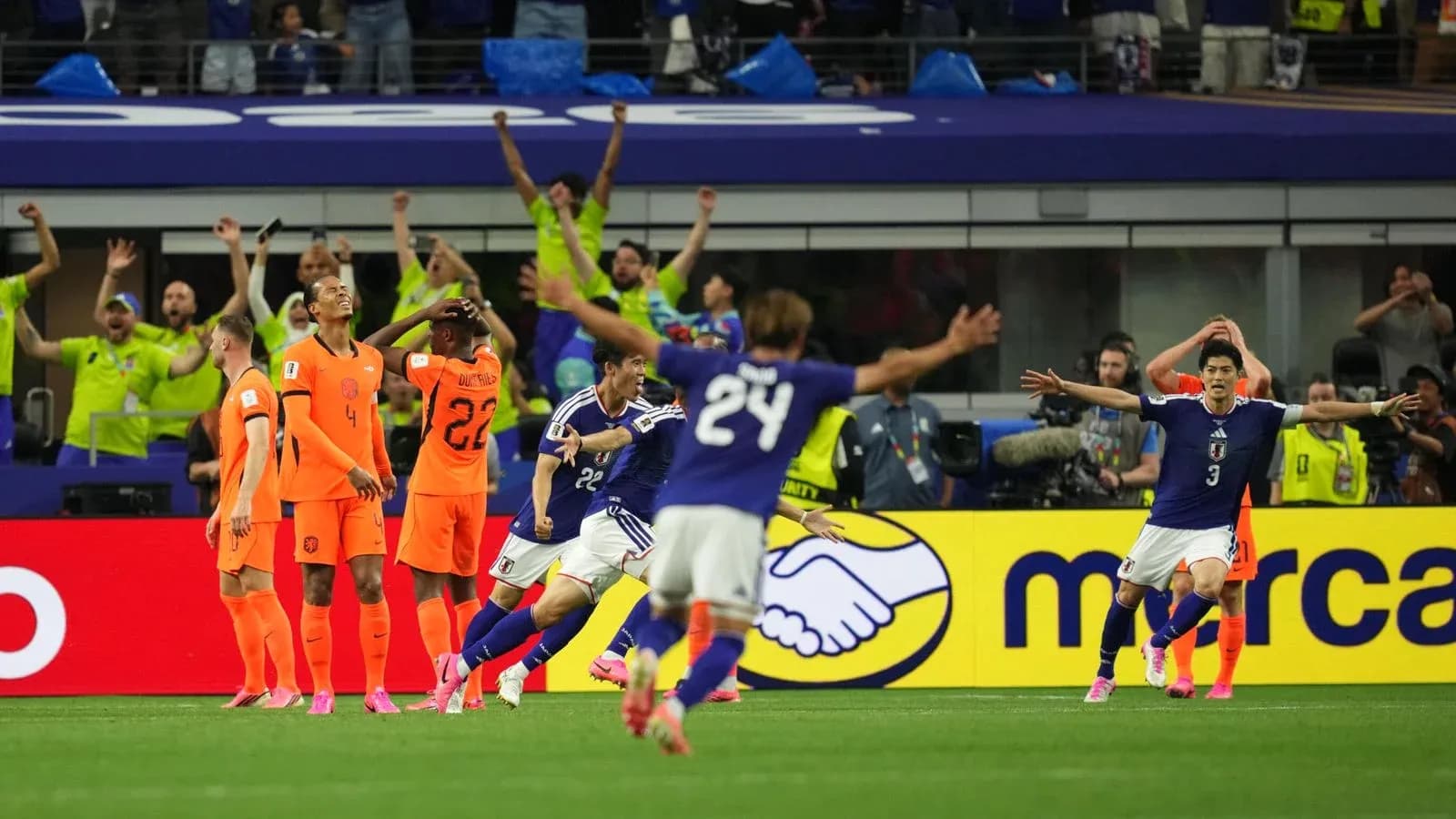
The AT&T Stadium in Arlington hosted a World Cup opener that felt more like a knockout rehearsal than a tentative first step. Netherlands and Japan traded punches for 90 minutes, finishing 2-2, and yet the real story lies in how these sides revealed their tactical DNA for the rest of Group F.
I. The Big Picture – Two Identities, One Stalemate
Following this result, both teams sit on 1 point in the group, with a goal difference of 0 after scoring 2 and conceding 2 in total. Netherlands appear twice in the standings snapshot, but in Group F they are listed 3rd, while Japan are 2nd. The numbers are identical: in total 1 match played, 0 wins, 1 draw, 0 defeats, 2 goals for and 2 against.
For Netherlands, this was a pure home-stage performance in statistical terms: all 2 goals for and 2 goals against have come at home, with an average of 2.0 scored and 2.0 conceded at home and in total. Japan’s story is the mirror image on their travels: all 2 goals for and 2 goals against have come away, with an away and total average of 2.0 scored and 2.0 conceded.
Ronald Koeman’s 4-3-3 was orthodox on paper but fluid on the pitch. B. Verbruggen sat behind a back four of D. Dumfries, J. P. van Hecke, V. van Dijk and M. van de Ven, with a midfield triangle of R. Gravenberch, F. de Jong and T. Reijnders tasked with controlling rhythm and progression. Up front, C. Summerville and C. Gakpo flanked D. Malen in a classic Dutch front three.
Hajime Moriyasu responded with a 3-4-2-1 that leaned into Japan’s traditional strengths: mobility between the lines and quick combinations. Z. Suzuki was shielded by T. Watanabe, S. Taniguchi and H. Ito, while a midfield band of four – R. Doan, K. Sano, D. Kamada and K. Nakamura – rotated constantly around the half-spaces. Ahead of them, T. Kubo and D. Maeda supported central striker A. Ueda.
II. Tactical Voids and Discipline – Where the Edges Frayed
There were no officially listed absentees, so both coaches had access to deep benches. That depth mattered more to Netherlands, whose attacking options included M. Depay, W. Weghorst, B. Brobbey, J. Kluivert and N. Lang. Japan’s substitutes offered a different kind of variety: defensive reinforcements like T. Tomiyasu and K. Itakura, plus forwards such as K. Goto, J. Ito and K. Ogawa.
The disciplinary ledger, however, tilts the narrative. Heading into this game, Netherlands had already shown a tendency to collect cards late: 3 yellow cards in total, split evenly across 61-75, 76-90 and 91-105 minutes, each band accounting for 33.33% of their yellows. This match confirmed the pattern in personnel terms. C. Summerville, already emerging as an attacking leader, also sits near the top of the yellow-card charts with 1 caution in his 70 minutes, while M. Depay has 1 yellow in just 20 minutes of action. It underlines a risk: Koeman’s key forwards play on the emotional edge.
Japan, by contrast, remain spotless in the card data. No yellow or red cards are recorded across any time band. That discipline is a tactical asset in tournament play, especially for a team that presses and counter-presses aggressively.
III. Key Matchups – Hunter vs Shield, Engine Room vs Enforcer
The “Hunter vs Shield” duel is embodied by C. Summerville against Japan’s back three. Summerville’s World Cup so far is compact but explosive: in total 1 appearance, 1 goal, 1 shot (on target), 29 passes at 86% accuracy, and 7 duels with 5 won. He drew 3 fouls and committed 1, picking up that single yellow card. His directness from the right, drifting inside onto his left foot, stretched Japan’s line and forced S. Taniguchi and H. Ito into constant adjustments.
Japan’s defensive “shield” is less about one player and more about structure. The 3-4-2-1 compresses central spaces, asking the wide midfielders – particularly R. Doan and K. Nakamura – to double as auxiliary wing-backs. Their ability to track Dutch full-backs like Dumfries while also stepping into midfield channels was crucial in preventing Netherlands from simply overwhelming them with width.
In the “Engine Room” battle, R. Gravenberch and F. de Jong faced D. Kamada and K. Sano. Gravenberch has quietly become one of the tournament’s early creative hubs: 2 assists in total, 25 passes at 88% accuracy, 2 key passes and 3 dribble attempts with 2 successes. He is not just a passer but a carrier, breaking lines and drawing midfielders out of position. De Jong, even without detailed stat lines here, is the metronome that allows Gravenberch to take those risks.
Japan’s answer lies in Kamada’s intelligence between the lines and Sano’s work rate. Their job is twofold: deny De Jong easy outlets and spring forward when Kubo or Maeda receive on the turn. That connection is already visible in the assist data: T. Kubo has 1 assist and 16 passes at 75% accuracy, while K. Ogawa, coming off the bench, produced 1 assist from just 15 minutes and 1 key pass. Moriyasu has a late-game creator who can alter the tempo against tiring legs.
IV. Statistical Prognosis – A High-Wire Group F
With both teams averaging 2.0 goals scored and 2.0 conceded in total, the profile is of open, high-variance football rather than cagey pragmatism. Neither side has kept a clean sheet; neither has failed to score. Penalties have not yet entered the equation – both have 0 penalties taken, 0 scored and 0 missed – so the Expected Goals picture is likely driven by open play and transitional moments rather than set-piece volume.
Defensively, Netherlands’ late-card pattern hints at physical and mental fatigue in the final third of matches, precisely when knockout-level opponents will push hardest. Japan’s clean disciplinary record and well-drilled 3-4-2-1 give them a platform to exploit that window, especially with fresh legs like K. Ogawa or J. Ito off the bench.
Following this result, the tactical balance of Group F suggests that future Netherlands games will be shaped by whether Gravenberch and Summerville can keep outscoring the vulnerabilities of a back line that concedes 2.0 goals at home. For Japan, the question is whether their disciplined structure and flexible front line can turn these entertaining draws into the narrow wins that decide a World Cup campaign.