Controversial Handball Decision Sparks Champions League Classic
The handball that lit the fuse on a Champions League classic came in a blur. A fierce Ousmane Dembélé cross, a ricochet off Alphonso Davies’ hip, then the ball sprang up onto the defender’s arm inside the Bayern Munich box. No time to react, no obvious intent. But in this era of forensic officiating, that was only the start of the story.
Referee Sandro Schärer initially let play go. Then came the now-familiar pause. VAR official Carlos del Cerro Grande called him to the monitor, the stadium holding its breath as slow-motion replays dissected every frame. Moments later, Schärer pointed to the spot.
The decision split the football world in seconds.
‘Definitely a punishable handball’
Lutz Wagner, one of Germany’s leading refereeing experts, backed the call without hesitation. For him, the pictures were clear.
The left arm, Wagner argued, had extended away from Davies’ body and “increased the defensive surface area.” The arm came out, widened the blocking zone, and that, in his view, made it “definitely a punishable handball.” Based on the available images, he insisted, the referee had reached the correct decision.
On the pitch and in the Bayern camp, the mood was very different.
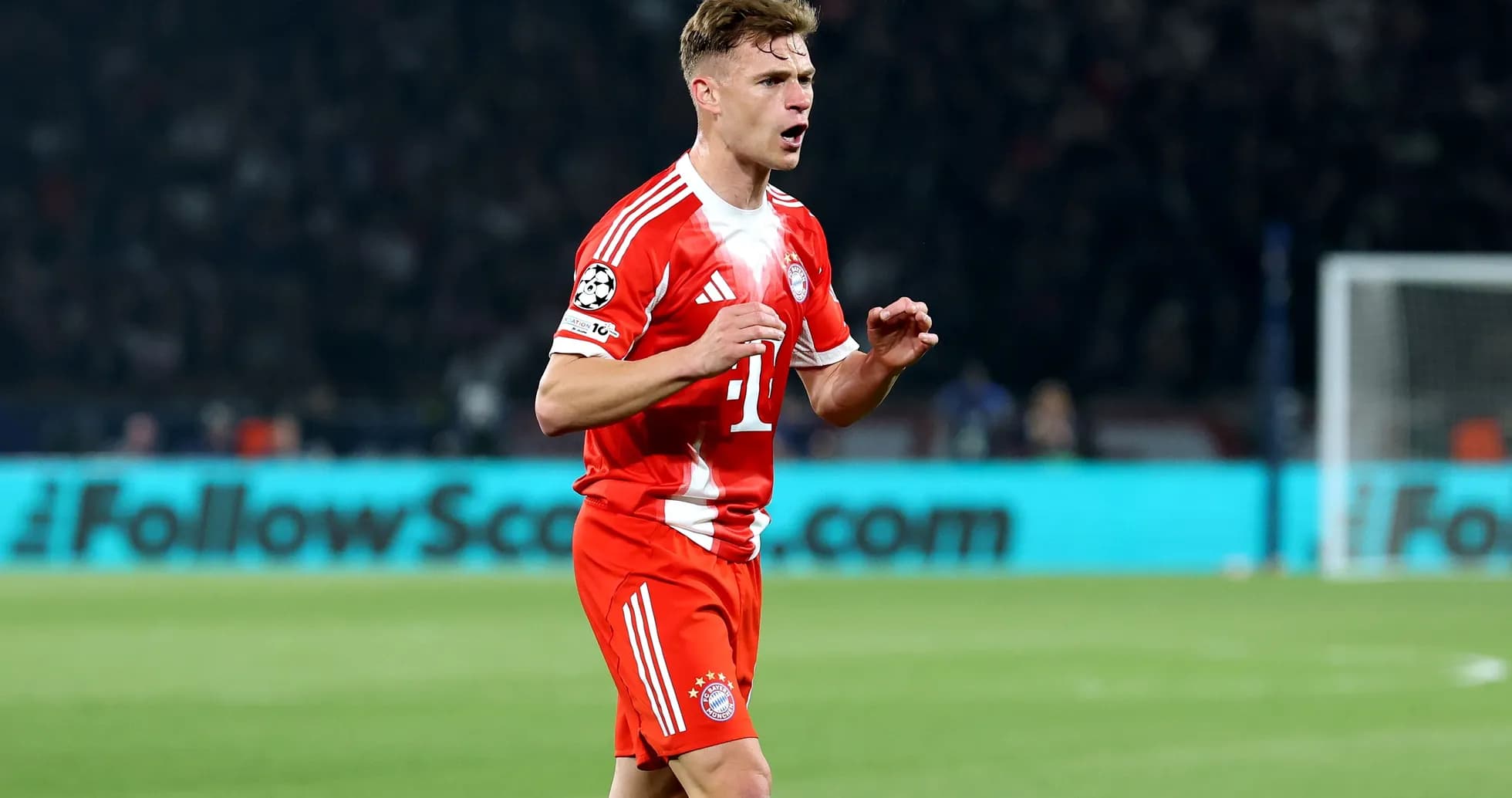
Joshua Kimmich, who had already been dragged through an emotional 90 minutes, could barely hide his irritation. “That’s really frustrating, because there’s no opponent behind him who could have scored,” he said, zeroing in on the core of his complaint: there was no clear goalscoring chance being denied. For the 31-year-old, the current interpretation of the law has gone too far.
He floated an idea that many players have quietly shared for years. Not every handball in the area, he argued, should automatically mean a penalty. Accidental, deflected incidents like this one might be better served with a lesser punishment, something short of the game’s most severe sanction.
Bayern rage, but the whistle has blown
On the touchline, Vincent Kompany chose his words carefully but made his stance obvious. The Bayern manager labelled the incident “highly debatable,” a diplomatic phrasing that barely concealed his frustration.
Sporting director Max Eberl went a little further in the mixed zone. “There’s plenty to discuss,” he said. The sequence bothered him: ball to body, then body to hand. “The ball hits the body first, then the hand, so perhaps it shouldn’t have been given.” Then came the resigned shrug of a man who knows how these nights go. “But what’s the point of getting worked up now? Unfortunately, he blew the whistle.”
The sense of injustice did not stop at Bayern’s own staff.
Two former internationals and now Prime experts, Christoph Kramer and Mats Hummels, lined up against the decision as well. Kramer’s gripe was with the technology as much as the law. “It’s that super slow-motion again; that’s the worst thing in football, it makes everything look much worse,” he complained, echoing a growing belief that frame-by-frame analysis distorts the reality of split-second actions.
Hummels homed in on the optics. “After the shot, the hand flails away, which makes it look worse,” he said. The crucial detail for him was the deflection. “The ball bounces off the hip; I always thought that shouldn’t be a penalty.”
The debate will run and run. On the night, the call stood. And around it, a wild semi-final unfolded.
A semi-final off the scale
By half-time, Paris Saint-Germain and Bayern Munich had already carved their names into Champions League history. A 3–2 scoreline at the break made it the highest-scoring first half ever seen in a semi-final. Defences creaked, attacks ran riot, and the second half refused to slow down.
The pressure from Paris told again just before the hour. In the 56th minute, Khvicha Kvaratskhelia struck to stretch the lead to 4–2. Two minutes later, Dembélé added another, the Parisians surging into a 5–2 advantage that felt, for a moment, like a knockout blow.
On the pitch, Bayern’s players looked stunned.
“You all saw what happened after the 5–2,” Kimmich admitted later. “You’re standing on the pitch thinking, what on earth is going on? We weren’t three goals worse than them.” His words captured the surreal nature of the contest: a game Bayern were still very much in, yet suddenly chasing from miles behind on the scoreboard.
The captain spoke of the tightrope his team had to walk. “It was important to stay relatively calm,” he said. The dilemma was brutal and simple. “Do you throw caution to the wind to get back into it, or do you try to avoid the worst-case scenario?”
Bayern chose to fight.
Bayern drag the tie back from the brink
The comeback started with brute force. In the 65th minute, Dayot Upamecano rose and powered home a header to make it 5–3. It was more than just a goal; it was a lifeline, a reminder to PSG that this tie would not be decided in one manic burst.
Suddenly, the noise shifted. Paris, so fluid and ruthless for an hour, began to feel the weight of the occasion. Bayern sensed it.
Then came Luis Díaz, outstanding all night, dragging his side even closer. His strike cut the deficit to 5–4 and turned what had looked like a Paris procession into a contest teetering on a knife-edge. The score stayed that way until the final whistle, a chaotic, breathless 90 minutes sealed with a one-goal margin that barely hinted at the chaos that had gone before.
“We always knew it would be a back-and-forth contest, but not quite this open,” Kimmich reflected. The oddity of the result gnawed at him. “It feels odd to be losing by only one goal. We were three down, fought back, and still needed to equalise. Paris were clearly tiring at the end.”
That last observation will not have gone unnoticed in the Bayern dressing room.
All eyes on Munich
Now the tie heads to the Allianz Arena on 6 May, with Bayern trailing by a single goal but carrying a surge of late momentum and a sense that Paris can be pushed to the limit.
Win by two, and they are in the final in Budapest at the end of May. Waiting there would be either Arsenal or Atlético Madrid, who open their own semi-final on Wednesday. Lose the argument over handball, win the war over 180 minutes: that is the equation Bayern must solve.
The laws of the game may remain under the microscope. The decision on Davies will be replayed and re-argued for days. But when the whistle blows in Munich, none of that will matter.
What will count is whether this furious, flawed, unforgettable first leg has given Bayern the anger and belief to finish the job.