Morocco Holds Brazil to a Draw with Tactical Mastery
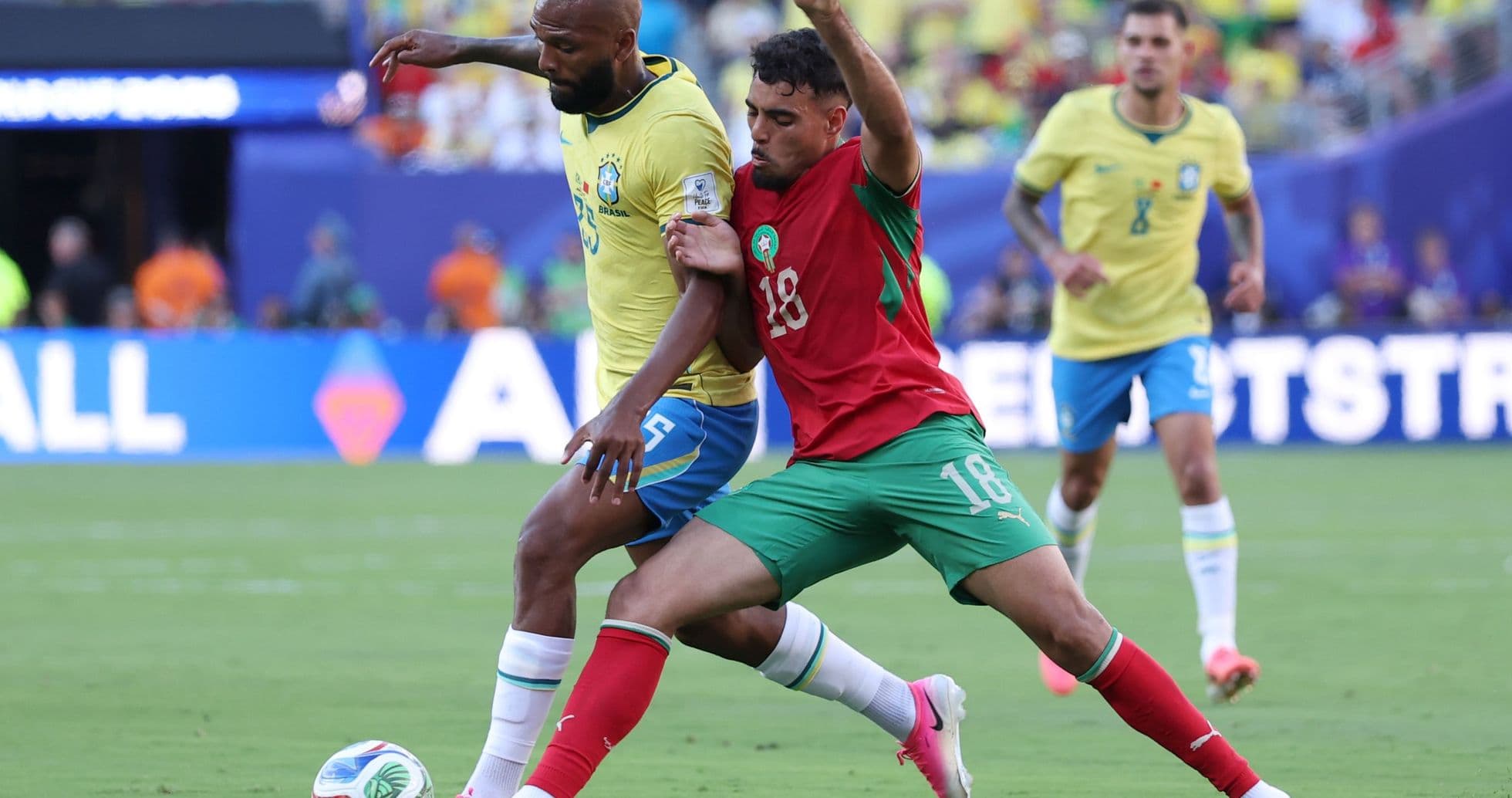
From the start, Morocco's intense approach was no accident. It was a well-planned trap, and Brazil fell right into it during their clash, which ended in a 1-1 draw. This match contrasted Brazil’s top-tier individual talent but shaky team cohesion against Morocco’s disciplined collective effort.
Team Lineups and Formations
Brazil set up in a 4-2-3-1 formation with Allison guarding the goal. The defense featured Ibanez, Marquinhos, Gabriel, and Santos. Casemiro and Guimaraes held midfield duties behind the attacking line of Paqueta, Raphinha, Vinicius, and forward Thiago.
Morocco mirrored the 4-2-3-1 setup, with Bono as goalkeeper and Mazraoui, Riad, Diop, Hakimi forming the back four. Aynaoui, Bouaddi, and Ounahi took midfield roles, supporting the attack led by El Khannous, Saibari, and Diaz.
Early Pressure From Morocco
Despite being the underdogs on paper, Morocco surprised everyone by dominating the first 30 minutes. Their quick transitions and tight mid-block defense unsettled Brazil, helping them score the opening goal. Midfielder Bouaddi shone with energetic control both offensively and defensively.
Morocco’s defensive tactic focused on a compact 4-4-2 block that maintained close lines between defense and midfield. Instead of pushing high to press, they guarded central zones, cutting off passes and forcing Brazil to play wide. This tactic paid off when Morocco intercepted a wide move, quickly passing through Diaz to Saibari, who scored.
Brazil’s Struggles in Control and Defense
Brazil had trouble moving the ball forward despite maintaining possession. Their build-up often stalled due to poor spacing between midfielders and attackers. Using a 3-2 shape in buildup, the back three included Santos, Gabriel, and Marquinhos, while Ibanez pushed higher. Yet, the large gaps between players hindered smooth progression.
Casemiro and Guimaraes tried to anchor midfield but failed to connect effectively, leading to frequent turnovers. Brazil’s defensive shape was also fragile, repeatedly broken by Morocco’s fluid movement. Casemiro’s physical decline became obvious before his replacement by Fabinho early in the second half. Morocco targeted Brazil’s midfield and fullback areas through tactical substitutions.
Vinicius’s Flair Masks Team Issues
Brazil lacked a key creative link in the final third to keep attacks flowing. Many moves collapsed without a player capable of combining under pressure and connecting midfield to attack. Thiago, as a target man, didn’t fill this role well; his style waits for service rather than orchestrating plays.
Cunha fits the profile of a connector and surprise came that he didn’t start. He seems more suited for balancing Brazil’s offense, while Thiago might be better off entering later when Brazil needs to press hard.
Final Thoughts
Despite their skill, Brazil showed familiar weaknesses: imprecise buildup against organized defenses and shaky structure after losing possession. These flaws could cause problems against tougher opponents.
Morocco proved once more why their tactical discipline and transition speed earn respect worldwide. They matched one of football’s most talented sides through smart organization and game planning, not luck.