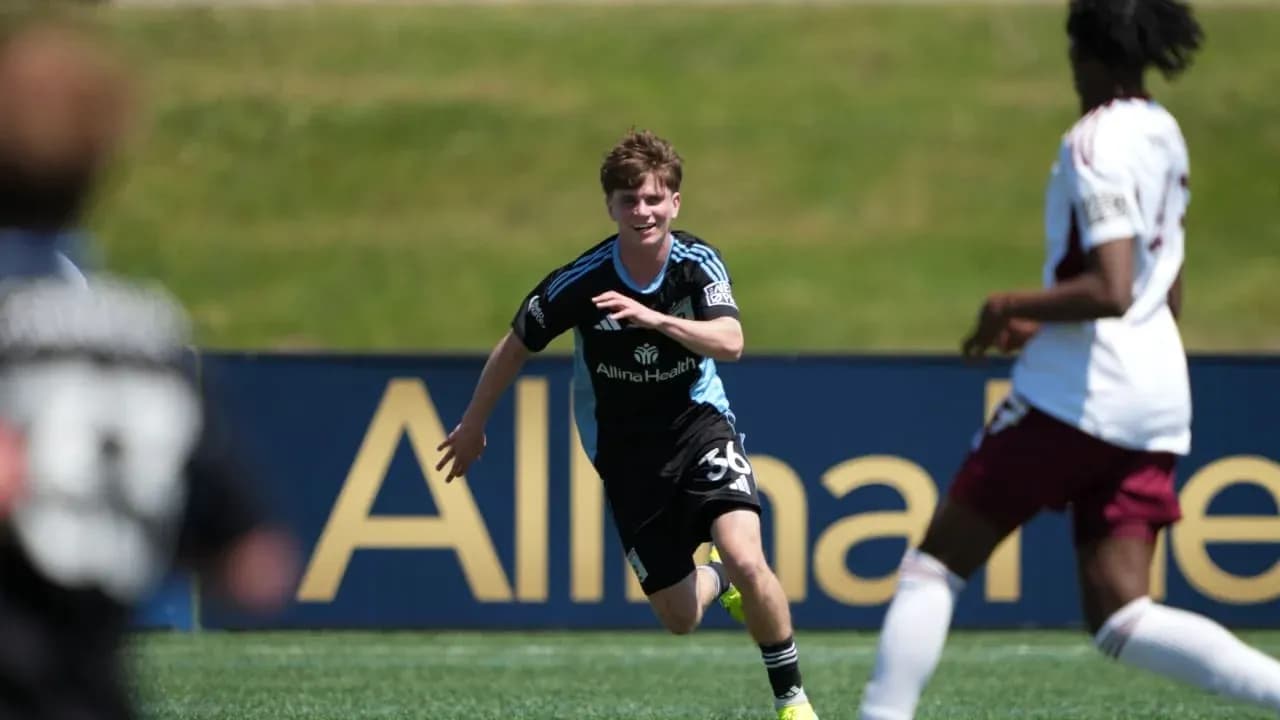
Minnesota United II Secures 2–0 Victory Over Colorado Rapids II
Under the lights at Allianz Field, this MLS Next Pro group-stage meeting felt less like a routine fixture and more like a referendum on two very different projects. Minnesota United II arrived as a streaky but dangerous playoff-chaser, sitting 8th in the Eastern Conference with 18 points from 12 matches and a goal difference of -1 overall (14 goals for, 15 against). Colorado Rapids II, by contrast, came in as a side drowning in its own numbers: 14th in the Eastern Conference, 3 points, 12 defeats from 12, and a brutal overall goal difference of -21 (10 scored, 31 conceded).
Following this result, the 2–0 home win underlined the statistical story that had been building for weeks. At home this campaign, Minnesota had been cautious but efficient, scoring 5 and conceding 4 across 5 matches, with an average of 1.0 goals for and 0.8 against. Colorado’s away record was the mirror image in the worst way: 4 goals scored and 14 conceded in 6 matches, averaging just 0.7 for and 2.3 against on their travels. The fixture always looked like a clash between a side learning how to manage tight margins and one still searching for a defensive identity.
Minnesota’s seasonal DNA is clear: a team that lives on fine lines, with no draws at all in 12 matches (6 wins, 6 losses), and a profile built on compactness rather than chaos. Four clean sheets overall, three of them at home, speak to a unit that knows how to lock games down once it takes control. Colorado, by contrast, had yet to keep a single clean sheet in 12 outings and had failed to score in 4 matches overall. Their longest streak is not a positive one: 12 straight defeats, home and away.
In that context, the lineups told a story of intent. Minnesota United II’s starting group — K. Perkins, C. Harvey, N. Dang, J. Clarkson, S. Vigilante, M. Harwood, A. Kabia, K. Chandler, J. Friedman, D. Randell, and T. Putt — looked balanced, with enough technical profiles to control the ball and enough running power to exploit Colorado’s fragile back line. The bench, featuring options like J. Adebayo-Smith, P. Tarnue, and L. Pechota, offered pace and fresh legs to either chase a game or stretch it late.
Colorado Rapids II, under Erik Bushey, named K. Starks, J. De Coteau, C. Harper, K. Sawadogo, J. Cameron, B. Jamison, A. Fadal, S. Wathuta, A. Harris, C. Aquino, and M. Diop from the start. It is a youthful, developmental group that has been asked to learn the hard way against the league’s more polished units. The bench — including Z. Campagnolo, L. Strohmeyer, and J. Copeland — hinted at depth in numbers, but not necessarily in hardened experience.
Tactically, the “Hunter vs Shield” matchup was always going to be Minnesota’s collective attack against Colorado’s porous defence. Heading into this game, Minnesota’s overall attacking numbers were modest — 1.2 goals per match in total, 1.0 at home — but their biggest wins told you where their ceiling lay: a 2–0 home result as their standout margin and a 2–4 away victory hinting at a side that can cut loose when space opens up. Colorado’s defensive record, meanwhile, was an open invitation: 17 goals conceded at home and 14 away, with their worst defeats a 1–4 home loss and a 3–1 away reverse.
The Shield simply could not withstand sustained pressure. Colorado’s season-long pattern of conceding in waves resurfaced here, and Minnesota’s ability to keep games on script — conceding just 4 at home all campaign — meant that once the first goal arrived before the interval, the contest tilted decisively. With Minnesota already strong at protecting leads, Colorado’s lack of attacking punch on their travels (0.7 goals on average away) left them chasing shadows more than chances.
The “Engine Room” battle was just as decisive. Without individual assist data, the roles are defined more by structure than by names, but Minnesota’s midfield spine — with players like M. Harwood, D. Randell, and A. Kabia knitting phases together — controlled tempo against a Colorado unit that has struggled to impose itself centrally all season. Colorado’s card profile underlines that struggle: yellow cards heavily clustered in the 31–45 and 61–75 minute windows (27.59% in each range), and a worrying spread of red cards between 16–75 minutes, each 25.00% of their total reds. They are a side that too often defends by fouling when the game speeds up.
Minnesota’s own disciplinary pattern is more measured but still spiky in key moments: yellow cards peaking in the 31–45 and 76–90 minute ranges (27.27% each). That late-game edge complements their clean-sheet record; they are willing to break rhythm and use tactical fouls to protect narrow leads, especially at home.
From a statistical prognosis standpoint, this 2–0 scoreline fits neatly within the expected bounds of the matchup. Minnesota’s defensive solidity at Allianz Field, combined with Colorado’s anaemic away attack and leaky back line, pointed toward a low-to-moderate xG game tilted heavily toward the hosts. Minnesota typically operate in the 1.0–1.3 goals-for band; Colorado routinely allow more than 2.0 per match. A controlled home win by two goals, with Minnesota preserving yet another clean sheet at Allianz, is almost the purest expression of both sides’ seasonal trends.
In narrative terms, this felt like Minnesota United II tightening their grip on a playoff trajectory — 18 points, 6 wins, and an ability to shut games down at home — while Colorado Rapids II remain trapped in a learning cycle defined by harsh lessons and unforgiving numbers. The gap between a team living on fine margins and one still searching for a foundation has rarely been clearer.