
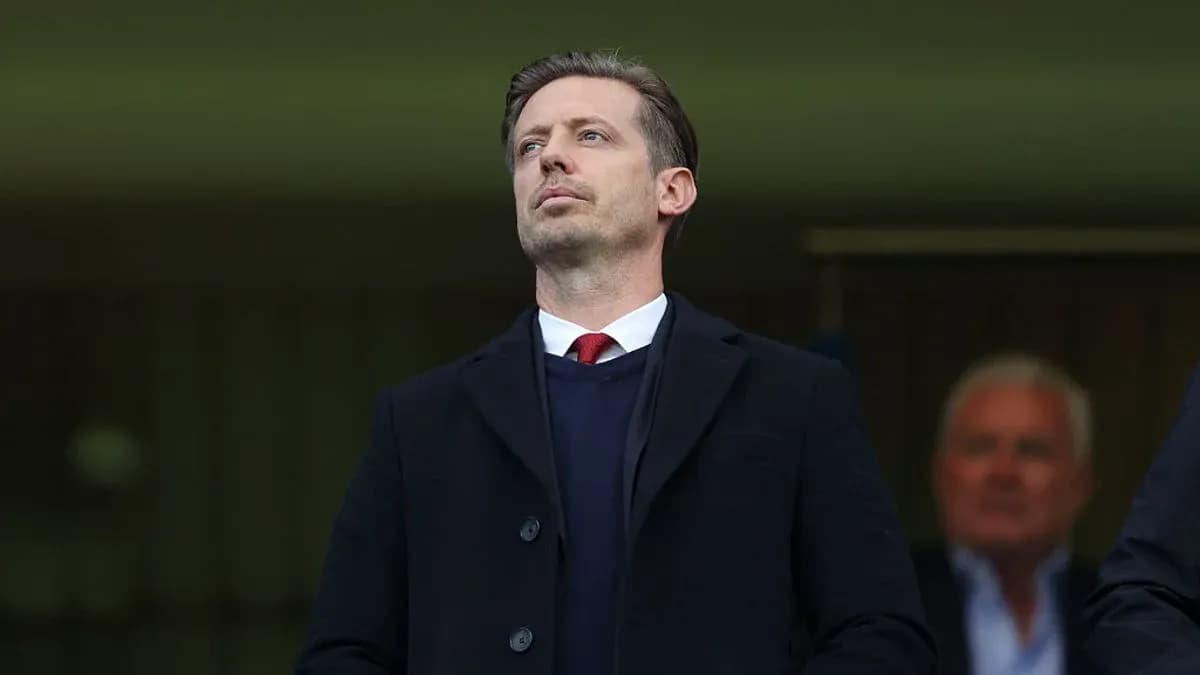
Michael Edwards Leaves Liverpool: A Frustrated Exit
Michael Edwards’ second Liverpool chapter was never supposed to end like this. Not this quickly. Not with frustration hanging in the air.
When he walked back through the door in 2024, it was on different terms and with a different brief. No longer the forensic sporting director who quietly underpinned the Jurgen Klopp era, Edwards returned as CEO of football at Fenway Sports Group, tasked with helping to steer Liverpool through life after Klopp and, crucially, to build something bigger: a multi-club model under the FSG umbrella.
That last part never arrived.
A Promise That Never Materialised
Those close to the situation describe Edwards as “frustrated” with FSG after being told the ownership group intended to buy another European club — a cornerstone of the project that lured him back. Two years on, that acquisition has not happened. The idea has drifted from priority to background noise, and with it, so did Edwards’ enthusiasm for the role.
He had been clear from the outset. The multi-club structure mattered. It was not a side project or a nice-to-have; it was central to how he saw FSG competing in a landscape increasingly dominated by sprawling football empires.
The Athletic reported that Edwards was especially keen for FSG to secure a second club. Instead, plans stalled. Options were explored, presentations made, pathways mapped out. Ownership did not pull the trigger. The broader vision, as Edwards himself would later phrase it, “evolved differently to how we had originally envisaged”.
The pressure finally told. He will now leave a year before his contract was due to expire, having already signalled his intentions last year.
From Architect of an Era to Restless Executive
Edwards’ name is stitched into Liverpool’s modern history. During the bulk of Klopp’s reign, he operated as the club’s sporting director, the analytical mind and transfer strategist behind signings such as Mohamed Salah, Sadio Mane and Andy Robertson — deals that reshaped Liverpool’s competitive ceiling.
He stepped away in 2022, his reputation sky-high and his phone buzzing. Both Manchester United and Chelsea sounded him out after his Liverpool exit, hoping to tempt him into leading their rebuilds. He declined, choosing a break over a quick return to the front line.
When he did come back, it was not to Anfield’s corridors but to FSG’s top table. This was supposed to be the next phase: guiding Liverpool through a post-Klopp transition while also shaping a wider football portfolio. The job was bigger than one club. That was the point.
Instead, the role slowly narrowed back down. The multi-club dream remained theoretical. The gap between what was promised and what was delivered became too wide to ignore.
Hughes In, Hughes Out
One of Edwards’ first major acts on his return was to bring in Richard Hughes as Liverpool’s sporting director. The pair had a working relationship from Hughes’ time at Bournemouth, where he served as technical director while Andoni Iraola coached the team without full control of transfers.
At Liverpool, Hughes was handed that control. He became the man in charge of recruitment at Anfield, the focal point for the next phase of squad building.
Now, even that arrangement is unravelling. Hughes is expected to leave at the end of the summer to join Al-Hilal, another key figure in the post-Klopp blueprint heading for the exit.
In the vacuum, a familiar name steps back into the spotlight. Mike Gordon, FSG’s president, is understood to be resuming day-to-day operations at the club. He has held that responsibility before and knows the terrain, but his return underlines the sense of a reset rather than a smooth continuation of the Edwards-led model.
Edwards’ Final Word
Publicly, Edwards chose his words carefully. His departure statement carried the tone of a man determined to leave the door open, not slam it shut.
“It has been a privilege to return to Fenway Sports Group and Liverpool Football Club at such an important moment,” he said. “I leave believing Liverpool is in a strong position, with outstanding people, a clear direction and the foundations in place for continued success.”
He acknowledged both parts of the role: the Liverpool transition and the wider FSG project.
“When I returned, I was excited not only by the opportunity to help guide Liverpool through an important period of transition, but also by the chance to help shape FSG’s wider football ambitions.
“While that broader project ultimately evolved differently to how we had originally envisaged, I am proud of the work our team undertook in presenting ownership with a broad range of thoughtful and well-developed options for the future.”
There was gratitude, too, for the hierarchy and the supporters.
“I’d like to thank Mike, John (Henry), Tom (Werner) and everyone across FSG and Liverpool for their support and friendship and, most importantly, the supporters, whose passion makes this club so special. I will always be grateful to have been part of its story.”
The words are polite, even warm. Between the lines sits a simple truth: the story he came back to write was never fully told.
Liverpool, under new leadership structures and with familiar faces returning to the controls, will march on. FSG will continue to weigh up what kind of football empire it truly wants to be.
The question is whether, in a game increasingly dominated by multi-club giants, they can afford to let a strategist like Michael Edwards walk away twice.



