Mexico's World Cup Journey Ignited Hope in a Year Marked by Fear
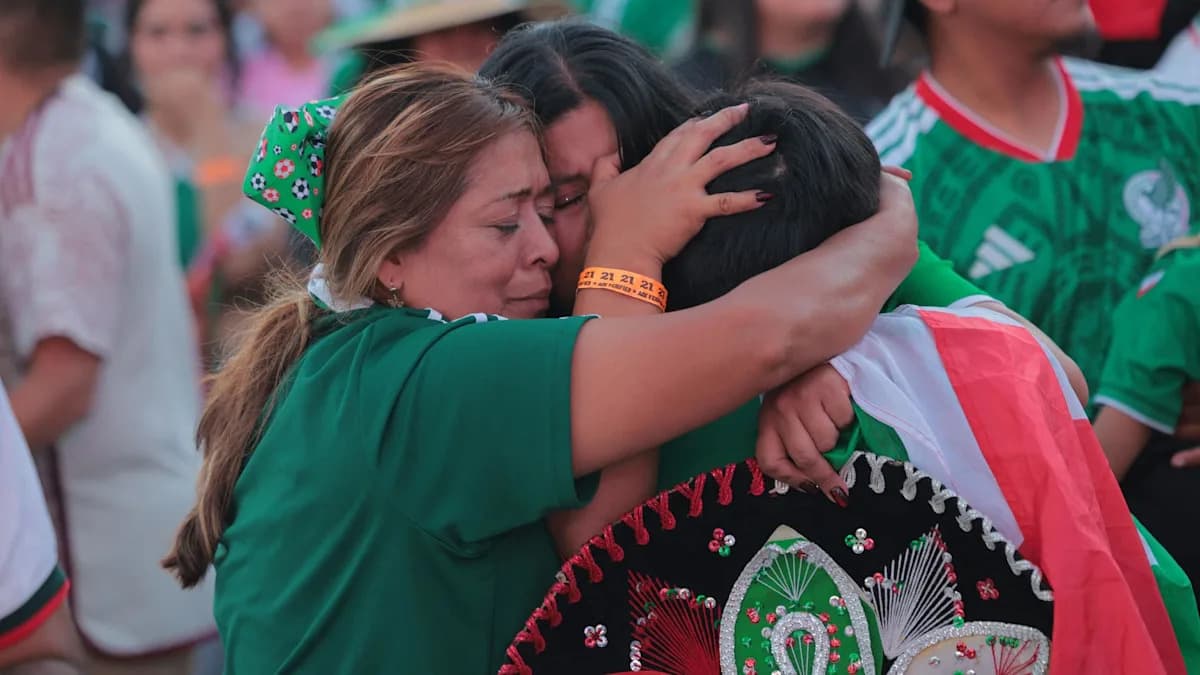
The atmosphere inside a crowded Santa Ana bistro was electric despite Mexico's elimination from the World Cup. Some fans waved Mexican flags, others sang through their sadness. The room soon erupted into Cielito Lindo – "Sing and don't cry." Louie Leyla, a Mexican-American who has lived in California since 1990, summed it up: "This is sad, but we're going to keep supporting our people no matter what."
England’s 3-2 win over Mexico at the Azteca Stadium ended the tournament for El Tri, yet in this community on the U.S. West Coast, the story felt far from over. For many, Mexico's performance was a source of pride and unity.
A Win Beyond the Scoreboard
Alicia Rojas expressed mixed feelings: "It’s a loss, but also a win for our community here in Santa Ana." Nearby, Cynthia Rebolledo smiled as her son, decked out in full Mexico colors, eagerly asked if the parade was still happening. His belief that Mexico had won spoke volumes about the hope and spirit shared among fans.
The World Cup became more than just soccer. Leigh Slater reflected on the journey: "Football mirrors life—you win some, you lose some. But this tournament showed the resilient spirit of immigrants in this country. This is catharsis."
Uniting Fans Across Borders
Mexico entered the match against England with an impressive record of 15 consecutive first halves in World Cup play without conceding a goal, only to face two early strikes from their opponents. Throughout the tournament, Mexican supporters were some of the most visible—donning bright green shirts, waving flags, and chanting loudly in stadiums across the United States and Mexico.
Southern California stood out as a focal point, home to one of the largest Mexican communities outside Mexico itself. This vibrant scene sharply contrasts with the fear and silence that gripped many Latino neighborhoods just a year ago.
A Year of Contrast
In mid-2025, ICE immigration raids left businesses empty, families confined indoors, and public gatherings rare. Gustavo Arellano, columnist for the Los Angeles Times, recalled the stark difference: "These same streets were completely dead last June. Only protests brought people out." He remembered National Guard vehicles stationed near his wife's shop and how local businesses suffered during those tense times.
Now, a year later, the festive crowd and loud celebrations represent a form of relief and release. "This is catharsis—for Mexicans especially, but for Latinos in general," Arellano said.
More Than a Game
Mexico’s status as one of the World Cup hosts, combined with their deep run into the knockout stages, transformed the event into something beyond sport. It became an occasion to embrace and celebrate cultural identity—something that had been overshadowed by anxiety and uncertainty the previous year.
Supporters who once feared immigration crackdowns now proudly sang the national anthem, waved flags, and donned El Tri jerseys in packed public fan zones filled with families. Expressing Mexican heritage and American identity felt natural and intertwined.
Arellano pointed out that in the past, displaying Mexican flags was often seen as unpatriotic, especially during the anti-immigration politics of the 1990s. Yet as America’s diversity grows, so does the visibility and pride of these fan bases.
Hope Despite Reality
Like many, Arellano hoped for one more upset. "The cynic in me says this is what always happens to Mexico. We're good, but we just can’t quite compete with the world’s elite," he admitted. "But we never give up. I’m proud they fought until the very end. England was simply better."
As the U.S. marks its 250th anniversary amid ongoing debates about immigration and identity, diaspora communities have rallied behind countries like Scotland, Argentina, Colombia, Ecuador, Morocco, and Egypt. This reflects an America where millions maintain strong ties to more than one homeland.
For many Mexican-Americans, the World Cup became a celebration of both places they call home.
A Moment of Joy for Latino Communities
At a difficult time for Latino communities, this World Cup provided something rare: a chance to experience joy openly. As Arellano put it, it was a moment to express happiness and pride amid challenges.