Mexico's World Cup Carnival: A City Transformed
The hints were everywhere on the eve of kickoff.
Street vendors ran out of green jerseys as fast as they could pull them from plastic bags. Pavements turned into makeshift club shops, queues snaking around corners as fans scrambled for one last piece of Mexico before the big day.
Up the road, hundreds gathered around El Ángel de la Independencia, the city’s beating sporting heart. They sang, they danced, they climbed the steps and wrapped the monument in flags. Car horns and fireworks took care of the soundtrack, echoing through Mexico City long past midnight.
If this was the rehearsal, the main event was always going to be something else.
A city turns into a World Cup carnival
Mexico’s players held up their end of the bargain first. A 2–0 win over South Africa in the opening match of a World Cup shared by Mexico, Canada, and the USA. Routine on paper. Anything but in reality.
The final whistle at the stadium was only the starting gun downtown.
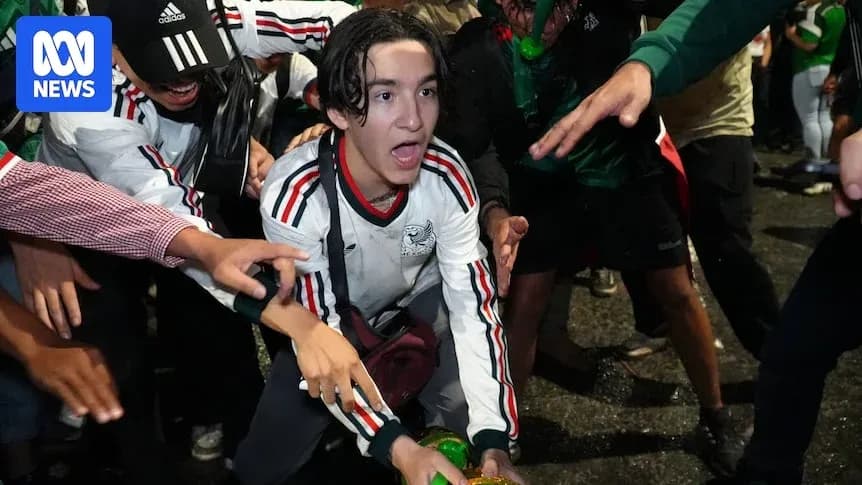
Paseo de la Reforma, usually a river of traffic, became a pedestrian-only World Cup fantasy. Green shirts flooded the boulevard. Beer arced into the air in foamy showers. Cans of fake snow hissed and sprayed over strangers who instantly became friends. Conga lines snaked past plastic World Cup trophies held aloft as if they were the real thing.
Food stalls did roaring trade: tacos, tortas, elotes, and every snack in between. Stands selling scarves and flags sat beside tables stacked with glow sticks that turned the night into a rolling, fluorescent wave. A free concert blasted out over it all, the music bouncing off glass towers and old stone facades.
For an outsider, it might look like an over-the-top reaction to a group-stage win. For Mexico, this is muscle memory. This is what they do when the national team delivers.
They pour into their own version of Fed Square, a victory monument marooned in a roundabout, and they simply refuse to go home. The stamina is legendary. The party runs until the city starts to blink awake again.
Roars, cramps, and a teenage prodigy
The electricity had been crackling long before kickoff.
Outside the stadium, traditional performers in bright costumes drummed and danced, pulling fans into circles of song and rhythm. Inside, 80,000 people turned the place into a cauldron.
They sang through the opening ceremony, voices rising when Shakira appeared, the World Cup queen casting the old spell once more. But those deep, chest-rattling roars were saved for Mexico’s goals.
Raúl Jiménez’s header carried more than just a scoreline with it. Years on from a horrific head injury that threatened his career, he rose and buried the chance, and the sound that followed felt like a collective exhale. Relief, pride, defiance, all rolled into one.
Later, another surge. This time for a teenager.
When 17-year-old Gilberto Mora stepped off the bench in the second half, the reaction was instant. The crowd locked onto him and, as one, began to chant his name. That doesn’t happen by accident in this country. That’s a welcome reserved for players the nation expects to reshape its footballing future.
On the touchline, coach Javier Aguirre understood exactly what his players were feeling. He’s lived it before, as part of Mexico’s 1986 World Cup squad on home soil. He spoke of the emotional weight that comes with this stage, this shirt, this noise.
“The start of the World Cup is a brutal scenario, it makes your legs shake a little,” he said.
“You come from the training centre to here, the people, the fans are in the street and that tells the player, ‘Wow, wow, wow.’
“Never, never in 25 matches we had one case of cramps, today we had three players with cramps.
“It’s a very strong emotional state.”
The numbers told him what the eyes already had: the occasion had run through their muscles as much as their minds.
Now, the players have to bottle it all back up, turn down the volume in their heads, and get ready for the next group game. Out on the streets, there is no such restraint. The lid is off and staying off.
“It means everything. It means a lot,” one fan said amid the chaos.
“It’s putting us back on the map. It shows that Mexico is present in the world of football.”
Infantino’s relief, North America’s questions
Somewhere in the VIP seats, Gianni Infantino will have felt a different kind of release.
The FIFA president had spent the previous day railing against criticism of the organisation and the tournament build-up. Then he reached for a line from another era, urging everyone to “chillax”.
Once the first ball rolled and Mexico started scoring, the mood shifted. The complaints quietened. The party swallowed the tension. For now, the chill pills have been taken and the dance floor is full.
Infantino can breathe a little easier. But only for a while.
This is a football-mad nation, a place where the sport sits at the centre of public life. Across the border, it’s different. In Canada and the United States, “soccer” still fights for attention, squeezed between entrenched sporting giants.
Big names and heavyweight clashes will pull in huge crowds. That’s almost guaranteed. The real test lies elsewhere. Will fans pay top-tier prices to watch the less glamorous fixtures, the so-called off-Broadway acts? Or will empty seats tell their own story?
There are other shadows, too. The presence of Immigration and Customs Enforcement — ICE — in the US lingers in the background. Will it stay there, or will it intrude on a tournament that sells itself as a global celebration?
Those questions will not vanish just because the music is loud and the goals are flowing. They will return, sharper, as the tournament wears on.
For one night in Mexico City, though, the answers didn’t matter. The streets were green, the horns were blaring, and the World Cup had finally begun to speak in the only language that really counts here: football.