
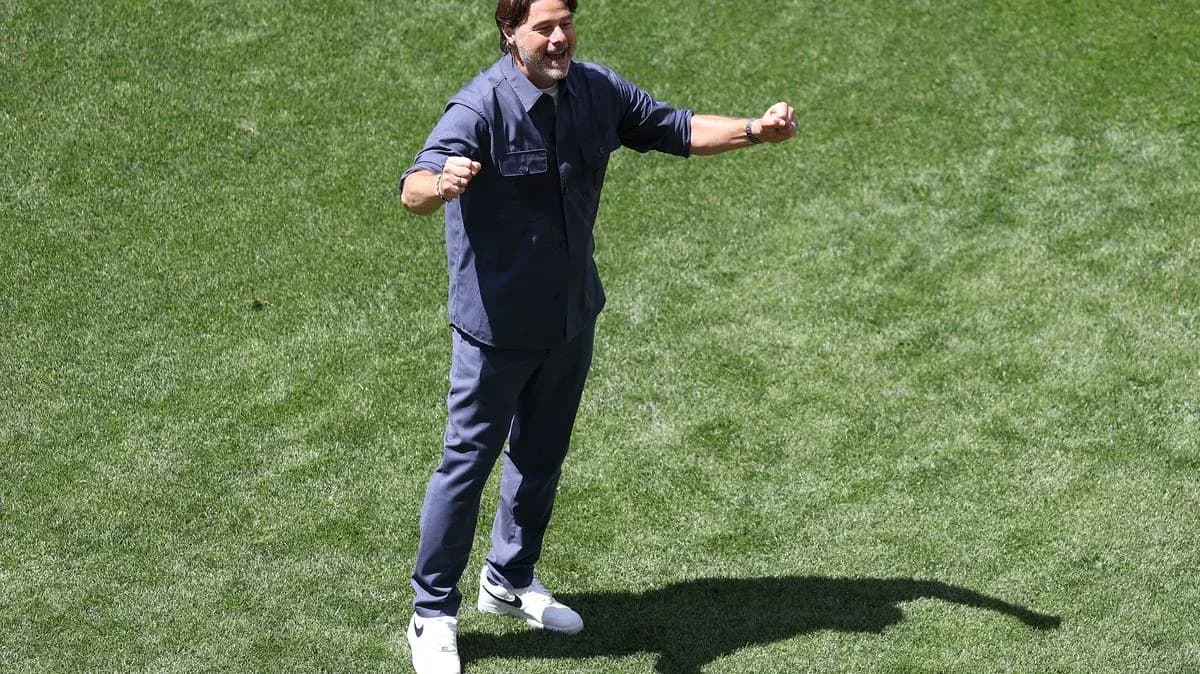
Mauricio Pochettino's Near Misses with Manchester United
There was a time when it felt inevitable. Mauricio Pochettino and Manchester United, bound to meet in that Old Trafford dugout sooner or later. Fate, it seemed, had other plans.
Twice, the Argentine stood at the front of the queue. Twice, the door swung shut just as he reached for the handle.
The one that slipped away
Go back to 2018/19. Pochettino, at Tottenham, was being talked about as the next United manager in everything but name. Jose Mourinho had gone, Ole Gunnar Solskjaer had arrived as the smiling caretaker, and the idea was simple: let the club legend steady the ship while United manoeuvred for Pochettino in the summer.
Then Solskjaer started winning. And kept winning.
Six victories on the bounce, capped by a statement result: a 1-0 win at Tottenham in mid-January. Pochettino, in the opposite dugout that day, watched his supposed audition turn into Solskjaer’s coronation. The Norwegian had the crowd, the dressing room and, crucially, the momentum.
The decisive moment came in Paris. United’s improbable comeback against Paris Saint-Germain in March electrified the club and forced the board’s hand. Solskjaer was given the job permanently. Pochettino, still at Spurs, still admired, suddenly found his moment had vanished.
By the time that season ended with Tottenham in a Champions League final and United floundering, the window had closed. Pochettino left North London a few months later, his stock still high but his path to Old Trafford blocked.
Ten Hag, timing and a missed connection
The story repeated in 2022, but with sharper edges.
Pochettino was at PSG, chasing a Ligue 1 title in a spell that never quite caught fire. United, again in need of a new manager and again leaning on an interim — this time Ralf Rangnick — narrowed their search to two men: Pochettino and Erik ten Hag.
From the outside, it looked like a straight shootout. Inside, timing did the damage.
As Pochettino has since explained, the Champions League exit to Real Madrid locked him into one priority: secure the French title. He was under contract, under pressure and unable to step away for serious negotiations. United, he said, were desperate to move quickly. The situation at Old Trafford had become “unsustainable” and the club wanted a deal tied up before the season’s end.
Ajax gave Ten Hag the freedom to talk. PSG did not extend the same courtesy to Pochettino. United went with the man they could get, not the man many inside the game believed they had long wanted.
In Manchester, the decision is now widely viewed as a misstep. John Murtough, the football director, was said to be impressed by Ten Hag’s interviews and vision. Pochettino’s version is simpler: he was never truly in the race because he could not sit at the table.
Ferguson’s favourite who never arrived
What makes the near-misses more striking is the presence of one powerful admirer.
Sir Alex Ferguson saw something early. Pochettino’s Southampton side caught his eye: intense, brave, front-foot football. The great United manager liked it so much he asked for Pochettino’s number and invited him to dinner. From that point on, the Argentine’s name lived in the corridors of Old Trafford as a kind of future ideal.
Yet football moves fast. Pochettino’s departure from Tottenham, his uneven spell in Paris and a single turbulent season at Chelsea all chipped away at the aura. For a while, it felt as though his time at the very top might be over.
That assessment now looks premature.
Reinvented on the world stage
The World Cup has thrown Pochettino back into the spotlight, this time in an unexpected role: leading the United States on home soil.
His USA team has not tiptoed into the tournament. They have surged. Intensity, aggression, a collective edge that has stood out even among the heavyweights. Their football has looked less like a traditional international side and more like a well-drilled European club: compact without the ball, sharp and purposeful with it.
Momentum is building behind the hosts. If they sustain this level, a run to the quarter-finals feels entirely realistic. Achieve that, and Pochettino’s name will thunder back into boardrooms across Europe.
His contract with the US expires at the end of the tournament. He has been careful with his words, saying only that he is “open” to extending his stay. But the logic is clear. Coaching a host nation at a World Cup on American soil is a once-in-a-lifetime charge. The Gold Cup will not stir the same emotions, nor command the same global attention.
Walk away now, and he returns to the market as a man reborn.
United move on – again
The timing, once more, is awkward.
United have just committed to another new era. Michael Carrick, after a hugely impressive second half of last season, has been handed a two-year contract. He looks, on the evidence so far, like the right fit for a club craving stability and a clearer identity.
Had Carrick stumbled, had United delayed their decision, the stars might finally have aligned for Pochettino this summer. Instead, the familiar pattern holds: by the time he is free, Old Trafford is already occupied.
The romance of the idea has not entirely faded. Ferguson’s admiration still lingers in the background. Supporters remember the high-pressing, fearless Tottenham side that once felt like a template for what United should be. But football does not wait for sentiment.
As Pochettino strides the touchline in this World Cup, orchestrating a US team playing with the kind of edge that once made him the most coveted coach in Europe, one truth hardens.
He looks destined for another big club, another major project, another shot at the summit.
It just no longer feels like that journey will ever take him to the home dugout at Old Trafford.



