Mauricio Pochettino's Journey: From Gold Cup Heartbreak to World Cup Success
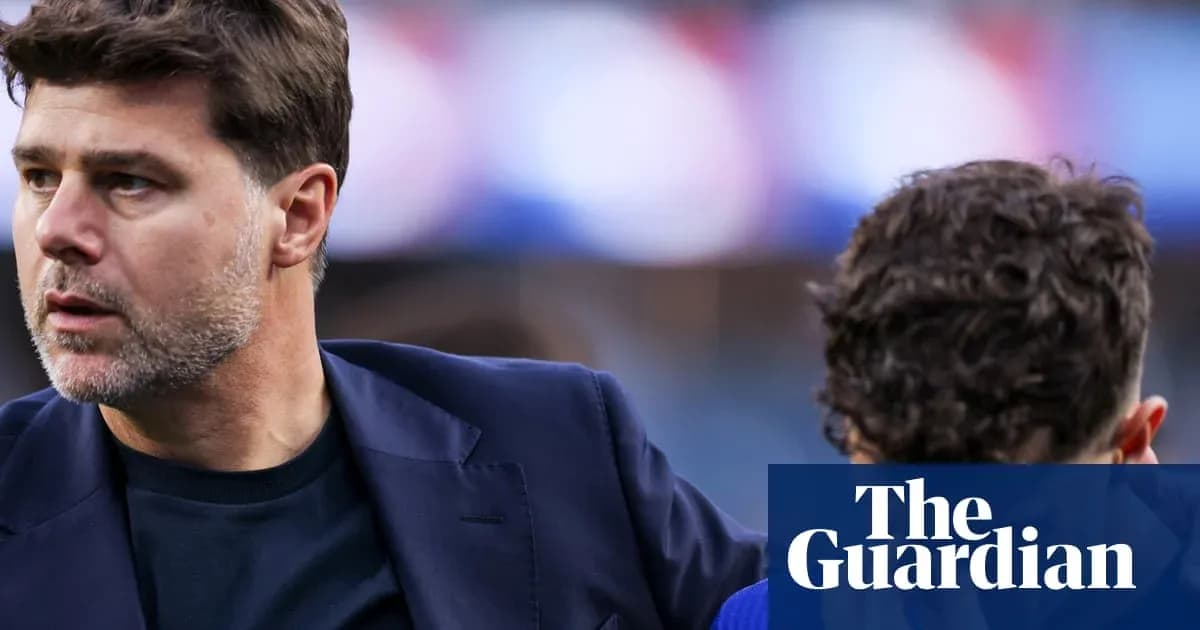
Mauricio Pochettino stood on the touchline in Houston with tears in his eyes, beaten by Mexico, drowned out by their fans, and confronted by a truth he hadn’t fully grasped. His US team had just lost the 2025 Gold Cup final. The regional crown was gone. The stadium, in one of the biggest metro areas in the United States, felt like an away ground.
He wasn’t just crying for the result.
He was crying for his players, for the effort they had poured into a tournament that ended with them outnumbered in their own country, and for the sudden clarity of what this job really was. One year from a home World Cup, the romantic ideas were gone. This was the reality: a national team trying to grow in a sporting culture that often looked the other way.
“We were so naive,” Pochettino admitted this week. “We misjudged the situation. It was worse than we really believed. … When we arrived here, we received a big bang, punch, and we were knocked out for a while. We said: ‘What the fuck?’”
That “punch” had landed months earlier. The Gold Cup heartbreak was only the second of three blows that would shape this US team’s rise. The story of how they got from that low point to the high of this World Cup starts with an empty stadium and a flat performance.
A crash in silence
March 2025. Concacaf Nations League. The assignment looked routine on paper: beat Panama in the semi-final, then deal with Mexico or Canada in another familiar regional final. The US had won the first three editions of this new competition. They were supposed to own it.
They didn’t even make the final.
Panama, organized and burning with purpose, shut them down. The US attack sputtered. Concentration wavered. One lapse, one chance taken, and Panama were through with just their third shot of the game.
The defeat hurt. The setting stung.
“It was empty,” Pochettino recalled. “You remember the game, Panama? It was the Mexican people [in the stands] because they played after us.”
In a competition they had dominated, in a region they once controlled, the US watched Panama celebrate in front of a sparse crowd mostly waiting for Mexico’s match. For a program that had historically bullied Panama – 17-4-2 as of mid-2021 – this was a new reality: four defeats in six meetings, including the 2023 Gold Cup semi-final and a 2024 Copa América group game.
“That was [a] good crash, no?” Pochettino said. “When people say, ‘Yeah, but you have bad results.’ Yeah, yeah: bad results. No worries. We know what we are going to do. When we detect all the problems, we go for the solution. And we knew that the solution would arrive.”
One of those problems, in his eyes, sat at the core of the team itself. Comfort. Entitlement. A sense that places were secure.
So when Christian Pulisic asked to skip the Gold Cup but still join the friendlies against Turkey and Switzerland, Pochettino drew a line. No half-measures. No separate tracks.
He said no.
Pulisic pushed back. The conversation stretched on. Results in those pre-Gold Cup friendlies – decisive defeats – sharpened the criticism. But a new standard had been set: you’re in from day one, or you’re watching from home.
Gold Cup pain, Gold Cup foundations
If the Nations League loss was a crash, the Gold Cup became a laboratory.
Without some of the established names, Pochettino found new pillars. Malik Tillman finally stepped into the role of chief creator, the playmaker entrusted with unlocking defenses. Matt Freese seized the goalkeeper’s spot and outlasted Keylor Navas in a shootout. Alex Freeman emerged as a young full-back Pochettino didn’t want to drop. Sebastian Berhalter forced his way into the midfield rotation.
The coach changed too. For once, international football resembled the club game he knew so well. A month with a fixed squad. Daily sessions. Real time to refine the system, to drill habits, to build something that looked like a team rather than a collection of players parachuting in for a window.
They reached the final. They met Mexico. They lost.
The tears came, but not because he felt his team had failed him. In that locker room in Houston, Pochettino asked them for just one thing.
“Keep improving, but please don’t change.”
What he wanted to change was happening outside the dressing room.
“Why not us?”
Later that month, Pochettino sat in the stands in Columbus, watching Ohio State face Texas in college football. Seventy thousand fans roared for every snap.
“There were 70,000 fans there,” he said. “And my question was, you know, why not? If the fans are very passionate, why not with us, with soccer? Because if [the support is] with us, they will be and show the same passion. It’s massive. It’s so powerful for the player.”
From that question, a mantra formed: “Why not us?”
It wasn’t just a slogan. It became a blueprint. When Pulisic and the other mainstays returned in September, Pochettino unveiled the shape that would define his team. A fluid structure, constantly morphing, designed to disorient opponents with relentless off-ball movement and fast switches of play. A side encouraged to attack space with courage, to take risks when the door opened.
Showtime, in national team colors.
The results started to match the ambition. A 2-0 win over Japan in September. A draw with Ecuador and a victory over Australia in October. Then a November window that sent a message: a win over Paraguay and a 5-1 demolition of Uruguay to close 2025 on a surge of belief.
The mood changed. The outside noise softened. And then came March.
The third lesson: Europe bites back
Two games, two defeats. Belgium and Portugal. A 7-2 aggregate that cut through the optimism.
The scorelines were brutal. The performances, at times, were worse. The defense cracked, then crumbled. Against Belgium, the US even reverted to an older, more porous structure, abandoning some of the principles that had fueled their rise. Up front, Pulisic, stuck in the worst goal drought of his career, started at center-forward against Portugal and barely left a mark.
From the outside, it looked like a familiar script: a promising US team exposed by heavyweight opposition, dragged back to earth.
Inside the camp, the tone was different.
“I feel like we’ve always bought in,” defender Chris Richards said this week, “but I really feel like the March camp that we had was really important. … I think we really gave, you know, two really good teams in Europe a really strong game.”
Pochettino defended his players but didn’t sugarcoat the gap.
“Belgium and Portugal have, in the top 100 players, [a] few or some players in that top 100. I think we don’t have [any].”
The criticism outside grew louder. Old doubts resurfaced. Was this just another cycle of false dawns? A team capable of the odd statement win, but just as likely to stumble against anyone?
The schedule offered no respite. Senegal and Germany loomed as pre-World Cup tests. Some wondered if the federation would regret those choices.
No,” Pochettino said flatly. “That is good for us. It’s going to measure our level.”
He wanted the measurement. He got it.
A 3-2 win over Senegal. A 2-1 defeat to Germany that still hinted at a team sharpening at the right time. The performances had edge again. The structure held. The belief didn’t evaporate under pressure.
And then the World Cup began.
Showtime on home soil
Paraguay first. The US tore into them, a 4-1 statement that looked like a release of two years’ worth of frustration and work. The movement, the switches, the aggression: everything Pochettino had preached showed up under the brightest lights.
Australia next. A 2-0 win, controlled and mature, with a team that now knew how to manage a game as well as explode it.
By Thursday, they had already won Group D. Only four teams at this World Cup had wrapped up first place after two matches. Argentina and Germany, giants of the men’s game. Mexico, backed by ferocious support and hardened by years of playing at altitude in hostile arenas.
And the US, under Pochettino, in their own country at last, finally feeding off raucous, partisan home crowds.
Turkey awaited in a dead rubber, already eliminated. For the US, it was a rare luxury: a World Cup match without jeopardy. A chance to rotate, to breathe, to look ahead.
This, unmistakably, is the peak of Pochettino’s tenure so far. Two wins. A 6-1 combined scoreline. Top of the group. A style that turns heads, not just numbers. A connection with fans that felt impossible on that empty Nations League night, unthinkable in that hostile Gold Cup final.
Mark McKenzie, a defender who has lived every step of this journey, put it simply.
“It’s not going to be figured out overnight, it’s not going to be figured out in one camp, or sometimes in six months, or 12 months, maybe not as fast as everybody wanted,” he said. “I think we’re showcasing that it’s a process.”
The process has taken them from silence, to boos, to a roar that finally belongs to them. The question now is no longer whether the US can compete.
It’s how far this team, forged in those three hard lessons, can push the ceiling of what “Why not us?” really means.