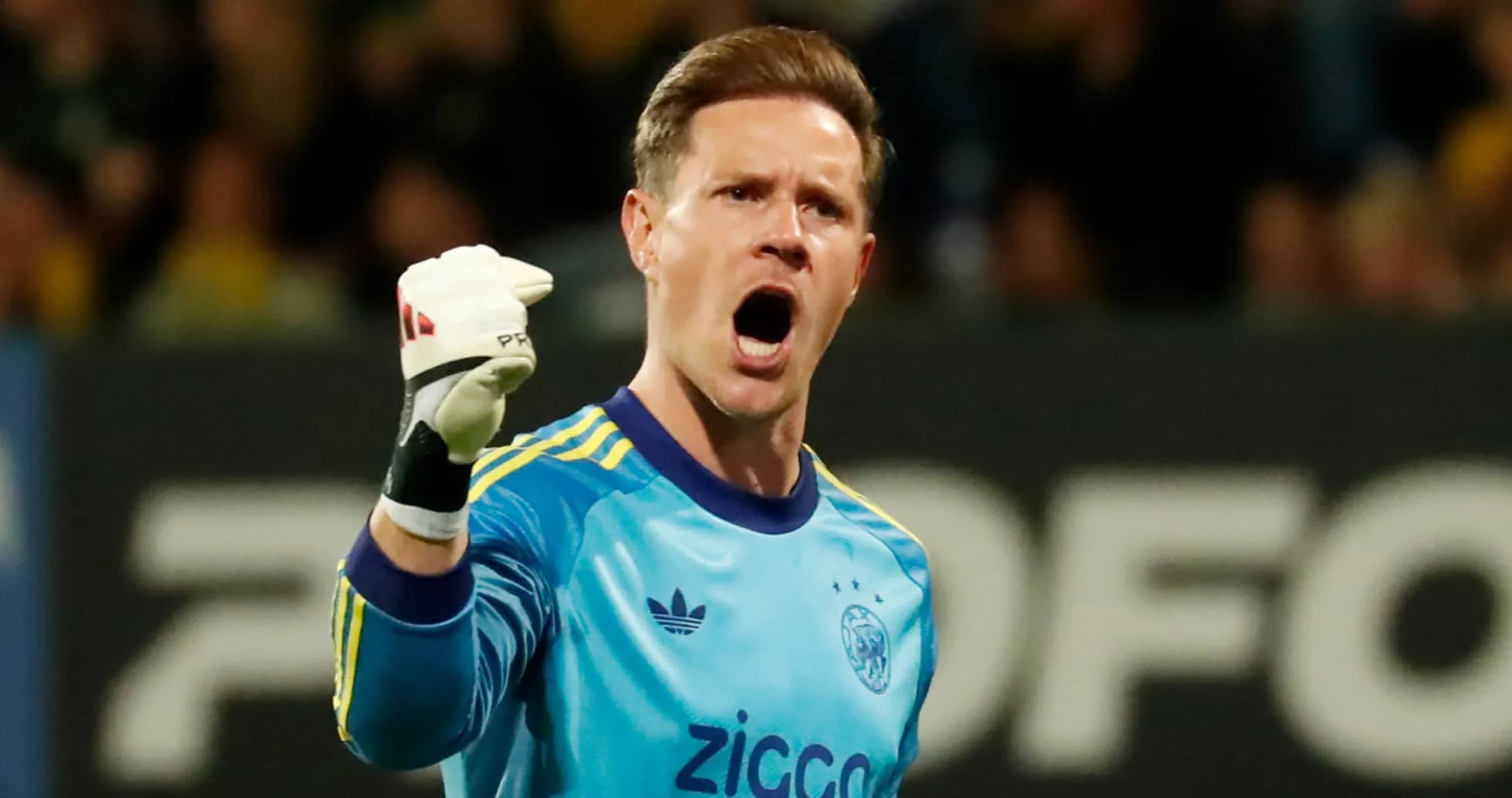
Marc-André ter Stegen Named Germany’s No. 1 Goalkeeper
The long-running question over who guards Germany’s goal has finally been answered. Jürgen Klopp has nailed his colours to the mast: Marc-André ter Stegen is his No. 1.
After years in the shadow of Manuel Neuer, the Barcelona goalkeeper – currently rebuilding his rhythm on loan at Ajax – has been handed the gloves and, with them, the responsibility of leading a new era.
Klopp doesn’t want a debate. He wants a backbone.
“Yes, for the moment, there is one, Marc-André ter Stegen,” he said, via Bulinews, when asked if he now has a first-choice goalkeeper. No ambiguity. No rotating door. The new national coach is trying to reshape Die Mannschaft, and for him that starts with experience in the spine and youth built around it.
This changing of the guard comes in the wake of Neuer’s decision to retire from international duty, closing one of the most decorated chapters in German football history. The former Bayern Munich captain redefined the role of a goalkeeper; his absence leaves a giant hole in both presence and personality.
Klopp didn’t downplay that. He couldn’t. But he was clear that Ter Stegen is ready to step into the light.
“A team needs stability and a spine, and then you can add a lot of youth around that. I’ve known him for ages. Manuel Neuer was the best goalkeeper in the world for a long time,” Klopp said.
Then came the crucial line, the one Ter Stegen has waited years to hear.
“Nevertheless, everyone knew that Ter Stegen was world-class too. He then suffered an injury at an unfortunate time. At the moment, he is fit and the same goalkeeper he was before. He brings experience with him. He is making a very good impression. Everything depends on performance.”
That last sentence is the warning label on the promotion. The shirt is his, but it has to be defended.
Klopp’s decision on the goalkeeper comes within a sweeping reset of the entire squad. For the upcoming international break, he has named an enormous 44-man group, split across two separate squads, as he stress-tests the depth of German football in competitive action.
The UEFA Nations League will be his laboratory. No gentle friendlies, no soft landings.
Alongside Ter Stegen, Augsburg’s Finn Dahmen and Besiktas keeper Alexander Nübel are in the frame for the first two matches. Dahmen is the constant thread: the only goalkeeper named in both squads, linking Freiburg’s Noah Atubolu and Bayern Munich’s Jonas Urbig in a carefully staggered goalkeeping pool.
It is a clear hierarchy, but also a clear message. Ter Stegen leads. The next generation waits, watches, and pushes.
Klopp’s new-look Germany will be thrown straight into a demanding schedule. The Nations League pits them against the Netherlands, Greece, Serbia, and then a return fixture against Greece in a packed window that will leave nowhere to hide.
Four games. Two squads. One new order in goal under the brightest possible lights.
For Klopp, this stretch is about more than results. It’s about seeing which youngsters can grow around his chosen core and which ideas survive real competition. For Ter Stegen, it is something even sharper: the first true test of his reign as Germany’s undisputed No. 1, and the chance to turn his manager’s faith into a new era of authority between the posts.