Mahmoud Bentaieb Considers Switching Nationality to Egypt
Mahmoud Bentaieb, the Zamalek defender who has already worn Morocco’s colours, is seriously weighing up a switch to represent Egypt. The debate around whether he can actually do it, though, is far more complicated than a simple change of heart.
The story exploded in Cairo first. Local reports claimed the 26-year-old wanted to abandon Morocco and line up for the Pharaohs. In Rabat, the reaction was swift: Moroccan outlets pushed back, insisting there was nothing in it.
Then came the twist.
His agent, Youssef Massaad, broke the silence and cut through the noise. Speaking to Moroccan newspaper “Al-Omk”, he confirmed that Bentaieb is indeed considering changing his sporting nationality. The trigger, he said, was Morocco coach Mohamed Ouahbi leaving the defender out of the latest national team squad – a snub that clearly stung.
For Bentaieb, Morocco had always been the first choice. Born in Casablanca to Moroccan parents, he came through as a local player with a clear international path. But the door closing, even temporarily, at senior level has opened another one in Cairo.
According to Massaad, Egyptian officials have floated the idea of him representing Egypt. The player has not dismissed it. On the contrary, he is studying the proposal and has already taken a concrete step: he has contacted FIFA to ask about the legal possibility of switching allegiance and is now waiting for an official answer.
The legal maze behind a flag change
On paper, FIFA offers a route for players to change national teams, but it is narrow and full of conditions.
Lebanese legal expert Ralph Charbel laid out the framework in comments to Kooora. For a player who has never represented a country at youth level and wants to play for another national team, he must first obtain that country’s nationality and then meet at least one of these criteria:
- He was born in that country.
- His father or mother was born there.
- His grandfather or grandmother was born there.
- He has lived continuously in that country for at least three years if he moved before the age of ten, or at least five years if he moved after the age of ten.
Here is where Bentaieb’s case tightens.
He was born in Casablanca. His father and mother are Moroccan. His roots are entirely Moroccan. He is married to an Egyptian woman – the daughter of Zamalek board member Ahmed Suleiman – and has been living in Egypt since his move from Saint-Étienne in the summer of 2024. That gives him roughly two years on Egyptian soil so far, short of the five-year residency threshold usually required in such cases.
Even if he secures Egyptian nationality and somehow fits into the residency or ancestry framework, another barrier stands in his way.
Arab Cup appearances come back into play
Charbel underlined that beyond the basic eligibility criteria, FIFA imposes strict limits on players who have already represented one senior national team.
To switch, a player must not have played more than three matches for his current senior national team, and at least three years must have passed since his last appearance.
This is where the 2025 Arab Cup becomes a problem for Bentaieb.
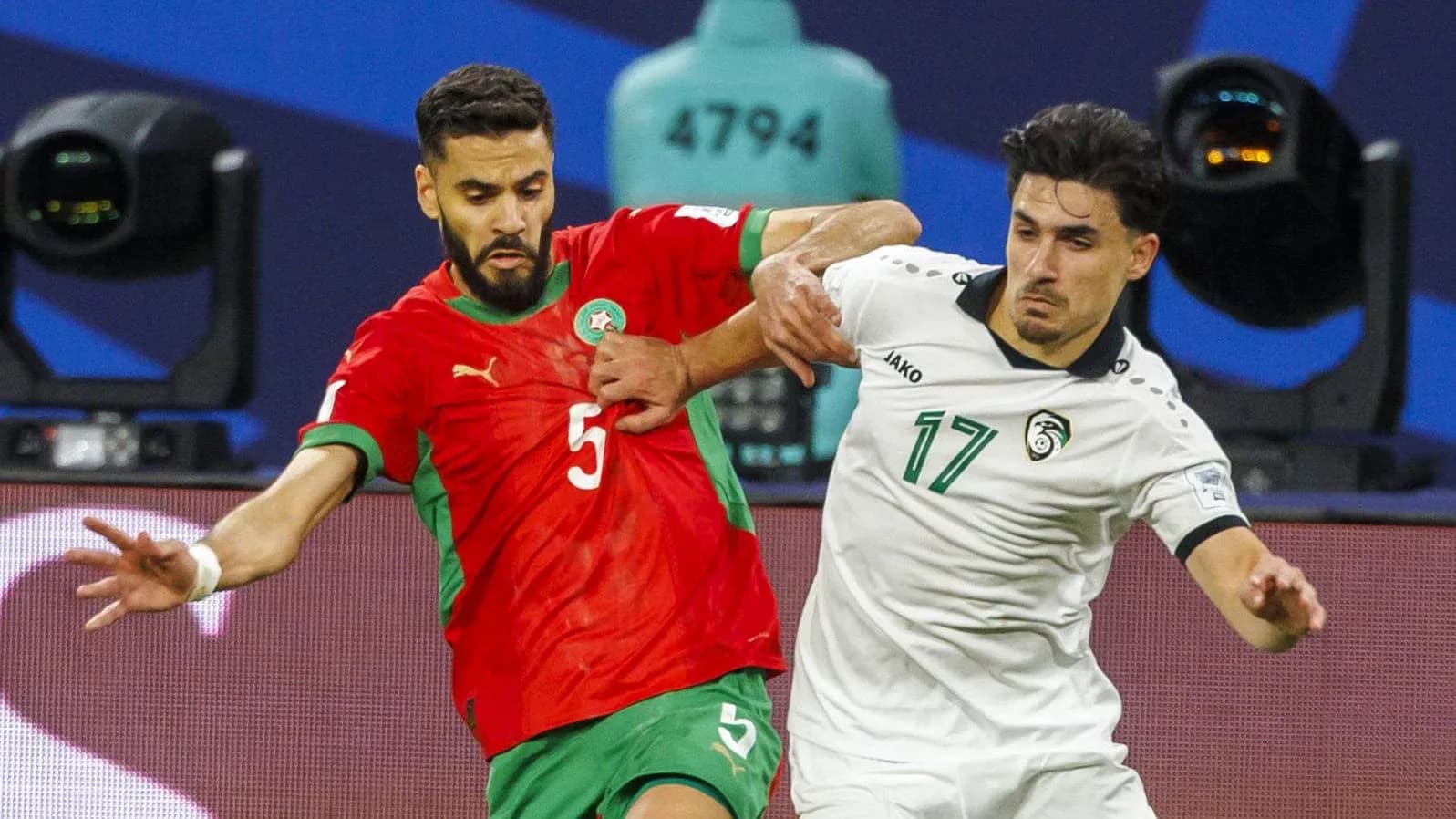
He never played for Morocco at youth or junior levels. His first taste of international football came with the senior side at that tournament in Qatar last year. Across the competition, he featured in four matches, all as a substitute, against Saudi Arabia, Syria, the UAE and Jordan. Morocco won every one of those games, and he was part of the squad that lifted the trophy under coach Tarik Sektioui, now in charge of Oman.
He also sat on the bench in the group-stage draws with Comoros and Oman, but did not play in those two.
Those four caps matter. They push him beyond FIFA’s three-match limit for players seeking to change their sporting nationality after senior appearances.
Charbel added another crucial detail: FIFA has officially recognised the Arab Cup as a tournament under its umbrella since 2021. That status means Bentaieb’s appearances for Morocco in Qatar are fully official, regardless of the fact that the Atlas Lions used a second-string squad without their Europe-based stars.
Put simply, those minutes off the bench count. Every one of them.
Given these facts, Charbel believes that, under current regulations, it will be difficult for Bentaieb to secure approval to represent Egypt. The combination of four senior caps in an official FIFA-recognised competition and the residency and ancestry rules leaves him boxed in.
Still, the door is not slammed shut. Charbel was careful on one point: he cannot say with absolute certainty that FIFA will reject the request, because he does not know what specific legal arguments or documentation Bentaieb’s camp might present.
For now, the defender waits – caught between two national teams, four Arab Cup appearances, and a rulebook that rarely bends.