Liverpool W vs Arsenal W: A Measuring Stick in the FA WSL
Anfield had the feel of a measuring stick rather than a mere league fixture. In the FA WSL’s Regular Season - 22, Liverpool W, fighting in the lower reaches of the table, welcomed title-chasing Arsenal W. By full time, the scoreboard read 1-3, but the story beneath the result was about the gulf in structure, timing and ruthlessness between a side clinging to survival and one calibrated for Champions League standards.
Heading into this game, the standings framed the clash starkly. Liverpool W sat 11th with 17 points from 22 matches, their overall goal difference at -13, built from 21 goals scored and 34 conceded. At Anfield they had been marginally more competitive: 11 home games had yielded 3 wins, 3 draws and 5 defeats, with 13 goals for and 15 against. Arsenal W arrived as a machine in almost perfect tune. Second in the table on 51 points, they had 15 wins, 6 draws and just 1 defeat overall, with 53 goals scored and only 14 conceded, a towering overall goal difference of +39. On their travels, Arsenal W had been close to relentless: 7 away wins, 3 draws and a single loss, scoring 25 and conceding just 8.
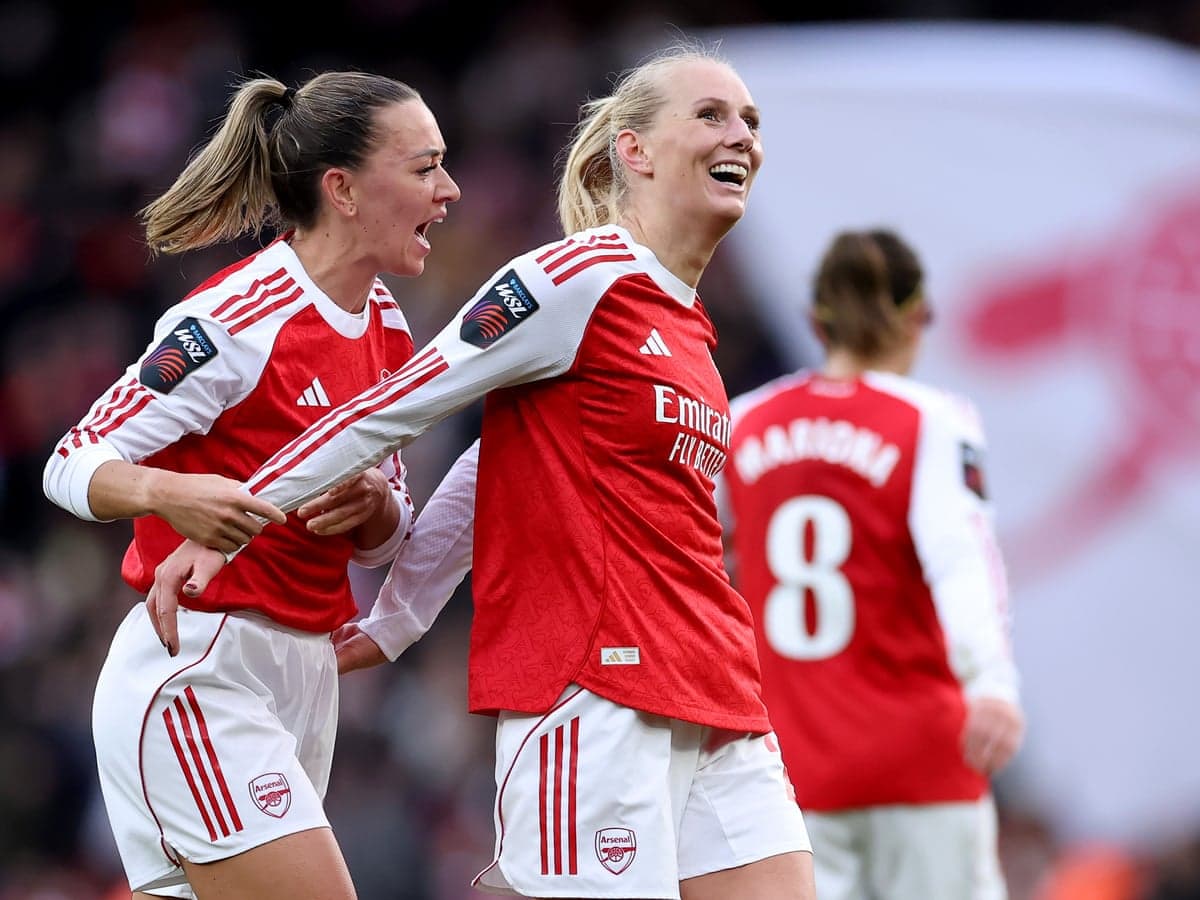
The opening 45 minutes played out exactly as those numbers warned. Liverpool W’s season-long defensive pattern has been clear: they concede heavily in waves, especially between 46-60 minutes (20.00% of their goals against) and 76-90 minutes (25.71%). But even before those danger zones, their vulnerability between 16-45 minutes – where 34.28% of their goals against arrive – left them exposed to an Arsenal side that thrives on early control and late punishment. Arsenal W’s own goal distribution is telling: 18.87% of their goals come in the first 15 minutes, 16.98% between 16-30, and a devastating 26.42% between 76-90. The first half at Anfield, with Arsenal W racing into a 0-3 lead by half-time, was the statistical script made flesh.
Tactical Overview
Tactically, Liverpool W’s starting XI told of a side trying to blend youth, running power and a bit of guile. J. Falk anchored them from the back, with G. Fisk – a defender who has blocked 9 shots across the campaign and carries a red-card history – central to their last line. The presence of F. Nagano and D. O’Sullivan hinted at a midfield tasked with absorbing pressure and springing counters, while M. Enderby and B. Olsson offered the main attacking threat. Olsson, with 4 goals and 2 assists in total and a direct, duel-heavy style (60 duels, 22 won), has been Liverpool W’s sharpest attacking edge this season.
Arsenal W, by contrast, arrived with depth and variety. D. van Domselaar in goal fronted a defence that has conceded just 14 goals overall – an average of 0.5 at home and 0.7 on their travels – protected by the likes of C. Wubben-Moy and K. McCabe. Ahead of them, the creative and rotational wealth was formidable: V. Pelova, M. Caldentey and C. Foord interchanging behind a dual threat of S. Blackstenius and A. Russo. Russo, with 6 goals and 2 assists overall, 32 shots (22 on target) and 16 key passes, is Arsenal W’s archetypal modern nine-and-a-half: link player, finisher, and pressing trigger rolled into one.
Key Duels
The “Hunter vs Shield” duel in this fixture was twofold. For Liverpool W, the hunter was Olsson, backed by Enderby’s late surges from midfield. Enderby’s season – 3 goals, 2 assists, 21 dribble attempts with 11 successful, and 88 total duels (41 won) – underlines her role as the carrier who can break lines. Their task was to puncture an Arsenal W unit that, on their travels, concedes only 0.7 goals per game and has collected 5 away clean sheets. The fact Liverpool W found a single goal in the second half was a minor victory against that defensive shield, but the damage had long been done.
For Arsenal W, the primary hunters were Russo and Blackstenius. Blackstenius, with 5 goals and 2 assists in total and 26 shots (14 on target), brings verticality and penalty-box instincts. Around them, O. Smith – 4 goals, 2 assists, 19 key passes and 19 tackles – represents the “engine room” in the truest sense, bridging midfield and attack. Her duel with Liverpool W’s central screen of Nagano and O’Sullivan was always going to dictate how deep Liverpool W were forced to defend. Once Arsenal W established territory, their timing profile took over: early pressure, sustained waves, and the threat of a late surge that Liverpool W’s numbers suggest they rarely survive unscathed.
Discipline and Tactical Texture
Discipline and absences also fed into the tactical texture. Liverpool W have lived dangerously with cards this season: 11 of their yellow cards arrive between 61-75 minutes (35.48%), and they have seen red in the 16-30 and 61-75 windows. G. Bonner, on the bench here, carries a red card from earlier in the season, while Fisk’s disciplinary record includes 2 yellows and a yellow-red combination. Arsenal W’s main card magnet is C. Kelly, whose 4 yellow cards in just 299 minutes show the edge she brings when introduced. That depth of aggressive, high-intensity options from the bench – Kelly, O. Smith, F. Leonhardsen-Maanum, S. Holmberg – contrasts with Liverpool W’s reliance on a tighter core group and explains why late-game scenarios tend to tilt towards Arsenal W.
Statistical Prognosis
From a statistical prognosis perspective, the result aligns almost perfectly with the underlying trends. Arsenal W’s overall scoring rate of 2.4 goals per game, against Liverpool W’s concession rate of 1.5, always pointed to multiple Arsenal goals. Conversely, Liverpool W’s overall scoring average of 1.0 per match, up against an Arsenal W defence that allows just 0.6, suggested that even a single home goal would require either a moment of quality from Olsson or Enderby, or a rare lapse in Arsenal’s structure.
Following this result, the narrative is clear. Liverpool W remain a side capable of flashes – especially early in games, where 35.00% of their goals for arrive in the opening 15 minutes – but structurally fragile, particularly as legs tire and concentration wanes. Arsenal W, meanwhile, look every inch a side whose xG and defensive solidity justify their league position: layered in attack, miserly at the back, and with the timing of a team that knows exactly when and how to turn control into scoreboard pressure.