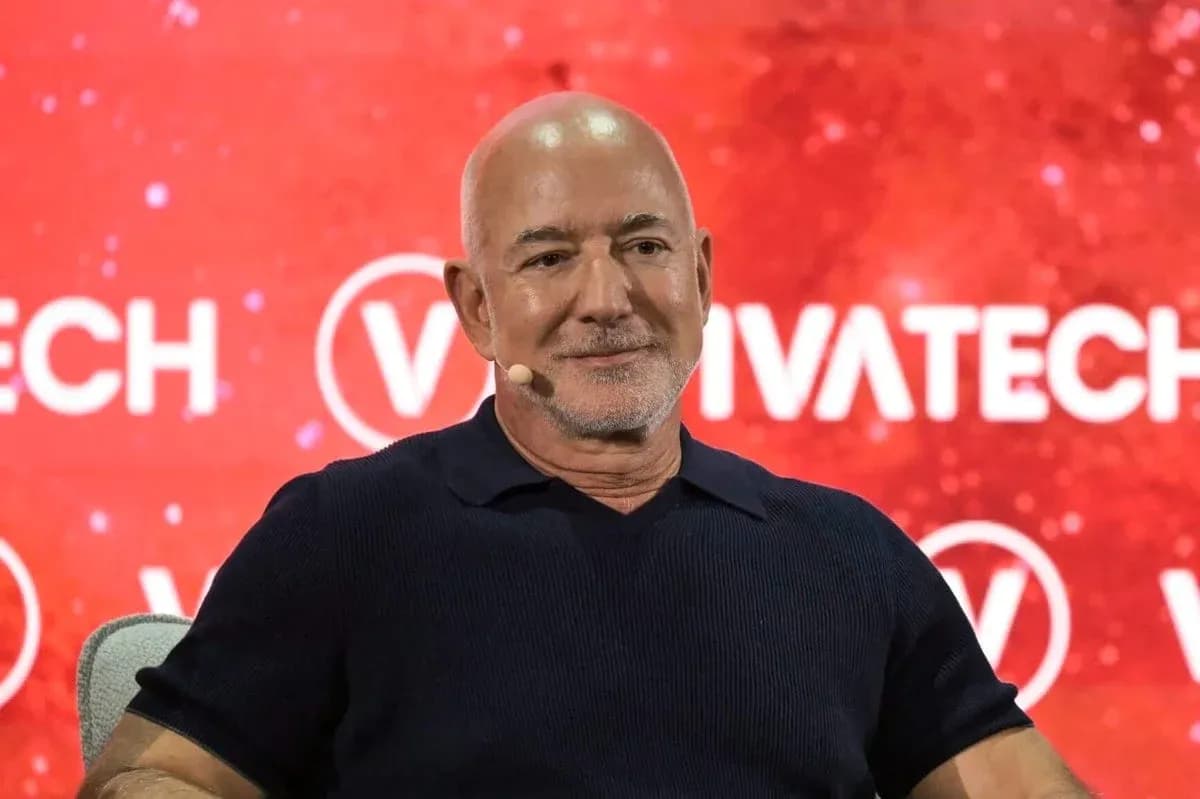
Liverpool Secures Minority Stake from Amit Bhatia and Jeff Bezos
Liverpool have brought one of the world’s richest men into Anfield’s orbit — but not into the boardroom, and not to rip up the club’s careful financial playbook.
Fenway Sports Group (FSG) have agreed to sell a significant minority stake in Liverpool to a new consortium fronted by British-Indian businessman Amit Bhatia and backed by K5 Sports, the investment fund linked to Jeff Bezos, and the family office of Facebook co-founder Eduardo Saverin and his wife Elaine.
The deal, announced on Friday, marks Bezos’ first move into sports ownership after years of speculation around possible bids for major U.S. franchises. Sources familiar with the transaction say the stake is expected to be in the region of 30 per cent to one-third of the club, though the exact figure has not been disclosed because of confidentiality agreements.
A new power bloc — but FSG stay in charge
This is not a takeover. FSG remain firmly in control.
The Boston-based group will retain majority ownership and full operational control, and there will be no change to Liverpool’s leadership structure or day-to-day running, according to sources briefed on the plans. This is FSG bringing in heavyweight partners, not handing over the keys.
Bhatia’s 1892 Holdings consortium is the driving force of the deal. He becomes vice-chairman of the club and joins the Liverpool board, where he will sit alongside Elaine Saverin and Bryan Baum of K5 Sports. Bezos, despite his profile and wealth, will not take a board seat.
It is Liverpool’s first major external minority investment since Dynasty Equity bought around three per cent of the club in September 2023 for close to $200million.
FSG president Mike Gordon framed the move as a continuation of the group’s long-term strategy rather than a reaction to short-term pressures.
“Liverpool has always been built by thinking beyond one season and making decisions with the club’s long-term interests in mind,” he said. “As we considered this opportunity, it became clear that Amit and the consortium shared our long-term philosophy and appreciation for what makes Liverpool special.”
Bhatia, speaking on behalf of 1892 Holdings, called the deal “a huge privilege” and stressed his admiration for what FSG have built at Anfield. “We are making this investment because we believe deeply in Liverpool and its leadership,” he said.
No transfer war chest – yet
For supporters eyeing the next transfer window, the message is blunt: don’t expect a sudden spending spree.
Those close to the deal are clear that there will be no immediate injection of extra cash for this summer’s recruitment. The transfer strategy mapped out before the window remains in place, and Liverpool’s broader approach to squad building will not be torn up.
So why is this eye-catching? Because of what it could mean over the next decade rather than the next deadline day.
FSG insist they were not searching for a bailout. They were looking for partners who could expand Liverpool’s reach and strengthen the business around the football operation. Bhatia’s network in Asia and the technology and venture capital clout of the other investors are expected to open commercial doors and deepen the club’s global footprint.
FSG still carry the heaviest load. They keep the majority, they keep the control, and they keep responsibility for the big calls. How much influence Bhatia exerts remains to be seen. If he operates mostly in the background, that would fit FSG’s long-standing reluctance to dilute their authority, despite regular interest from would-be investors.
What the deal underlines is FSG’s extraordinary success as sports investors. Selling roughly a third of a club they bought in 2010 for a fraction of its current value, while retaining control, is one of the standout business stories of the Premier League era.
The money behind the move
The names involved would not look out of place on a global rich list — because they are on it.
Jeff Bezos, 62, founded Amazon from his garage in 1994 and turned it into the world’s biggest e-commerce company. Forbes’ Real Time Net Worth ranks him as the third-richest person on the planet with an estimated fortune of $272.1bn. He stepped down as Amazon CEO in 2021 but remains executive chairman, and owns The Washington Post and space company Blue Origin.
Eduardo Saverin, 44, co-founded Facebook with Mark Zuckerberg while at Harvard. Born in Brazil and raised partly in the United States, he moved to Singapore in 2009 and renounced his U.S. citizenship ahead of Facebook’s initial public offering. His venture fund B Capital, launched in 2015 with Raj Ganguly, manages more than $12bn in assets.
Amit Bhatia, 46, brings deep City and industrial ties. A former Morgan Stanley investment banker, he chairs British construction giant Breedon Group, runs AyBe Capital Advisors and helped found property investment firm Summix Capital. His 2004 marriage to Vanisha Mittal, daughter of steel tycoon Lakshmi Mittal, linked him to one of the most powerful families in global business. Lakshmi Mittal, once the world’s third-richest man, now sits 64th on Forbes’ list with an estimated $33.9bn; Saverin is just two places below on $33.2bn.
Their sporting track records
Bhatia is the only member of the trio with substantial football boardroom experience.
He spent nearly 19 years at Queens Park Rangers, serving as vice-chairman until 2018 and then chairman until 2023. In July he stepped down from the QPR board and transferred his shares to majority owner Ruben Gnanalingam, bringing his long association with the Championship club to an end.
Saverin has already come close to Premier League ownership. He was part of the consortium that backed former Boston Celtics co-owner Steve Pagliuca’s bid to buy Chelsea in 2022 after Roman Abramovich was forced to sell under UK government pressure following Russia’s invasion of Ukraine.
Bezos has flirted with the idea of entering elite sport before. He explored potential bids for NFL franchises the Washington Commanders and the Seattle Seahawks but never pulled the trigger. Liverpool is his first concrete step into the sector.
Why FSG chose this moment
FSG’s stance has been consistent. They would consider new shareholders only if the terms suited Liverpool and helped the club grow.
“John Henry has been very up front about the fact that if there ever was an opportunity for investment that would help the club, then they would seriously consider it,” chief executive Billy Hogan said last month, echoing a 2022 FSG statement that left the door open to minority investment “under the right terms and conditions.”
This is not the first time FSG have invited outside capital into their sports empire. In March 2021, RedBird Capital Partners paid around $735m for an 11.5 per cent stake in FSG, a move that helped stabilise finances in the wake of the Covid-19 pandemic. Over two years later, Dynasty Equity injected just under $150m for roughly three per cent of Liverpool, with much of that money used to fund the Anfield Road Stand expansion, buy back the Melwood training ground for the women’s team and repay a slice of bank debt.
The new deal goes much further in scale but not in control. FSG still hold the reins, yet they now have a powerful group of partners sharing the financial and strategic burden of pushing the club on.
There is also the cold, hard logic of timing. As Arjun Nagarkatti of Deutsche Bank notes in a broader context, every investor must decide when it is “a good time to monetise their asset”. Football, with its surging valuations, is no exception. After 14 years at Anfield, during which Liverpool have enjoyed major on-field success and a huge rise in value, FSG have chosen this moment to cash in on a large minority stake.
What changes financially for Liverpool?
Since 2010, FSG have run Liverpool on a self-sustaining model. Revenue generated by the club is reinvested in the squad, infrastructure and operations. That approach has frustrated fans at times, particularly when rivals appeared to spend more aggressively, but it has underpinned a return to the summit of English and European football.
The arrival of Bhatia, Bezos and Saverin does not rip that model up. It strengthens the foundations beneath it.
A consortium of this financial weight can help Liverpool grow commercial revenues, unlock new sponsorships and deepen existing partnerships. Under UEFA’s new squad cost ratio rules, which replace the Premier League’s profit and sustainability regulations, sustainably higher income translates into greater long-term spending power in the transfer market.
The Dynasty Equity deal already marked a shift, with £146.5m of shareholder cash flowing into Liverpool across the 2023-24 and 2024-25 seasons, mostly to cover infrastructure projects. It is highly unlikely that the proceeds from this much larger stake sale will simply be funnelled straight into transfer fees or wages. Football’s financial regulations blunt the impact of owners trying to pour in vast sums overnight.
What could change is the scale and flexibility of owner funding behind a business that has largely had to live off what it earns.
A future takeover on the cards?
The obvious question hangs in the air: is this the first step towards a full sale to the new consortium?
Those close to Liverpool insist not. The transaction documents do allow for flexibility over how the relationship might evolve, but there is no built-in pathway that guarantees a bigger stake or a future takeover. FSG are adamant this is not a soft launch for an exit.
For now, Liverpool find themselves in a rare position. One of the game’s most storied clubs, still controlled by the owners who rebuilt it, now backed by a fresh wave of global capital and some of the most influential figures in modern business.
The model stays. The money deepens. The question is whether that combination can keep Liverpool at the sharp end of a sport where the financial arms race only ever seems to accelerate.