
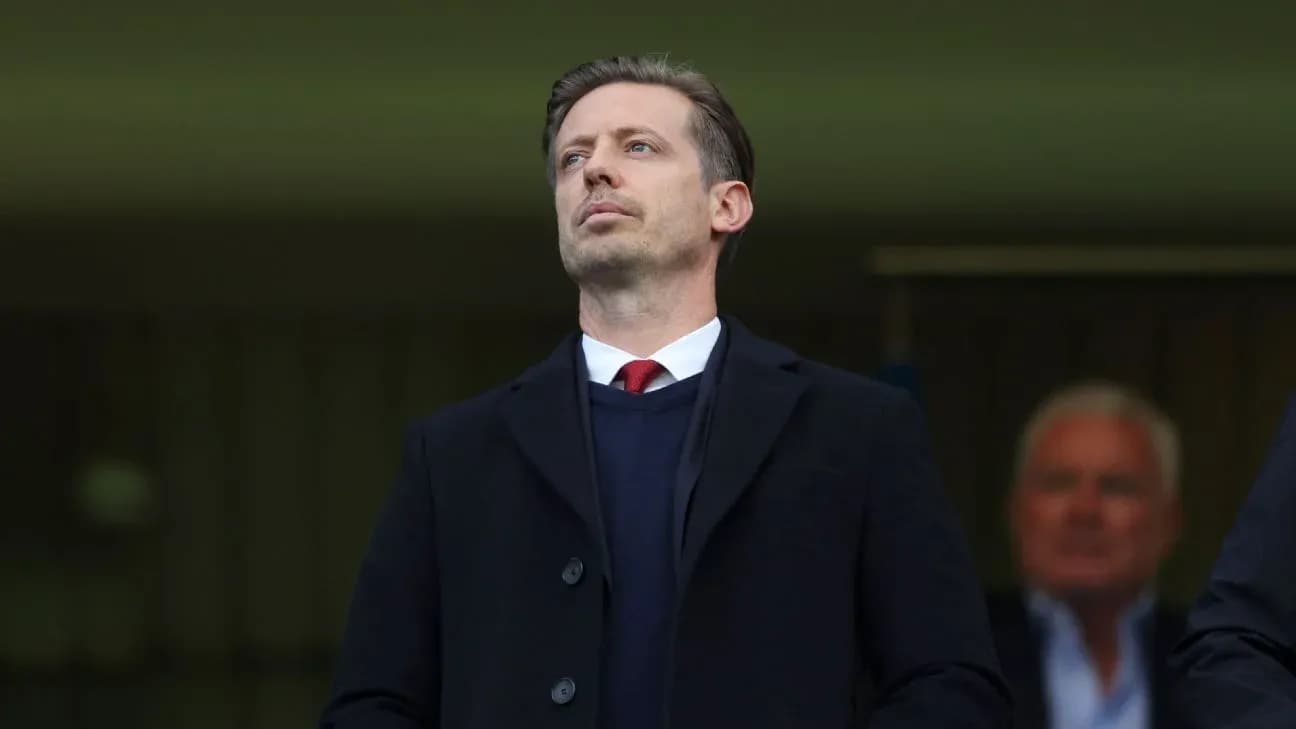
Liverpool Faces Turbulence as Michael Edwards Departs
Liverpool have been living with transition on the pitch for more than a year. Now the real turbulence is upstairs.
Michael Edwards, the architect of so much of the club’s modern success and lately the chief executive officer of football for Fenway Sports Group, has walked away with a year still to run on his deal. He leaves immediately, and he leaves at a time when Liverpool’s hierarchy already feels fragile.
This was supposed to be Edwards’ second act at FSG. After his celebrated spell as sporting director under Jürgen Klopp ended in 2022, he returned in 2024 with a different brief: to spearhead the owners’ push for a multi-club model and secure a second team under the FSG umbrella. The project never got off the runway.
FSG looked hard. More than 20 clubs were examined, among them Bordeaux in France and Málaga in Spain. Presentations were made, options laid out. Then the plan was quietly parked earlier this year. With no tangible progress, Edwards’ frustration grew, and attempts from the American ownership to persuade him to stay fell flat.
So he goes, with FSG insisting this is all part of a “planned transition following the completion of key strategic priorities.” The timing tells a different story. Liverpool are already digesting major change: Arne Slot, appointed only last year, has been replaced as head coach by former AFC Bournemouth manager Andoni Iraola. Now the man who was meant to shape the group’s wider football vision has departed as well.
Power will flow back towards Boston. FSG president Mike Gordon, long a central figure in Liverpool’s modern era, is expected to take a more hands-on role in the day-to-day running of the club. He knows the terrain, but this is a very different landscape from the one Liverpool dominated when Edwards first helped build a title-winning machine.
There is another fault line to watch. Sporting director Richard Hughes, who brought Iraola to Anfield and whose contract runs until the summer of 2027, is already being linked with Saudi Pro League side Al Hilal. If those rumours harden into something more concrete, Liverpool’s football structure could face a second major departure in quick succession.
Edwards’ influence on that structure is not in doubt. Across his two spells, he reshaped Liverpool’s football operation, modernising recruitment and strategy and helping to assemble the squad that finally delivered the Premier League title in 2025. The club’s data-driven, joined-up approach became a reference point across Europe, and Edwards’ name a byword for smart, decisive team-building.
His parting words were gracious and measured. He called it “a privilege to return to Fenway Sports Group and Liverpool Football Club at such an important moment,” insisting he leaves believing the club is “in a strong position, with outstanding people, a clear direction and the foundations in place for continued success.” He acknowledged that FSG’s broader football ambitions had “evolved differently” from the original vision, but expressed pride in the range of options his team had put before ownership.
He also thanked Mike Gordon, John Henry, Tom Werner, colleagues across FSG and Liverpool, and, pointedly, the supporters “whose passion makes this club so special,” saying he would always be grateful to have been part of its story.
The story now moves into a new chapter without him. A fresh head coach, a sporting director whose own future is under scrutiny, an ownership group recalibrating its strategy after shelving expansion plans, and a president stepping back into the cockpit.
For a club that once made stability its greatest strength, the next decisions in the boardroom may define whether Liverpool stay on their carefully built path – or are forced to start drawing the blueprint all over again.



