Liverpool vs Crystal Palace: Pivotal Clash in Champions League Race
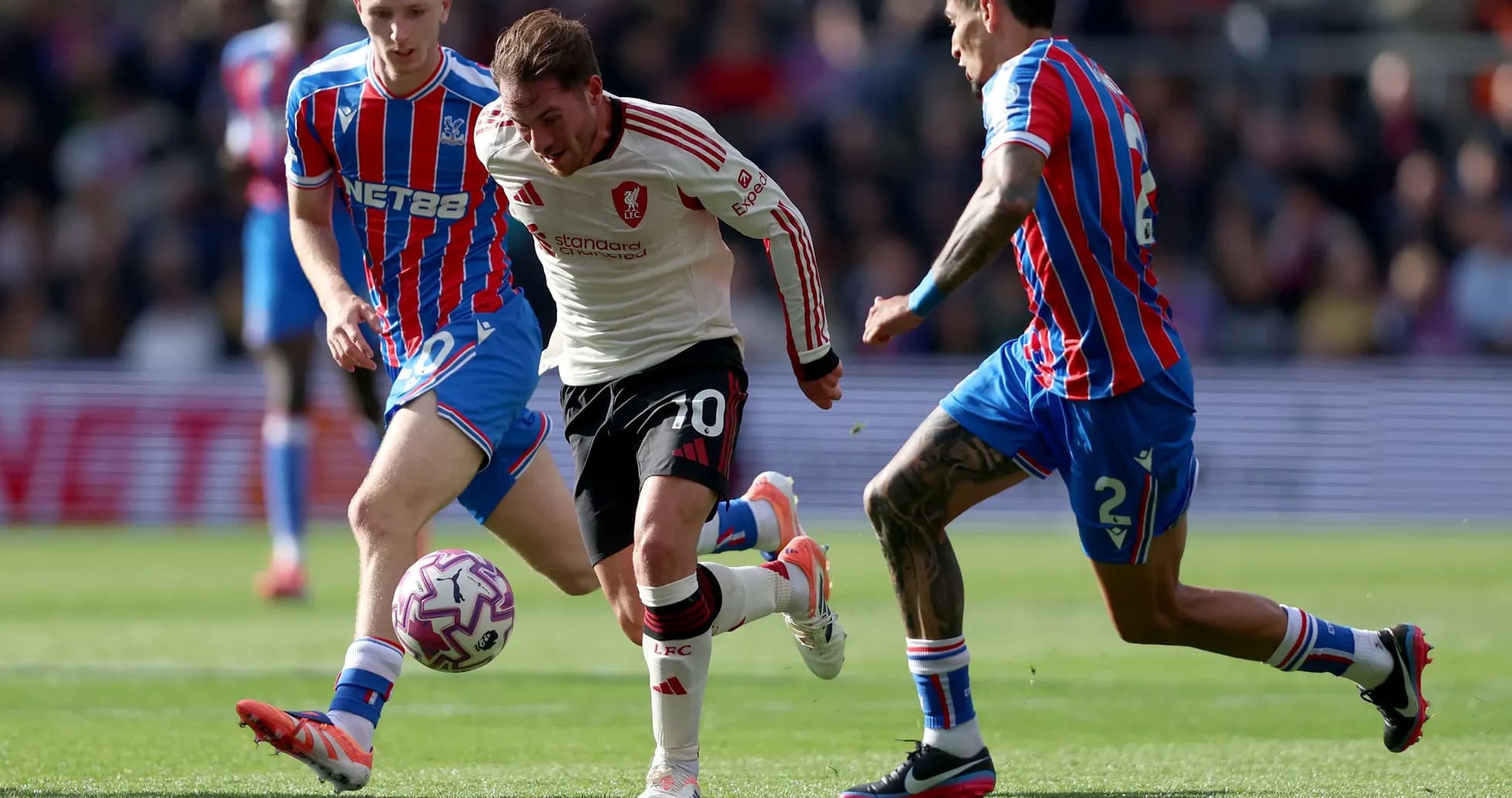
Liverpool host Crystal Palace at Anfield in a Regular Season - 34 Premier League fixture that is pivotal for the Champions League race. In the league phase, Liverpool sit 5th with 55 points from 33 games (54 goals for, 43 against), needing a strong finish to secure a Champions League league-phase spot, while Crystal Palace are 13th on 43 points from 32 games (35 goals for, 36 against), close to mathematical safety but still short of complete security. The stakes are asymmetric: for Liverpool this is a must-win to keep pressure on the top four, for Palace it is a chance to consolidate mid-table and avoid being dragged back towards the bottom.
Head-to-Head Tactical Summary
The recent head-to-head pattern is surprisingly Palace-favouring and tactically awkward for Liverpool. On 29 October 2025 in the League Cup 4th Round at Anfield, Crystal Palace won 3-0, leading 2-0 at half-time and managing the game to a clean-sheet away win. A month earlier, on 27 September 2025 in the Premier League at Selhurst Park, Palace again took control, beating Liverpool 2-1 after leading 1-0 at half-time. In the 2025 Community Shield final at Wembley Stadium on 10 August 2025, the sides drew 2-2 in normal time (Liverpool led 2-1 at half-time, full-time 2-2) before Palace edged the penalty shootout 3-2. Going back to the 2024 Premier League, Liverpool’s last league meeting at Anfield on 25 May 2025 ended 1-1 with Palace leading 1-0 at half-time, while Liverpool’s most recent league win in this matchup was a 1-0 away victory at Selhurst Park on 5 October 2024, having been 1-0 up at half-time. The tactical thread: Palace have repeatedly struck first and protected leads, both home and away, with Liverpool struggling to break down their structure at Anfield.
Global Season Picture
- League Phase Performance: In the league phase, Liverpool’s 5th place is built on 16 wins, 7 draws and 10 losses from 33 matches, with 54 goals scored and 43 conceded (goal difference +11). At Anfield they have 9 wins, 4 draws and 3 defeats from 16 home games, scoring 29 and conceding 17. Crystal Palace, in 13th, have 11 wins, 10 draws and 11 losses from 32 league fixtures, with 35 goals for and 36 against (goal difference -1). Their away record is notably strong for a mid-table side: 7 wins, 2 draws and 6 losses from 15 away games, with 19 goals scored and 17 conceded.
- All-Competition Metrics: Across all phases of the competition, Liverpool show an attacking tilt with 54 total goals in 33 fixtures and averages of 1.8 goals per home game and 1.5 away (1.6 overall). Defensively they concede 1.1 per home game and 1.5 away (1.3 overall), pointing to a more fragile away structure than at Anfield. Their disciplinary profile is aggressive late on, with yellow cards peaking in minutes 76-90 (14 yellows, 28.57% of their total) and additional cards in added time, indicating intensity and possible risk management issues in closing phases. Red cards are rare but have occurred in the 91-105 window. Crystal Palace, across all phases, are more conservative offensively with 35 goals in 32 matches (0.9 at home, 1.3 away, 1.1 overall) and a balanced defence conceding 1.1 goals per game both home and away. Their card distribution is spread, but they accumulate a high share of yellows between minutes 31-60, reflecting a combative mid-game phase, and have had red cards in the 46-75 period, showing some risk around tactical fouls or transitions.
- Form Trajectory: In the league phase, Liverpool’s form string “WWLDL” signals inconsistency: two wins followed by a draw and two defeats. That pattern underlines why this fixture is critical; their margin for error in the top-four race is shrinking. Palace’s “DWDWL” in the league phase shows a team that is hard to beat but still uneven: draws bookending wins and a loss, consistent with a mid-table side capable of upsetting stronger opponents but lacking sustained momentum.
Tactical Efficiency
Without explicit numerical attack/defence indices from the comparison block, the efficiency picture must be inferred from season averages. Across all phases, Liverpool’s attack is productive (1.6 goals per game) but not elite relative to their defensive leakage (1.3 conceded), producing only a moderate positive goal balance. At home, the profile is more efficient: 1.8 scored versus 1.1 conceded suggests that when they control territory and tempo at Anfield, their attack-to-defence ratio is favourable and compatible with a top-four contender. Palace’s attack/defence balance is more cautious but efficient in context: 1.1 goals scored and 1.1 conceded across all phases yields a neutral goal profile, typical of a compact, counter-attacking side. Their away numbers (1.3 scored, 1.1 conceded) indicate that their game model travels well: they do not open up defensively despite carrying more attacking threat on the road. In practical terms, Liverpool’s efficiency edge is volume-based (more chances, more goals), while Palace’s lies in structural discipline and game-state management, as evidenced by their ability in recent head-to-heads to establish and then protect leads.
The Verdict: Seasonal Impact
For Liverpool, this match is season-defining in the Champions League race. In the league phase they are already in the Champions League league-phase qualification zone but with only 55 points and a mixed recent run, any dropped points at Anfield against a mid-table opponent would significantly weaken their leverage over rivals, especially with only a small number of games remaining. A win would stabilise their trajectory, reinforce Anfield as a high-yield venue (already 29 goals for and only 17 against at home) and keep them on course for top-four, possibly even opening a late push higher depending on other results. A draw would extend their inconsistent pattern and likely turn subsequent fixtures into must-win scenarios. A defeat, given Palace’s lower-table status, would be a major setback that could open the door for challengers behind them and potentially drop them out of the top-four conversation.
For Crystal Palace, the seasonal impact is more about consolidation than ambition. Sitting 13th with 43 points and a nearly neutral goal difference, even a point at Anfield would move them closer to a secure mid-table finish and validate their strong away profile. A win would be transformational for their narrative: it would confirm their recent head-to-head dominance as structurally repeatable, not accidental, and could shift internal expectations towards targeting a top-half finish rather than simply avoiding relegation concerns. However, defeat would not be catastrophic; their cushion is sufficient that the primary risk is psychological—losing some of the belief built up by their recent results against Liverpool—rather than a dramatic change in relegation probabilities.
Overall, the asymmetry is clear: Liverpool enter under pressure to convert home dominance into three points to protect Champions League ambitions, while Palace can approach with a controlled, structurally disciplined game plan, knowing that any positive result at Anfield would significantly enhance the perception and stability of their 2026 campaign without the same existential stakes.