Lecce vs Fiorentina: Tactical Insights from Serie A Draw
The lights at Via del Mare had barely cooled when the table told its brutal truth. Following this result, Lecce remain 18th in Serie A on 28 points, locked in the relegation zone with a goal difference of -24, while Fiorentina hold 15th on 36 points and a goal difference of -7. A 1–1 draw in Round 33 feels very different for each side: survival lifeline for Lecce, missed opportunity for Fiorentina.
I. The Big Picture – Structures and Seasonal DNA
The game ended level, but the shapes told a story of contrasting identities.
Lecce lined up in a 4-2-3-1, the club’s most trusted structure this season (17 league uses). Wladimiro Falcone stood behind a back four of Dorgu Veiga, Jannik Siebert, Tiago Gabriel and Antonino Gallo. In front, Ylber Ramadani and Ousmane Ngom formed the double pivot, with Santiago Pierotti, Lameck Coulibaly and Kaba Ndri supporting lone forward Walid Cheddira.
Heading into this game, Lecce’s numbers were those of a side permanently on the edge: only 22 goals in total across 33 matches, with just 12 at home. That is an average of 0.7 goals at home and 0.7 overall, against 1.4 conceded both at home and overall. The structure is conservative by necessity, built to protect rather than to dominate.
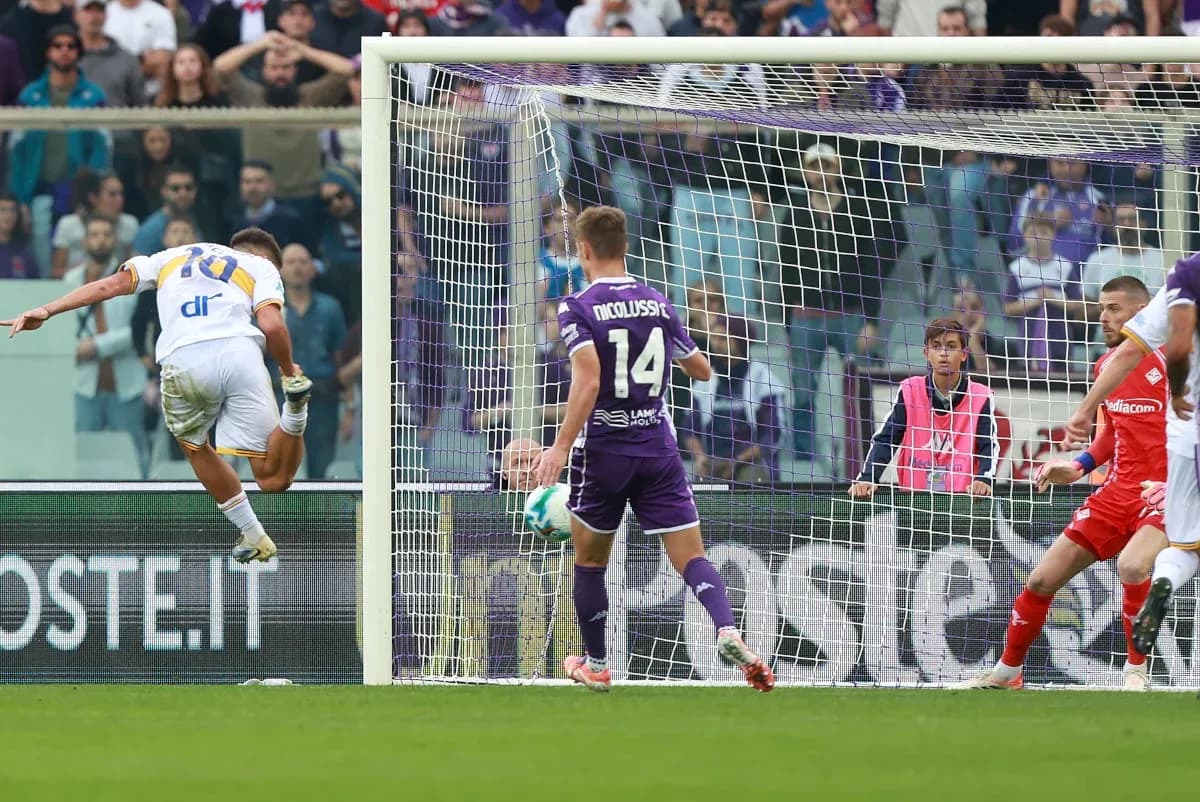
Fiorentina arrived with a 4-3-3 that has underpinned their season (10 league uses). David de Gea was shielded by Dodo, Marin Pongračić, Luca Ranieri and Robin Gosens. Rolando Mandragora, Nicolò Fagioli and Cher Ndour formed a technically fluent midfield, with Jack Harrison and Albert Gudmundsson flanking central striker Roberto Piccoli.
Their season’s statistical profile is of a team that wants to play: 38 goals in total from 33 games (1.2 overall), split into 20 at home and 18 on their travels, but undermined by 45 conceded overall, including 25 away at an average of 1.5. They create enough to hurt teams, yet leave the back door open just enough to be punished.
II. Tactical Voids – Absences and Discipline
Both squads walked into this fixture with clear voids.
Lecce were without M. Berisha (thigh injury), F. Camarda (shoulder injury), S. Fofana (inactive), Kialonda Gaspar (knee injury) and R. Sottil (back injury). The loss of Gaspar in particular stripped Di Francesco of a defender who, over the season, has been a specialist in emergency work: 21 successful blocks and strong aerial duels. His absence forced reliance on Siebert and Tiago Gabriel at the heart of the defence, demanding more positional discipline and less margin for error.
Fiorentina’s missing list was no less significant. N. Fortini (back injury), Moise Kean (calf injury), T. Lamptey (knee injury) and F. Parisi (inactive) all sat out. Kean’s absence removed an attacker who, heading into this game, had 8 total league goals and 2 penalties scored without a miss. Without his vertical threat and penalty-box presence, Vanoli leaned more heavily on Gudmundsson’s creativity and Piccoli’s link play.
Disciplinary trends added an undercurrent of tension. Lecce’s season-long yellow card distribution shows a clear late-game spike: 27.27% of their yellows arrive between 76-90 minutes, with another 10.91% from 91-105. Fiorentina mirror that pattern with 26.32% of their yellows in the 76-90 window and 15.79% from 91-105, plus 2 red cards concentrated entirely in the 76-90 range. This match was always likely to become stretched and scrappy as legs and nerves tired, and the 1–1 scoreline suggests exactly that sort of attritional, tense finale.
III. Key Matchups – Hunter vs Shield, Engine Room
Hunter vs Shield
For Lecce, the “hunter” role is shared rather than carried by a single prolific scorer. Cheddira’s presence as the spearhead of the 4-2-3-1 is less about volume of goals and more about occupying centre-backs, running channels and opening lanes for Pierotti and Ndri. Against Fiorentina’s away defence – which had conceded 25 goals on their travels at an average of 1.5 – the plan was clear: test the spaces either side of Pongračić and Ranieri.
Pongračić, though, is no passive shield. Over the season he has made 22 successful blocks and 33 interceptions, a defender comfortable stepping into duels (223 contested, 110 won) and absorbing pressure. His 10 yellow cards underline the edge he brings; he defends aggressively, and Lecce’s wide trio were always going to try to draw him out and expose the gaps behind.
On the other side, Fiorentina’s front three carried the creative burden left by Kean. Gudmundsson, who has 5 goals and 4 assists in the league plus 3 penalties scored from 3, is a red-card risk but also a high-impact outlet between the lines. Against a Lecce side conceding 1.4 goals per game overall and often forced into last-ditch defending, his ability to receive between Ramadani and the centre-backs was central to Fiorentina’s threat.
The Engine Room
The heart of this contest lay in midfield. Ylber Ramadani, one of Serie A’s most industrious enforcers this season, again anchored Lecce. Heading into this game he had 75 tackles, 10 successful blocks and 42 interceptions in league play, plus 7 yellow cards. He is the metronome and the shield, asked to screen, break up play and launch counters with his 1,284 completed passes at 80% accuracy.
Opposite him, Fagioli and Mandragora offered Fiorentina a different kind of engine: more circulation, more short combinations, less raw destruction. Cher Ndour’s presence on the left of the three added verticality and late runs into the box, a constant test of Lecce’s double pivot discipline.
Without Gaspar, Ramadani’s task doubled in importance. He had to slide across to protect Siebert and Tiago Gabriel, while also closing Fagioli’s passing lanes. Every time he stepped out to press, space opened behind him for Gudmundsson to drift into, and Fiorentina’s equal share of control in midfield stemmed from exploiting those micro-moments.
IV. Statistical Prognosis – xG Shape and Defensive Solidity
We do not have explicit xG numbers, but the season-long data sketches a plausible Expected Goals landscape for this match.
Lecce, with only 0.7 goals scored on average both at home and overall and having failed to score in 9 home games, typically operate on fine margins. Their clean-sheet count of 4 at home and 8 overall shows they can dig in, but their 23 goals conceded at home underline how often they are forced into survival mode.
Fiorentina’s away profile – 18 goals scored and 25 conceded on their travels, with 6 away games where they failed to score – suggests an xG pattern of modest but consistent chance creation, offset by defensive lapses. Their 3 away clean sheets show they can shut games down, but not reliably.
A 1–1 draw fits those underlying trends almost perfectly: Lecce scraping a goal at home against a defence that concedes 1.5 away on average, Fiorentina finding a way through a back line that allows 1.4 overall but not managing to turn territorial and technical superiority into a second or third strike.
Following this result, Lecce’s tactical identity remains that of a survivalist: compact 4-2-3-1, reliant on Ramadani’s engine and the work rate of Pierotti, Coulibaly and Ndri around Cheddira. Fiorentina, even without Kean, stay true to their 4-3-3 DNA: ball-playing centre-backs, advanced full-backs in Dodo and Gosens, and a fluid front three led by Gudmundsson’s invention.
The narrative from Via del Mare is of two teams faithfully enacting their season-long scripts. Lecce cling to life by grinding points out of low-scoring, attritional contests; Fiorentina continue to walk the line between expressive football and defensive fragility. On this night, the numbers and the story aligned: one goal each, one point each, and a table that still leaves Lecce with everything to do.