Liverpool's Champions League Exit: A Night of Missed Opportunities
Arne Slot once shared a dressing room with Pierre van Hooijdonk at NAC Breda. He might remember the old striker’s most withering line about managers: replace them all with cats and the league would still have one champion and three relegated sides.
On nights like this, it feels uncomfortably close to the truth.
Liverpool are out of the Champions League, undone by Paris Saint-Germain with a clinical, almost cruel, 4-0 aggregate defeat. Two legs, two 2-0 losses, and two entirely different versions of the same team. The outcome never changed. The illusion that the manager might bend this tie to his will evaporated under the sheer weight of PSG’s superiority.
In Paris, Liverpool barely laid a glove. At Anfield, they threw everything they had at it for 45 minutes and still never came close.
The contrast was stark. The result was identical.
A tie lost before Anfield woke up
This quarter-final was effectively decided last week. Slot’s side took three shots in the first leg and somehow walked away with as many goals as they would manage across 21 efforts in the second. That statistic alone tells the story: PSG dictated the terms of engagement, regardless of Liverpool’s approach.
The plan at Anfield seemed obvious in hindsight: keep it tight for a half, then unleash the chaos. Drag PSG into a goalless opening, then gamble after the break. But if that really was the script, the casting was baffling.
Alexander Isak, on a pre-planned 45-minute limit, spent his entire allocation in the quiet half, touching the ball five times and threatening even less. When Liverpool finally went for broke, they did it without the most expensive attacker in British football history on the pitch.
Slot backed his structure over his firepower. The tie demanded the opposite.
Questions pile up quickly. If this was to be a furious, all-or-nothing response, why didn’t Mo Salah or Rio Ngumoha start after impressing against Fulham? Why wait until the game was already slipping away to introduce the players most likely to destabilise a defence that had spent an hour in relative comfort?
What was billed as another famous Anfield night instead drifted into a strange, uneventful stupor. For 60 minutes, the occasion barely flickered. The loudest noise came from the sense of time being wasted.
The penalty that never was – and the absurdity that followed
The tie flickered, briefly, around the moment that should have changed everything.
Alexis Mac Allister went down in the area under the lightest of contact from Willian Pacho. Maurizio Mariani pointed to the spot. Anfield erupted. Liverpool had a lifeline, or so it seemed.
Up in the commentary gantry, Mark Clattenburg, hired as the specialist voice of authority, delivered his verdict. Clumsy challenge. Contact on the foot. Penalty given on the field. VAR, he insisted, would not overturn it. There was, in his view, no clear and obvious error.
Jon Champion echoed the confidence: no sign of further intervention, no hint of a rethink.
Seconds later, Mariani stood at the pitch-side monitor. A few replays. A brief pause. Decision overturned.
No penalty.
The paradox was brutal. Clattenburg’s explanation wasn’t wild or biased; it was logical. Once a referee gives a penalty for contact, VAR is supposed to stay out of it unless the mistake is glaring. Yet the official whose job is to interpret that logic in real time watched the same footage and came to the opposite conclusion.
The episode didn’t ignite Liverpool. It simply added an air of farce to an already flat night. The champions of Europe carried on, unruffled. The sense that Liverpool might ride a wave of injustice never materialised.
Dembele decides, PSG indulge
Ngumoha, at least, refused to shrink. The teenager was excellent, demanding the ball, running at defenders, and forcing one sharp save from the outstanding Matvey Safonov. Salah, on what is likely to be his final Champions League appearance for Liverpool, carved out a glorious back-post chance for Milos Kerkez, who should have buried it.
Those moments came sandwiched between the two strikes that ended everything.
Ousmane Dembele, all whirring feet and cold precision, punished Liverpool twice. The first goal felt like the release of tension for PSG, a side that had been content to manage the evening. The second was indulgent, a reminder that when they chose to accelerate, they operated on a different level.
By then, Liverpool’s improvement after the interval almost made the defeat more damning. They played with greater intensity, pressed higher, committed bodies forward. They tried. They really did.
They still weren’t close.
Slot clung to that late surge in his post-match reflections, insisting Liverpool had shown they could compete with the champions of Europe. The evidence on the pitch suggested something harsher: on a night when the home side ran hotter, when the crowd roared louder, PSG simply tightened their grip and waited for their moments.
The margin wasn’t emotional. It was technical, tactical, individual. And it was clear.
The manager in the spotlight
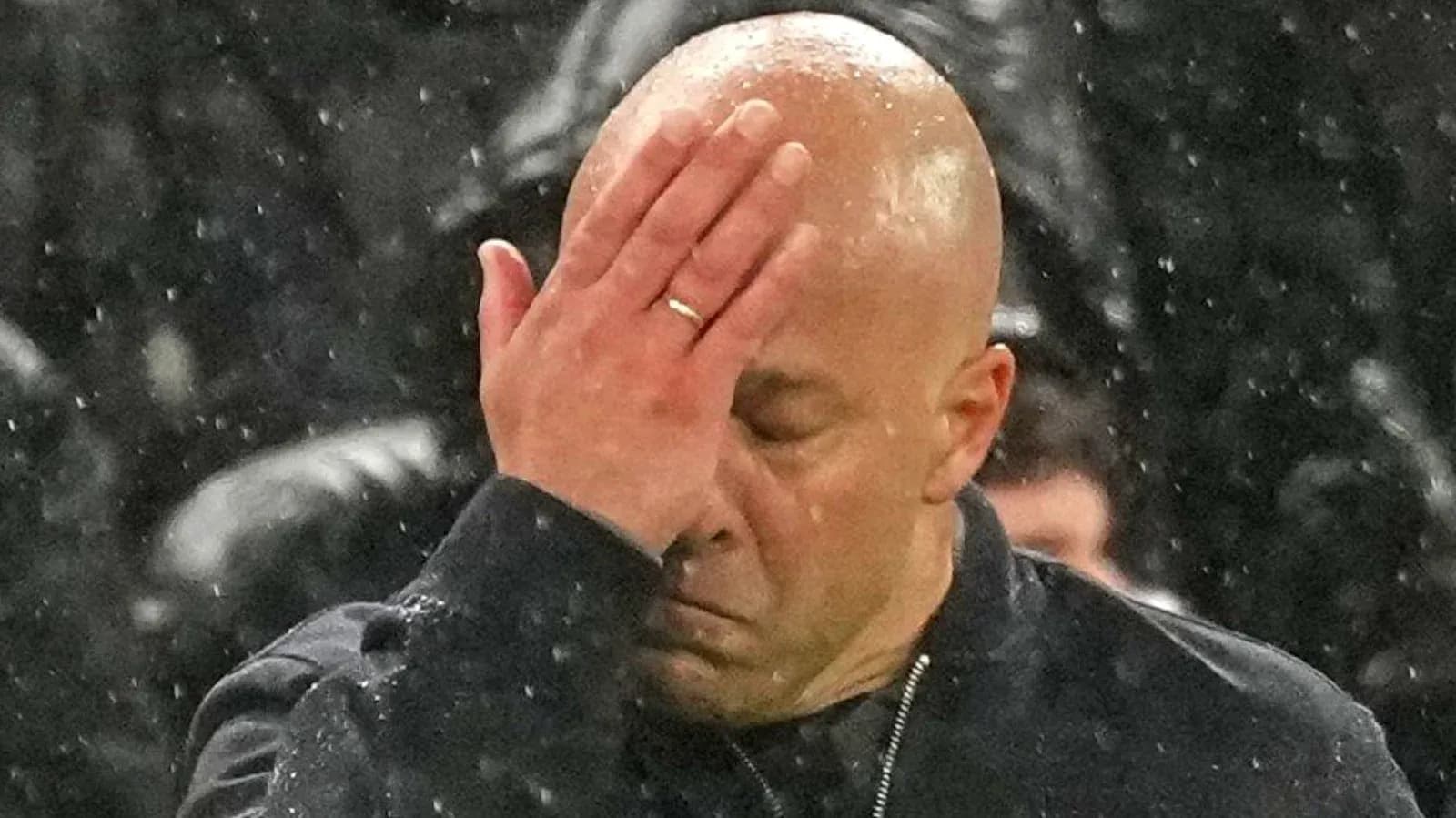
So much of this, inevitably, circles back to Slot. His defenders will argue that PSG’s quality would have exposed almost any plan. There is truth in that. Yet the structure of this tie leaves him with uncomfortable questions to answer.
Why did Liverpool effectively write off three of the four halves in a Champions League quarter-final? Why did the tactical bravery only appear once the situation had become desperate? Why did the team look more liberated at 2-0 down on aggregate than they ever did at 0-0?
If you’re going to go out to the best side in Europe, you can at least go out swinging from the start.
By the final whistle, the comparison that opened the night came back into focus. The Liverpool manager and the referee pundit on Amazon Prime had drifted into similar territory. Both talked, both explained, both justified. Neither altered the outcome in front of them.
On this evidence, cats might not have done worse. The problem for Liverpool is that, next season, they will need far more than that to close the gap to nights – and opponents – like this.