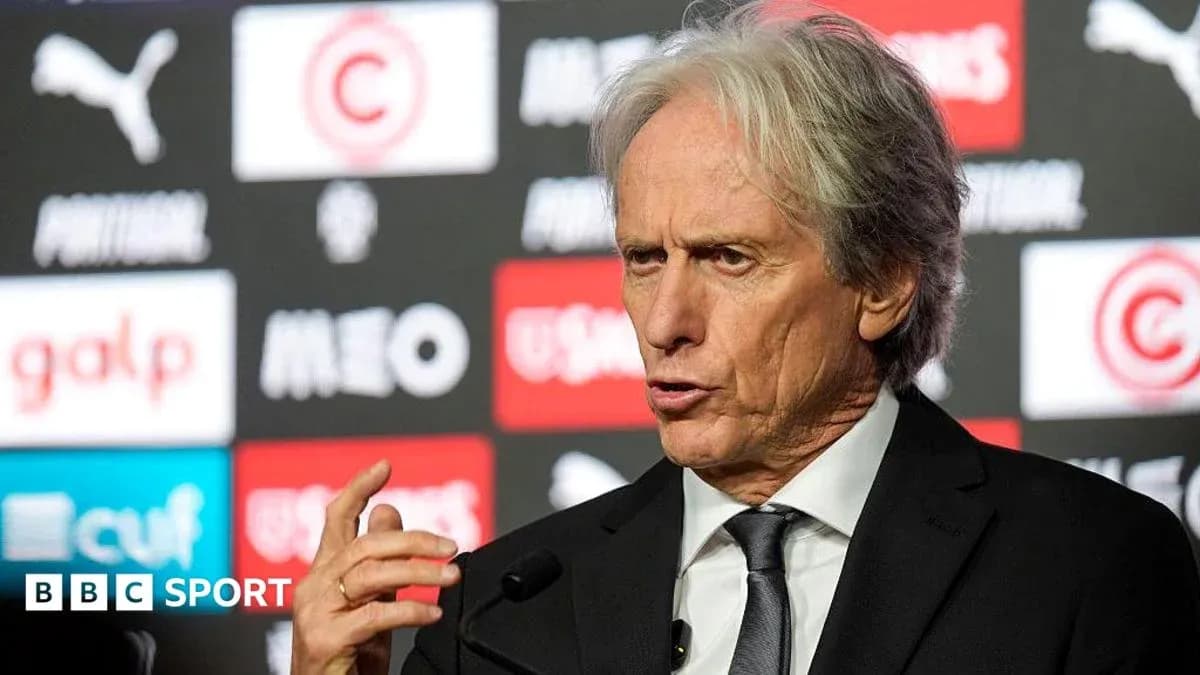
Jorge Jesus Appointed Portugal National Team Coach
Portugal have turned to one of their most seasoned and outspoken coaches to lead them into a home World Cup. Jorge Jesus, 71 years old and as combative as ever, has been appointed national team head coach on a four-year deal that runs through to the 2030 tournament, which Portugal will co-host with Spain and Morocco.
The announcement comes in the immediate aftermath of a flat World Cup campaign that ended with a 1-0 defeat to Spain in the last 16. Roberto Martinez had already signalled his intention to step down, closing a tenure that began in January 2023 and never fully convinced a demanding football nation.
Now, the federation has turned to a very different profile. Jesus arrives with a reputation forged in fiery touchline duels, tactical detail and an unshakeable belief in his own methods. He also arrives with one crucial relationship already in place: he knows Cristiano Ronaldo from the inside.
Ronaldo still central – on Jesus’ terms
Jesus worked with Portugal’s captain during his spell at Al Nassr, guiding the club to the Saudi Pro League title last season. That year together clearly left its mark. Speaking on Friday, the new Portugal coach made his stance on the 41-year-old unmistakably clear.
Ronaldo, he said, is a “symbol of Portuguese football”. As long as the forward is playing and in the right condition, Jesus will pick him – “within certain limits and under the conditions that I consider best for the national team”.
It was a line that did two things at once. It honoured Ronaldo’s status and record, but it also made plain that the hierarchy has changed. The national team will be built on Jesus’ criteria, not on sentiment.
Ronaldo has already confirmed that this World Cup was his sixth and final appearance at the tournament, a staggering milestone in itself, though he has stopped short of announcing a full retirement from international football. His club contract with Al Nassr runs until 2027, and Jesus was quick to stress that the veteran forward “is never going to be a problem for the national team. Not for the national team, nor for me.”
They enjoyed working together in Saudi Arabia, Jesus said, describing it as “easy to work with him”. He has not yet spoken to Ronaldo since taking the Portugal job, but the message was clear enough: if the captain keeps playing and meets the standards, the door remains open.
A serial winner returns to the Portuguese stage
For all the focus on Ronaldo, this is a major appointment in its own right. Jesus is one of Portugal’s most decorated and polarising coaches, a man whose career has stretched across the country’s biggest clubs and far beyond its borders.
He lifted three league titles with Benfica in his first spell there, in 2010, 2014 and 2015, and built sides that combined aggression, width and relentless pressing. In Brazil, he became a cult figure at Flamengo, winning five major trophies in a single year, including the 2019 Brazilian title and the Copa Libertadores, and leaving Rio de Janeiro with a hero’s status.
His most recent work has been in Saudi Arabia, where he claimed a domestic treble with Al Hilal in the 2023-24 season. Those honours underline why the Portuguese federation has turned to him now: he is used to pressure, used to big personalities, used to winning.
Now he steps into a job where all those traits will be tested at once. Portugal are not just chasing trophies abroad; they are preparing to host the world.
A new cycle, a familiar expectation
Jesus’ first match in charge will come quickly enough: a Nations League Group D opener against Wales on 24 September. It will be the first glimpse of how he intends to reshape a squad loaded with talent but still shadowed by questions about balance and identity.
The backdrop could hardly be more demanding. Portugal will share the 2030 World Cup with neighbours Spain and Morocco, a historic staging that turns every decision between now and then into part of a long build-up. Every squad list, every tactical tweak, every result will be measured against that looming tournament on home soil.
Martinez leaves behind a team that has been competitive but inconsistent in major knockout matches. Jesus arrives with a mandate to harden Portugal, to give them an edge that has too often deserted them when it mattered most.
He has the medals, the experience and the personality to try. He also has a global icon who is not ready to close the book on his international career.
How Jesus manages that final chapter of Ronaldo’s time with Portugal – and how he builds the next generation around it – will define not just his tenure, but the country’s prospects when the World Cup finally comes to their own doorstep.