
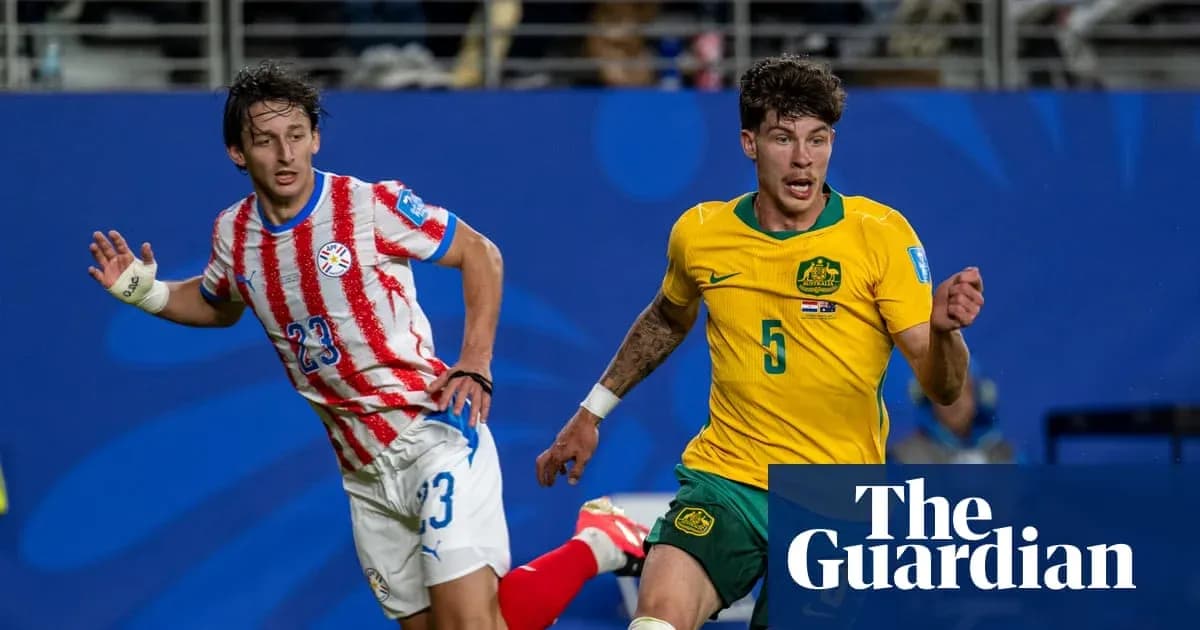
Jordy Bos Shines as Socceroos Edge Closer to World Cup Knockouts
Jordan Bos did not so much play right-back as rip up the job description and write his own.
Time and again the Socceroos’ left-sided defender thundered down the opposite flank, shrugging off one challenge, then another, before tearing into the box. Each surge felt like a swell rolling in from the Bay, dragging Australia up the pitch and, with it, closer to the World Cup last 32.
The scoreline stayed frozen at 0-0 against Paraguay on this cool San Francisco evening, but the tension never did. Every time Julio Enciso found a pocket of space, every time Patrick Beach had to fling himself into another save, that thin line between progress and disaster flickered.
Tony Popovic kept glancing at the clock. So did the 12,000 Australians striped in yellow, eyes glued to the slowly turning digits. Every clearance drew a roar. Every second survived felt like one step further away from elimination’s edge.
Australia did not actually need a goal to finish second in Group D. They needed something less tangible and far more elusive: a jolt, a sense that this campaign still had a heartbeat after the flat defeat to the United States.
They found it in Bos.
A left-back let loose on the right
Within a few kilometres of Silicon Valley’s tech giants, the Socceroos discovered their standout performer with a simple search: give Bos the ball and let him run. Over and over he bounced off would-be tacklers, accelerated past defenders, and carried the game away from danger and into Paraguayan territory.
His first-half accomplice Cristian Volpato was withdrawn. So was Nestory Irankunda, the match-winner against Turkey. The attacking cast changed. Bos did not. He kept driving, kept colliding with bodies, kept arriving in the box as if he had been playing there his whole life.
From the right wing, substitute Ajdin Hrustic had the best vantage point in the stadium. “He’s a great player, he’s got power, you’ve seen it,” he said afterwards, sounding less like a team-mate and more like a fan who had just watched a breakout show. Aiden O’Neill, sheepish as he held the player of the match trophy, admitted it probably belonged in Bos’s hands instead.
Harry Souttar went further still. The captain called Bos “a special player, a special guy, and just takes everything in his stride,” before adding a line that said as much about the impression the defender has made inside the camp as anything he did on the pitch. “The guy’s body’s just unbelievable to look at,” Souttar said. “I don’t want to obviously put too much pressure on him, but if he keeps performing like that and there’s no ceiling.”
The dressing-room chorus swelled. Milos Degenek labelled Bos already a top-five left-back in the world and the best at his age. “That’s my opinion, I’m very biased, and I love him,” he admitted. Asked where Bos ranks at right-back, Degenek grinned and shot back: “Top 10.”
Irankunda pushed the praise into another stratosphere. “He’s the best player in the world, Jordy Bos, best winger in the world,” he said. “He might have to switch to a winger, in my opinion. He’s done so well at right-back today, but he got so high up the pitch today and he showed glimpses of what he can do with the ball.”
A gamble that paid off
Popovic’s decision to start Bos on the right had raised eyebrows before kick-off. He had natural right-backs available in Kai Trewin and Jason Geria. Instead he flipped his left-back across the line on the biggest stage.
It was not a blind gamble. Popovic had seen Bos operate there for Westerlo in Belgium and had already tested the idea with a half-hour cameo at right-back against New Zealand nine months earlier. “We’ve seen that he can adapt and play on that side,” the coach said. “It’s the best game he’s played of the three [World Cup matches] by far.”
Bos arrived at this tournament as one of the most polished players in the squad after proving himself in the Dutch Eredivisie last season. At 23, he also embodies the profile of this young, ambitious Socceroos group. Until Thursday, his World Cup had been steady rather than spectacular.
Then came this performance. Out of position. One yellow card away from suspension for the last 32. No sign of restraint.
The numbers told the story as clearly as the eye test. No Australian took more shots than Bos, who finished with three. He created the joint-most chances. He completed four dribbles and won more duels than anyone on the pitch, including seven of nine in the air. “I was enjoying it too, honestly, tonight,” he said, as if he had just finished a kickabout rather than a high-wire World Cup decider.
From Dani Alves to Bale – and then just Bos
Inside camp, the nicknames have already started. Hrustic has been calling him “Dani Alves” at training, a nod to the Brazilian great who turned right-back into a playmaking position. Others see shades of Arjen Robben, the left-footed right winger who spent a career cutting in and tormenting defences.
Bos is not getting carried away. “Unfortunately I didn’t score like him, but I tried,” he said of the Robben comparison.
The player he has been likened to most often, though, is Gareth Bale – the former Wales left-back who stormed up the pitch so relentlessly that he eventually became a world-class right winger at Tottenham and Real Madrid. Bale’s game fed off raw athleticism and power. Bos, on nights like this, looks built from similar parts.
Pressed on which comparison he prefers, Bos leaned towards the Dutchman. “Yeah, Robben … I don’t mind Bale, to be honest,” he replied.
In truth, the identity debate is secondary. Alves, Robben, Bale – those are reference points, not destinations. What mattered in San Francisco was that, as the clock wound down and Australia edged towards the knockout rounds, a new name began to carry its own weight.
This was the night Jordy Bos stopped being a bundle of potential and started being the player everyone else gets compared to.



