Jonathan David's Historic Hat-Trick Leads Canada to Victory
Jonathan David walked into this World Cup week under a cloud. Subbed before the hour in the opener against Bosnia and Herzegovina, his place and his pedigree were loudly questioned. For a striker who prefers his right foot to do the talking, the noise was impossible to ignore.
Against Qatar, he shut it all down.
This was the version of Jonathan David Canada has been waiting for on the biggest stage: relentless, ruthless, and utterly unforgiving.
David’s response: four goals in one night
From the opening whistle, David hunted. He pressed Qatar’s defenders, chased second balls, snapped into duels. The message was clear: this was not going to be another quiet night.
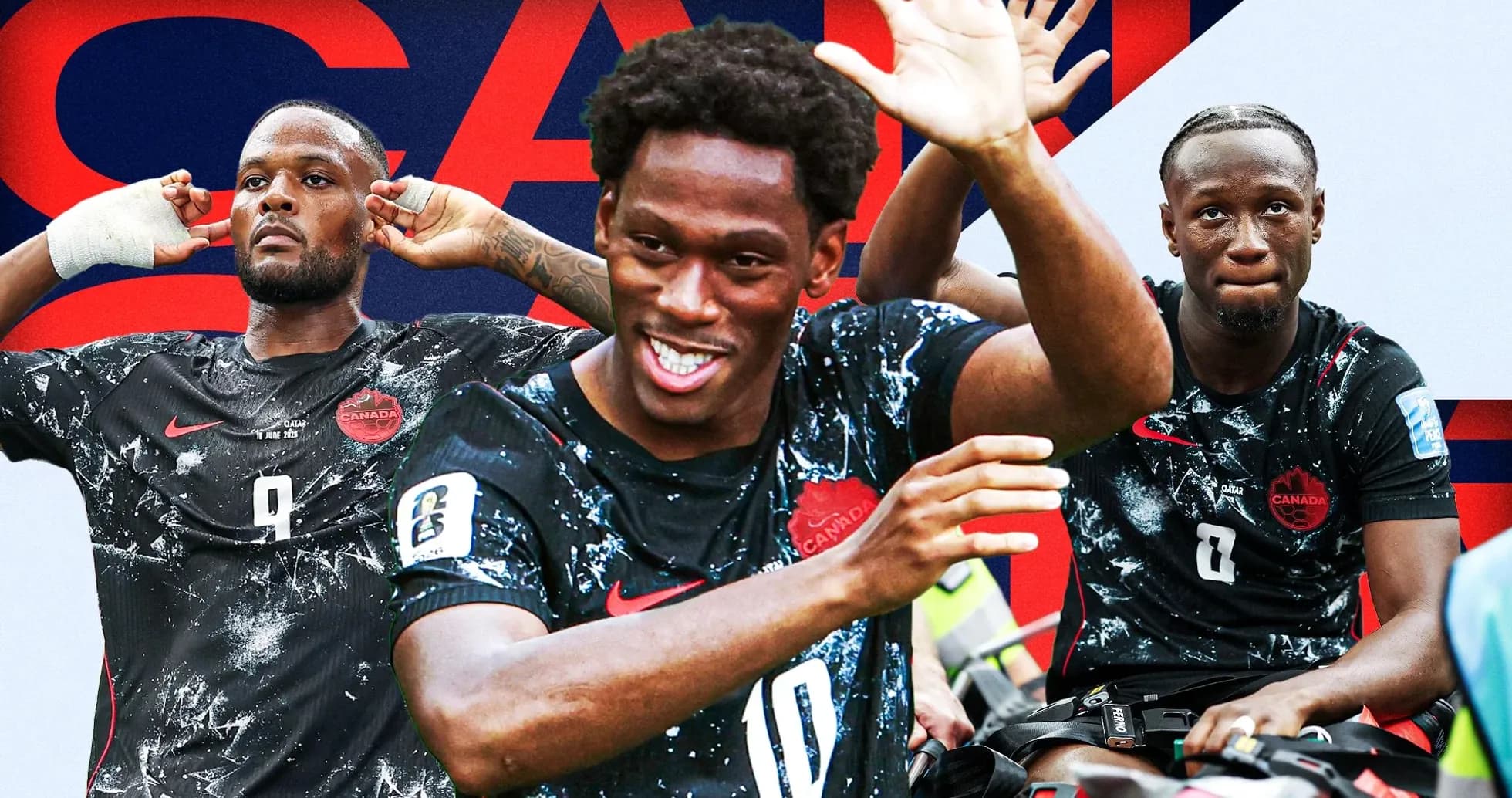
The breakthrough came in the 16th minute. David met a cross with a thunderous right-footed volley, the kind of strike that forces panic. The goalkeeper couldn’t hold it, and Cyle Larin pounced to score his second of the tournament. Officially, it was Larin’s goal. Spiritually, it belonged to David.
Minutes later, David took full ownership of the scoreboard. A beautifully worked triangle on the right between Tajon Buchanan and Alistair Johnston sliced Qatar open. David timed his run, took the final pass, and guided a perfectly placed shot into the net. At last, his first World Cup goal.
The pressure that had built over months evaporated in a single swing of his boot.
He wasn’t done. Later in the match, Larin turned provider, unleashing a shot that Qatar failed to clear. David crashed in on the rebound, his instincts sharper than anyone in the box. Another goal, another exclamation point.
Then, in the dying moments, came the historic flourish. David burst through again, ruthless and unrelenting, and buried Canada’s sixth. Hat-trick complete. The first Canadian to score three in a World Cup match, and the country’s all-time leading scorer now up to 42 goals.
“It was amazing. After every goal, it got louder and louder,” David said of the crowd. “It gave us motivation to get the next goal and the next goal.”
The noise that had dogged him all week? Gone. Replaced by something far more familiar: belief.
Head coach Jesse Marsch never claimed to share the doubts swirling outside the camp.
“That’s a player, that's a striker, that's a goal scorer. I never had any doubts in Jonny, and the one thing I said is, for us to really be successful as a team, we need Jonny driving what we do in the attacking part of the pitch,” Marsch said post-match. “He set up the first goal with the shot, then he obviously scored the hat trick, but I thought he was fantastic in general.”
On a night when Canada announced themselves as more than just plucky co-hosts, their No. 9 finally looked like the star his numbers have always suggested.
A brutal blow: Koné’s injury casts a shadow
The scoreline will live in the record books. The image that will haunt this team came in a single, sickening moment.
Ismaël Koné, Canada’s most important midfielder in this tournament, went down. No contact controversy, no tactical nuance — just a devastating injury that instantly changed the mood.
“You could hear the bone snap,” Marsch revealed after the match, adding that Koné had gone to the hospital for surgery. “Your heart goes out to him. Everybody’s shaken for him.”
Koné has been the hinge of this Canadian side. His elusive touches in tight spaces, his ability to glide past pressure, to thread passes between lines and turn defence into attack — all of it has underpinned Canada’s transitional threat. Without him, there is no like-for-like replacement. No one else in this squad brings that same blend of composure, daring, and line-breaking vision.
There has been no official timetable, but the expectation is grim: Canada may have to navigate the rest of this World Cup, and perhaps much longer, without him.
In a camp already scarred by injuries in the buildup to the tournament, the “next man up” mantra is familiar. They are getting Alphonso Davies back. Samuel Piette and others offer solidity. Saliba even stepped in and scored off a free kick after replacing Koné.
Good profiles, important players. None of them Koné.
“For us to be at our best, he's a big part of it. But, look, it's given us now something else to play for," said fullback Alistair Johnston. “That's what this team is all about, it really is a brotherhood. So it's really difficult to see one of your brothers go down. But, look, if we needed any extra motivation for this tournament, we got it now.”
The scoreboard said party. The faces in the Canadian camp told a more complicated story.
Johnston walks the tightrope — and leads
Few players embodied that mix of edge and control better than Alistair Johnston.
He entered the match one booking away from missing the Group B finale against Switzerland. Many fullbacks in that situation retreat into themselves, play safe, avoid risk.
Johnston did the opposite.
He was aggressive, tenacious, and constantly involved in Canada’s overloads on the right with Buchanan, Koné and David. He whipped in crosses, overlapped at every opportunity, and still managed the defensive responsibilities of dealing with Qatar’s most dangerous player, Akram Afif.
“We knew that the idea was kind of to build up against the Akram Afif. He's a maverick; you could see some of the quality he had on the ball. Defensively, though, the idea was to play against him, make him defend, because we didn't think he was going to,” Johnston explained. “We're trying to find that balance of me being in the defensive three in a build-up, but then also give me the license, as I have with my club, to really join in and help Tajon.”
By the end of the night, Johnston had the assist on Canada’s second goal, four accurate crosses, and six big chances created. Just as crucially, he avoided the yellow card that would have ruled him out of the Switzerland clash. Cards will be wiped before the Round of 16, and Canada will have their vocal leader available.
His contribution went beyond numbers. When Koné went down, Johnston moved quickly — talking to teammates, trying to steady a shaken group while keeping one eye on the stricken midfielder. In a team still growing into this stage, his leadership is becoming a pillar.
Qatar unravel, Canada rise
For Qatar, this was a sobering night. Four years after finishing last at their home World Cup, they arrived here hoping to show lessons had been learned.
Instead, they hit a new low.
They had battled to a gritty 1-1 draw with Switzerland, showing late character to grab their first World Cup point. Against Canada, that resilience vanished. They looked overwhelmed, unprepared for the tempo, the aggression, the relentlessness of a Canadian side playing with purpose.
Head coach Julen Lopetegui, a veteran of some of the sport’s most pressurised dugouts, could not coax composure from his team. The structure frayed, the belief drained, and Qatar slid to a level no other side had reached in this tournament: utterly outclassed.
They will most likely exit at the group stage and will do so without two starters in their final match. If this performance reflects their long-term trajectory, a return to this stage might be a long way off.
From doubt to momentum
Canada’s forward line has ridden its own rollercoaster in this World Cup.
Before the opener against Bosnia, the noise centred on Larin. Questions about his sharpness and impact led Marsch to drop him from the starting XI in favour of Tani Oluwaseyi. Larin’s response? A goal in each of the first two matches.
With Larin’s critics quieted, the spotlight swung harshly onto David after his subdued first outing. That conversation is over now as well. A hat-trick and a hand in another goal will do that.
With this emphatic win, Canada did more than collect three points. They proved they can not only belong on this stage, but impose themselves on it. And they did it without Alphonso Davies, buying their captain and superstar another week to recover before a showdown with Switzerland for control of the group.
The task ahead is clear and complicated all at once: keep riding the wave of attacking confidence, harden the collective resolve around Koné’s absence, and carry their injured playmaker with them into the tournament’s sharpest edges.
Canada have found their goalscorer. They’ve found their edge. Now the question is whether this group, shaken but emboldened, can turn a statement win into a deep World Cup run.