Iran Pushes FIFA for Venue Switch Ahead of 2026 World Cup
Iran’s place at the 2026 World Cup is no longer just a football question. It is a geopolitical test for FIFA, a diplomatic headache for three host nations, and a race against time for a team that is, on paper at least, already in the draw.
On Tuesday, Iran’s Minister of Sport, Ahmad Dania Mali, underlined that the country’s stance has not shifted: Tehran still wants its group-stage fixtures moved out of the United States and into Mexico, citing the US-Israeli war on Iran and the lack of security guarantees.
“Our request to FIFA to move Iran’s matches from the United States to Mexico remains in place, but we have not yet received a response,” he said in comments carried by Turkish agency Anadolu.
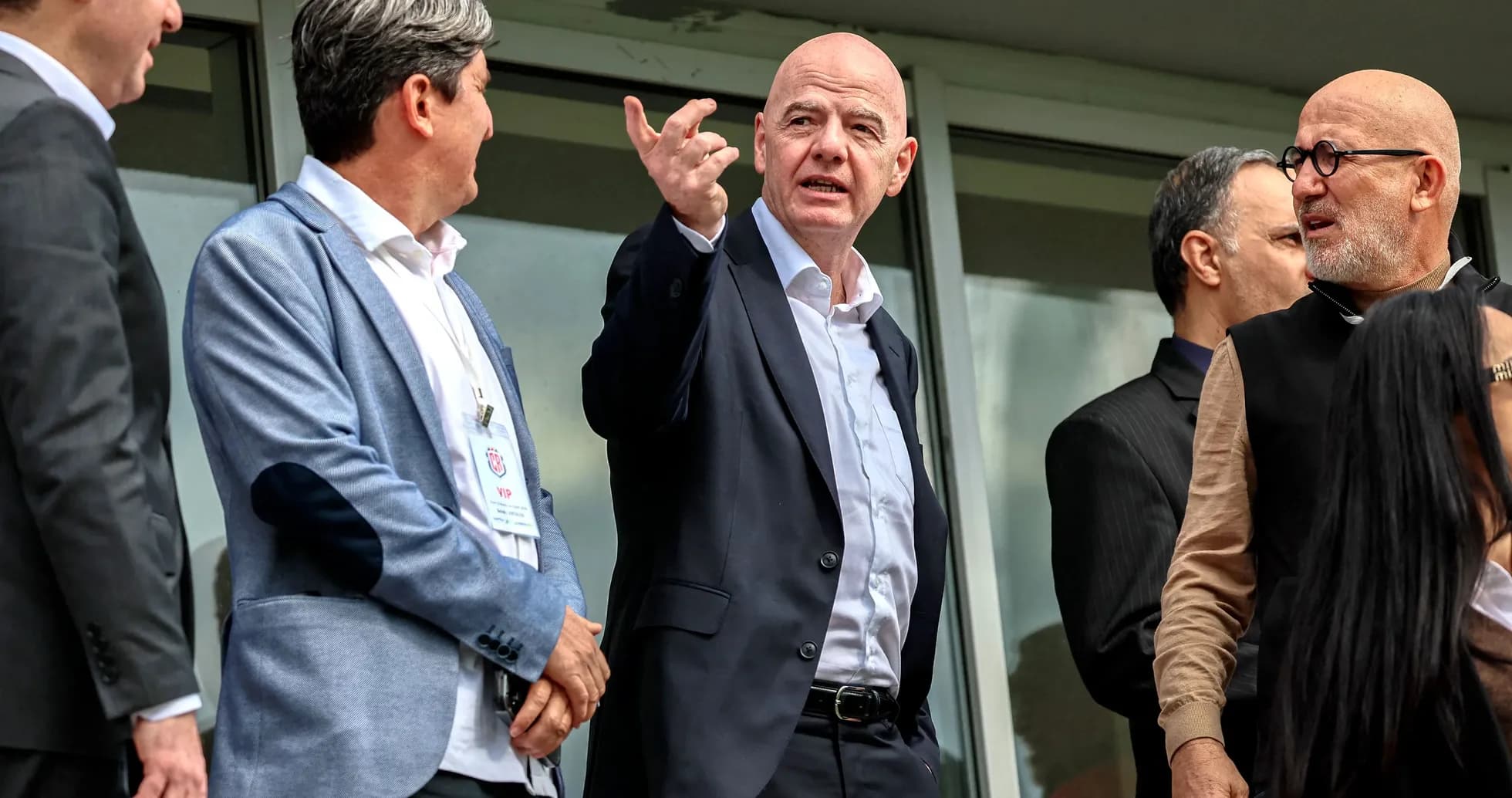
The demand cuts straight across FIFA’s public line. Last week, president Gianni Infantino stressed that Iran would play its 2026 World Cup matches as scheduled, on American soil. Iran’s football authorities are pushing in the opposite direction.
A conditional World Cup
Dania Mali was blunt about the stakes. If FIFA agrees to the venue switch, Iran will go to the World Cup. If not, the door appears to be closing.
“If the request is accepted, Iran’s participation in the World Cup will be confirmed. However, FIFA has not issued any response as yet,” he said.
He stressed that, from a sporting perspective, preparations will continue.
“As Minister of Sport, and in cooperation with the Iranian Football Federation, we will ensure the national team remains ready for the World Cup. However, the final decision will be taken by the Cabinet.”
So the players train, the federation negotiates, and the politicians wait for FIFA. Until a formal answer lands in Tehran, Iran’s World Cup status hangs in the balance.
Group G, on paper
On the tournament schedule, nothing has changed. Iran are locked into Group G and due to play all three group games in the United States: New Zealand and Belgium in Los Angeles, then Egypt in Seattle.
Those fixtures were supposed to be about tactics, travel and time zones. They now sit at the heart of a security and diplomatic dispute.
Last month, the Iranian Football Federation confirmed it had opened talks with FIFA over moving the games to Mexico. That process is ongoing, at least from Iran’s side. From Zurich, there is silence.
The White House weighs in
The political dimension sharpened when US President Donald Trump addressed the issue last month. He said the Iranian national team would be welcome to play in the United States, but suggested such a scenario might not be ideal for his own life and safety, before later clarifying that any threat to the players would not come from the US.
It was an unusual intervention for a head of state, and it did little to cool Tehran’s concerns over security.
Dania Mali went back to the rulebook.
“According to the relevant FIFA regulations, security must be guaranteed in the host country. The World Cup is due to kick off soon, and obtaining such guarantees during this period is highly doubtful,” he said.
That line matters. It frames Iran’s position not as a political boycott, but as a legal and safety argument rooted in FIFA’s own statutes.
“The likelihood of Iran participating in the World Cup matches to be held in the United States is very low,” he added, before leaving one narrow door open.
“However, if the necessary security guarantees are provided, our government will make its decision regarding Iran’s participation in the World Cup.”
The message is clear: security first, football second. And the clock is ticking.
If Iran walk away
One question immediately follows: if Iran withdraw, who steps in?
According to British newspaper The Sun, Italy – absent from the last three World Cup finals – would have a “very slim” route back into the tournament. The logic is simple: Italy are the highest-ranked side among those who failed to qualify through the final play-offs, and would therefore be a leading candidate if FIFA needed a replacement.
There is no confirmation from FIFA, no formal contingency plan in public. But the mere mention of Italy in this context shows how far-reaching Iran’s decision could be.
For now, Group G exists in two versions. On one sheet, Iran face New Zealand, Belgium and Egypt in Los Angeles and Seattle. On another, unofficial one, the same dates and venues are shaded in uncertainty, with a giant asterisk over the name of the Asian qualifier.
FIFA must decide whether it can deliver the guarantees Iran are demanding, or whether one of the World Cup’s most politically charged stories will end before a ball is even kicked.