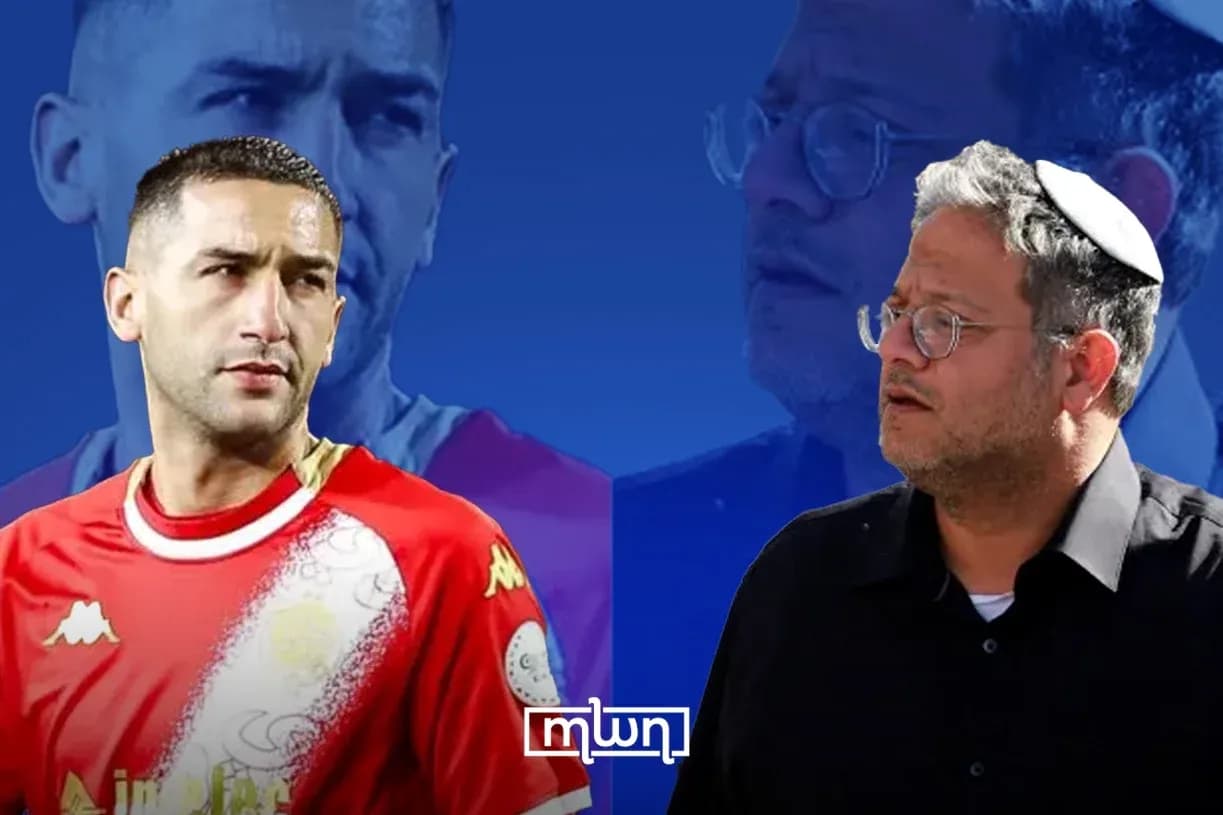
Hakim Ziyech's Stand on Palestine Sparks Controversy with Israeli Politician
Hakim Ziyech has never been shy about where he stands. Now his stance on Palestine has drawn him into a direct confrontation with one of Israel’s most powerful and controversial politicians.
The Moroccan international, currently with Wydad after high‑profile spells at Ajax, Chelsea, Galatasaray, and Al‑Duhail, ignited the latest flashpoint with a single Instagram story. The image showed Israeli National Security Minister Itamar Ben‑Gvir celebrating in the Knesset after the approval of a new death penalty law targeting Palestinian prisoners. Ziyech’s accompanying message cut straight to the point, questioning whether the move would once again be sold to the world as “self-defense.”
That was enough to trigger a furious response. Ben‑Gvir fired back, publicly branding Ziyech “antisemitic” and dismissing any criticism of the law. In comments carried by Israeli and regional media, he escalated the rhetoric further, warning that “Ziyech and all other antisemites will not escape.” The language underlined how far this dispute has moved from the pitch and into the heart of one of the world’s most charged political conflicts.
The Controversial Law
At the center of the storm sits a law that has already drawn international condemnation. On March 30, Israel’s parliament passed the measure by 62 votes to 48, setting death by hanging as the default sentence for Palestinians convicted in military courts. Human rights organizations and the UN human rights office have denounced the legislation as discriminatory and a threat to basic due process, arguing that it entrenches a separate and harsher system of justice for Palestinians.
Ziyech's Political Engagement
For Ziyech, this is not a sudden foray into politics. It is part of a steady, visible pattern.
Since Israel launched its devastating campaign in Gaza on October 7, 2023, the 32‑year‑old has repeatedly used his social media platforms to spotlight what he describes as bloody massacres carried out by Israeli Occupation Forces against Palestinians. His feeds, usually reserved for football, trophies, and training clips, have become a running commentary on the war and its human toll.
Back in October 2023, as images from Gaza flooded global screens, Ziyech posted one of his earliest public messages in support of Palestine, pairing it with a pointed quote about oppression and how media narratives can distort reality. It was a clear signal: he was not going to stay silent, no matter how uncomfortable the topic for sponsors, clubs, or governing bodies.
The posts kept coming. Months later, when new footage from the occupied West Bank circulated online, Ziyech reacted again, condemning Israel’s actions and urging people not to ease the pressure on their governments. He took aim not only at Israel but also at states he believes have enabled the situation, calling out what he sees as complicity and double standards.
That consistency has turned him into a prominent footballing voice on Palestine, particularly in the Arab world and among global fans who see athletes as some of the few figures with platforms large enough to cut through political spin. It has also made him a target.
Ben‑Gvir’s attack on Ziyech has not gone unnoticed, especially given the minister’s own record. He has a past conviction for incitement against Arabs and has been linked to an extremist movement that Israel itself has banned. Those details have resurfaced quickly in the wake of his remarks, raising questions about who gets to define antisemitism and how that label is deployed in the context of criticism of Israeli policy.
So a winger once celebrated purely for his left foot and vision now finds his name dragged into a bitter geopolitical fight, his social media posts dissected far beyond the usual circles of football fandom. The ball is no longer at his feet, but the stakes around his words have rarely been higher.