Ranking France's 2026 Forward Line Among World Cup's Greatest Attacks
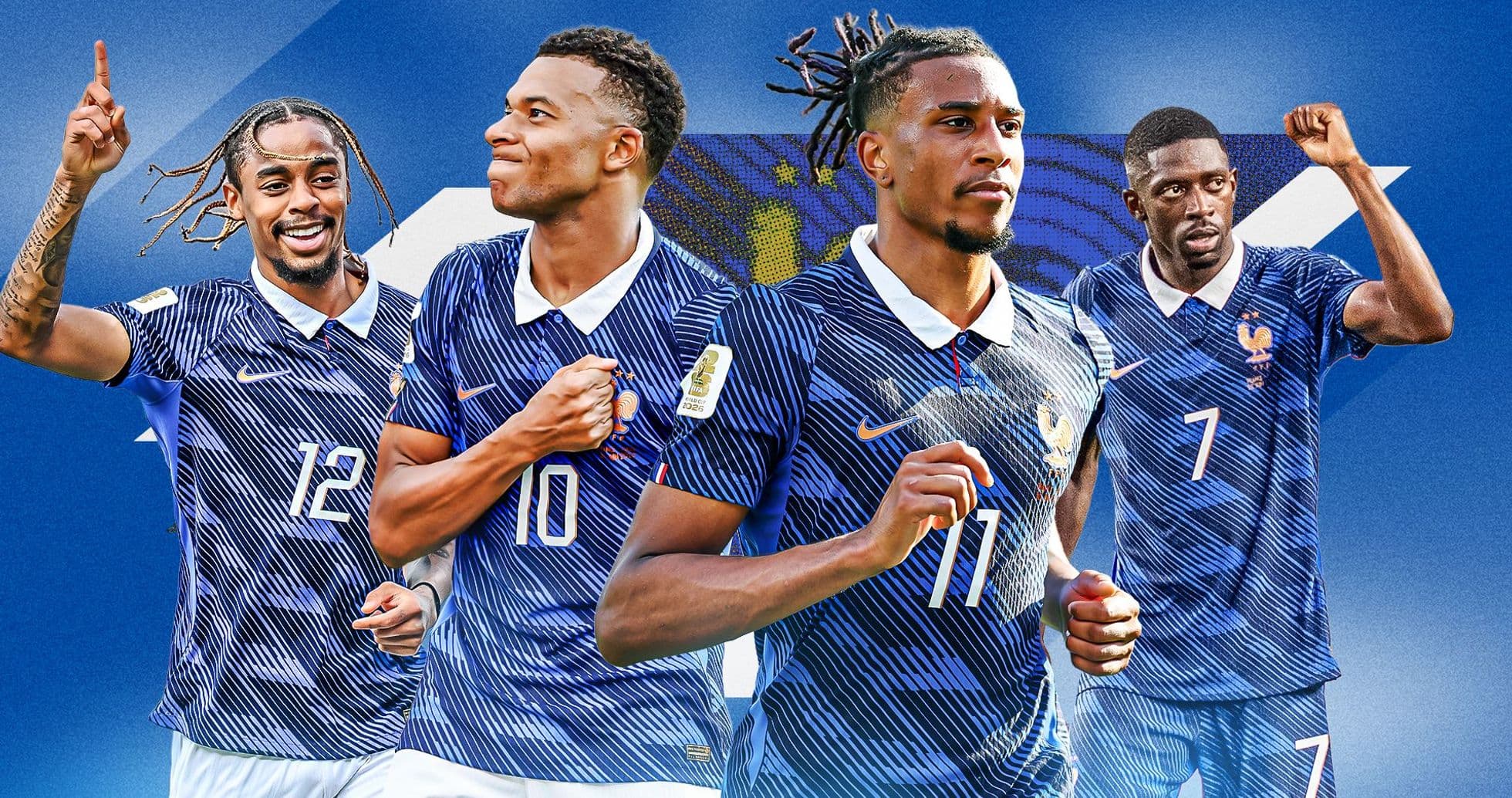
France’s attacking group, featuring Kylian Mbappe, Michael Olise, Ousmane Dembele, and Bradley Barcola, has dominated the 2026 World Cup stage. After sweeping their group with three wins, Les Bleus crushed Sweden 3-0 in the round of 32, becoming the tournament’s leading scorers with 13 goals so far. Mbappe leads the tally with six goals in just four matches.
Ousmane Dembele, currently holding the Ballon d'Or, trails closely with four goals, including a remarkable hat-trick against Norway in a 4-1 win that secured first place in Group I. Meanwhile, Michael Olise has yet to score but impressed with five assists, highlighted by a near-goal overhead kick against Sweden that rattled the post.
Coach Didier Deschamps rotates forwards like Bradley Barcola and Desire Doue, who have combined for three goals, adding depth to an already potent offense. If this momentum continues, where might this French forward line stand among the greatest World Cup attacks ever?
Top Six Legendary World Cup Forward Lines
West Germany’s 1954 champions were resilient despite an early group-stage thrashing by Hungary. Captain Fritz Walter orchestrated the attack, holding the record for most World Cup assists (nine). Max Morlock scored six goals, including a key one in the final, while Helmut Rahn netted the equalizer and match-winner in the last minutes of the final. With contributions from Hans Schafer and Ottmar Walter, they amassed 25 goals, ranking as the second-highest total in World Cup history.
Just Fontaine’s 13 goals in the 1958 World Cup remain a record for a single tournament. Despite his own brilliance, Fontaine acknowledged the limited service from teammates Roger Piantoni and Raymond Kopa, who contributed three goals each. Kopa also set an assist record with nine. The trio helped France finish third, standing out alongside the era’s star Pele.
Johan Cruyff led the Dutch with flair and innovation, supported by wingers Johnny Rep and Rob Rensenbrink and midfielder Johan Neeskens. Together, Rep, Rensenbrink, and Neeskens scored 10 goals as the Netherlands reached the final. Though they lost to West Germany after leading, Cruyff earned the best player award, and his team’s style left a lasting impact on football.
The Mighty Magyars’ legendary attack featured Ferenc Puskas, Sandor Kocsis, Nandor Hidegkuti, and Zoltan Czibor. They scored 27 goals in the tournament, with Kocsis alone netting 11. Despite an unbeaten streak since 1950 and an 8-3 group stage win over West Germany, Hungary fell short in the final in what became known as The Miracle of Bern.
Ronaldo’s redemption was the highlight of Brazil’s 2002 campaign, scoring eight goals and clinching the title with a brace in the final against Germany. He had solid backing from Rivaldo, the tournament’s second-highest scorer, and Ronaldinho, whose flair was undeniable despite a controversial red card. This trio’s blend of skill and goals made them one of the most memorable World Cup attacks.
Brazil’s 1970 squad is often called the greatest international team ever. Their forward line featured Rivellino’s powerful left foot, Tostao’s clever playmaking, Jairzinho’s historic goal streak in every match, and the iconic Pele. Pele scored four goals and lifted the trophy for the third time, embodying the “Jogo bonito” that captivated the world.