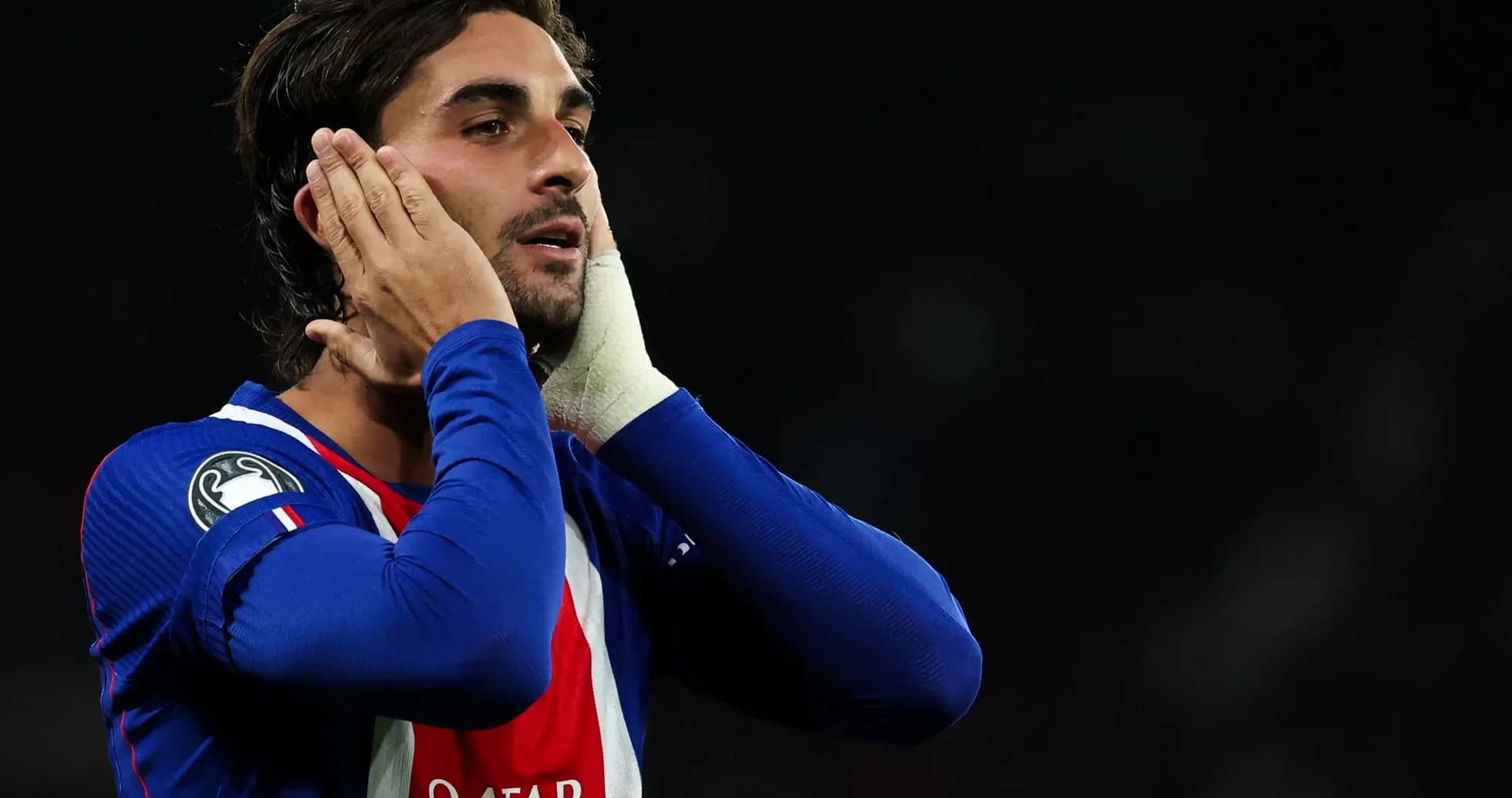
From Barcelona to Paris: A Footballer's Transition
Leaving Catalonia last summer was never going to be just a change of shirt and skyline. For a 26-year-old who had grown up in that ecosystem, it meant tearing up a life as much as a contract. The football looked easy. Everything else did not.
The move to Paris dropped him into a new language, a new city, a new rhythm of days. Training grounds change, but so do supermarkets, traffic, and the sound of conversations around you. That, he admits, has been the real work.
What softened the landing at the Parc des Princes were the faces waiting for him. Luis Enrique, back on the same side of the touchline, is more than a coach to him – a paternal figure in football, someone whose voice he already trusts. Inside a dressing room full of serial winners, he also found compatriots: Fabian Ruiz and Dro Fernandez, another who once walked the corridors of La Masia. The environment was new; the accents were not.
The transfer itself arrived like a storm. One moment he was embedded in Barcelona’s plans, the next he was on a plane, the deal pushed through at the breakneck speed that now defines the market. He summed it up bluntly: one day you’re there, the next you’re packing your bags. That is modern football – ruthless, hurried, rarely sentimental.
He still allowed himself a joke about those left behind in La Liga. There was one team-mate he could not smuggle into his luggage. Pedri would have to stay where he was.
If the off-pitch transition has been bumpy, you would never know it from the numbers. Seven goals in his first six matches in Paris. Not just settling in – leading the line. His movement, his timing, his finishing have turned him into a key reference in Enrique’s attacking blueprint almost overnight.
This surge in form did not appear from nowhere. It followed a summer that will sit at the centre of his career forever. In the World Cup final, with Spain and Argentina locked at 0-0, he delivered the decisive strike in a 1-0 win, the kind of moment that rewrites how a player is introduced for the rest of his life. World champion. Match-winner.
That combination – a historic goal on the biggest stage and a ruthless start in club colours – has pushed him onto the 30-man Ballon d'Or shortlist. He stands there alongside a new wave of Spanish talent: Lamine Yamal, Pau Cubarsi, Marc Cucurella, Rodri, and PSG team-mate Ruiz. A cluster of names that signals a national team not just reborn, but re-armed.
Asked about the award, he refused to turn the spotlight into a campaign. No grand declarations, no self-promotion. The decision, he said, belongs to the voters. Whoever is meant to win it will win it. If the trophy ends up in Spanish hands, all the better.
For now, his reality is more immediate. He has forced his way into Enrique’s plans in the French capital; the challenge is staying there. At a club that measures itself in titles and deep European runs, there is no room for plateaus. Keeping this scoring streak alive is not just about personal glory. It is about holding onto his starting place, pushing his own status higher, and driving PSG towards the trophies they now expect as a minimum.
He has changed country, language, and league in a single summer. The question that lingers is simple: if this is him still adapting, what happens when he truly feels at home?