Fiorentina vs Napoli: Tactical Analysis of Serie A Draw
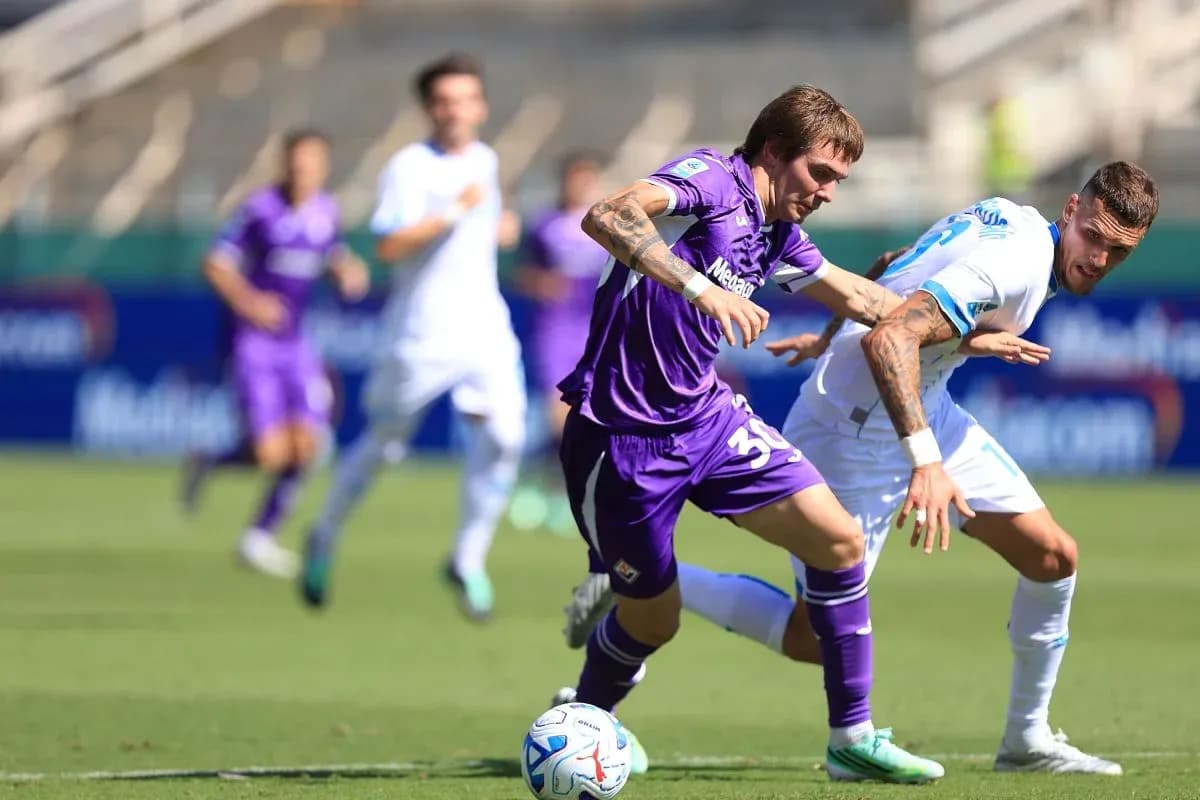
Under a clear Florence sky at Stadio Artemio Franchi, Fiorentina and Napoli walked out for a Serie A meeting that felt heavier than the calendar’s “Regular Season - 5” label suggested. For Fiorentina, 17th in the table with 4 points and a goal difference of -6 (6 scored, 12 conceded in total), this was less a routine league game and more an early-season stress test of Paolo Vanoli’s project. Napoli, 9th with 7 points and a goal difference of 1 (7 for, 6 against in total), arrived as a side still calibrating under Massimiliano Allegri, yet already more stable than their hosts.
The 1-1 draw that followed, sealed after 90 minutes under the watch of referee Daniele Doveri, told a story of two teams trying to reconcile their tactical identities with the hard numbers of their season so far.
Fiorentina’s reshaped spine
Vanoli doubled down on a 4-3-3 that mirrors Fiorentina’s broader season trend: high on technical promise, short on defensive control. At home this campaign, they had played 3, failed to win any, drawing 1 and losing 2, with just 2 goals scored and 6 conceded. The structure here was clear: D. de Gea in goal, a back four of A. Jimenez, R. Dragusin, L. Ranieri and Viery, a young, energetic midfield of C. Ndour, N. Fagioli and A. Atta, and a front three where the spotlight inevitably fell on Franco Mastantuono.
Mastantuono, officially listed as a midfielder in the season data but deployed higher here, has quickly become Fiorentina’s offensive compass. Heading into this game, he had 3 goals in 5 Serie A appearances, from 17 shots (8 on target), with 10 key passes and a rating of 7.18. His blend of volume shooting and line-breaking passes gives Fiorentina a clear “Hunter” profile: he is the player they trust to tilt games.
Around him, M. Pellegrino and A. Njie offered vertical running more than refined combination play. The midfield trio’s job was less about artistry and more about survival: Ndour’s legs, Fagioli’s passing angles, Atta’s shuttling. Yet the numbers underline the problem Vanoli is fighting: overall this season Fiorentina concede 2.4 goals per game in total, including 2.0 at home, with no clean sheets and 2 games where they failed to score. The back line is still learning each other, and the midfield shield is thin.
Discipline has also been a subtle undertow. Fiorentina’s yellow-card distribution this season shows a pronounced spike between 61-75 minutes, with 33.33% of their cautions arriving in that spell, and another 22.22% between 76-90. It points to a team that tires, chases, and fouls late—exactly when Serie A games often become chaotic.
Complicating Vanoli’s options were the absences of F. Parisi and R. Sottil, both ruled out with knee and back injuries respectively. Parisi’s absence in particular removed a natural left-sided outlet and a progressive full-back, forcing Fiorentina to lean even more on Viery and the wide forwards to carry the ball up the pitch.
Napoli’s patched elite
On the other bench, Allegri’s Napoli arrived with a 4-2-3-1 that looked, on paper, like a Champions League side forced into improvisation. Injuries to Alisson Santos, A. Buongiorno, Giovane, L. Marianucci, S. McTominay, A. Meret and L. Spinazzola stripped depth from every line. Yet the starting XI still dripped with quality: V. Milinkovic-Savic in goal; a back four of G. Di Lorenzo, A. Rrahmani, R. Marin and M. Olivera; a double pivot of B. Gilmour and S. Lobotka; and a fearsome band of three in front of them—M. Politano, K. De Bruyne, N. Lang—feeding R. Hojlund.
Napoli’s season profile heading into this fixture was one of balanced pragmatism. In total they had scored 7 and conceded 6 across 5 matches, averaging 1.4 goals for and 1.2 against per game. Away, they had played 3, winning 1, drawing 1, losing 1, with 5 goals scored and 4 conceded, an away scoring average of 1.7 and an away concession rate of 1.3. Two clean sheets in total, one at home and one away, hinted at a defensive structure that, while not watertight, was at least coherent.
Allegri’s “Shield” in this context is collective rather than individual: the Gilmour–Lobotka axis screening the back four, and Di Lorenzo’s leadership on the right. Napoli’s yellow-card timings—50.00% between 31-45 minutes, 25.00% between 46-60, and 25.00% in the final 15—suggest a side that clamps down when the game’s tempo spikes around half-time and then again as it stretches late on.
Hunter vs Shield: where the game was fought
The central duel was always going to be Mastantuono against Napoli’s defensive block. Fiorentina’s attacking averages—1.2 goals per game in total, but only 0.7 at home—meant they needed their young Argentine to overperform against a side whose away defensive record was relatively stable. Napoli’s structure, with Gilmour and Lobotka narrowing the central lanes, was designed to force Mastantuono wide or backwards, denying him the pockets where he thrives.
Behind him, Dragusin and Ranieri carried the burden of containing Hojlund’s runs and tracking the fluid movements of De Bruyne and Lang. Given Fiorentina’s overall concession rate of 2.4 per game and the fact they had yet to keep a single clean sheet, this was always going to be a precarious balancing act: commit too many bodies forward to support Mastantuono and Pellegrino, and Napoli’s transitions would bite; sit too deep, and De Bruyne would dictate from the half-spaces.
Napoli’s offensive “Hunter” was less singular and more distributed. De Bruyne is the obvious orchestrator, but Politano and Lang provide the width and 1v1 threat, while Hojlund stretches the last line. Against a Fiorentina side whose biggest defeats this season include a 0-3 at home and a 4-0 away, Napoli’s plan was clear: drag the back four wide, create central gaps for late runners, and trust their superior structure to manage the counter-press.
Engine room and late-game storylines
In the engine room, Fagioli versus Gilmour and Lobotka was the quiet but decisive battle. Fagioli’s role as Fiorentina’s primary metronome was complicated by Napoli’s two holding midfielders, who are both comfortable enough on the ball to turn Fiorentina’s press against them. If Fagioli could not get clean touches and face forward, Mastantuono’s influence would inevitably be diluted.
The card data and fitness profiles hinted at how the final third of the match might tilt. Fiorentina’s tendency to collect 55.55% of their yellow cards from 61-90 minutes (33.33% between 61-75, 22.22% between 76-90) suggested that Napoli’s best chance to crack them would come late, as legs and concentration faded. Conversely, Napoli’s more evenly spread cautions implied a side better able to manage those moments without descending into panic.
Statistical prognosis
Overlaying the season’s numbers on the tactical shapes, a 1-1 outcome feels almost mathematically apt. Fiorentina’s total scoring average of 1.2 against Napoli’s total concession rate of 1.2 points to a single home goal as par. Napoli’s total scoring average of 1.4 against Fiorentina’s porous 2.4 conceded suggests the visitors should find the net at least once, but perhaps struggle to run away with it against a home side desperate for points.
Neither team had taken nor missed a penalty in Serie A heading into this game—both sides with 0 penalties in total, 0 scored, 0 missed—so the expectation was always for open-play or set-piece breakthroughs rather than spot-kick drama.
In the end, the draw leaves the narratives unresolved. Fiorentina remain a side of fragile balance: a gifted young spearhead in Mastantuono, a back line still searching for stability, and a disciplinary curve that spikes precisely when control is most needed. Napoli, even with a long injury list, continue to look like a team whose floor is high: solid away numbers, a functioning double pivot, and enough individual quality in De Bruyne, Politano, Lang and Hojlund to threaten any opponent.
Following this result, the tactical lesson is clear for both: Fiorentina must turn Mastantuono’s brilliance into a system that protects as well as it creates, while Napoli’s path forward lies in refining a structure that already looks, statistically and stylistically, like a platform for something more convincing than mid-table anonymity.