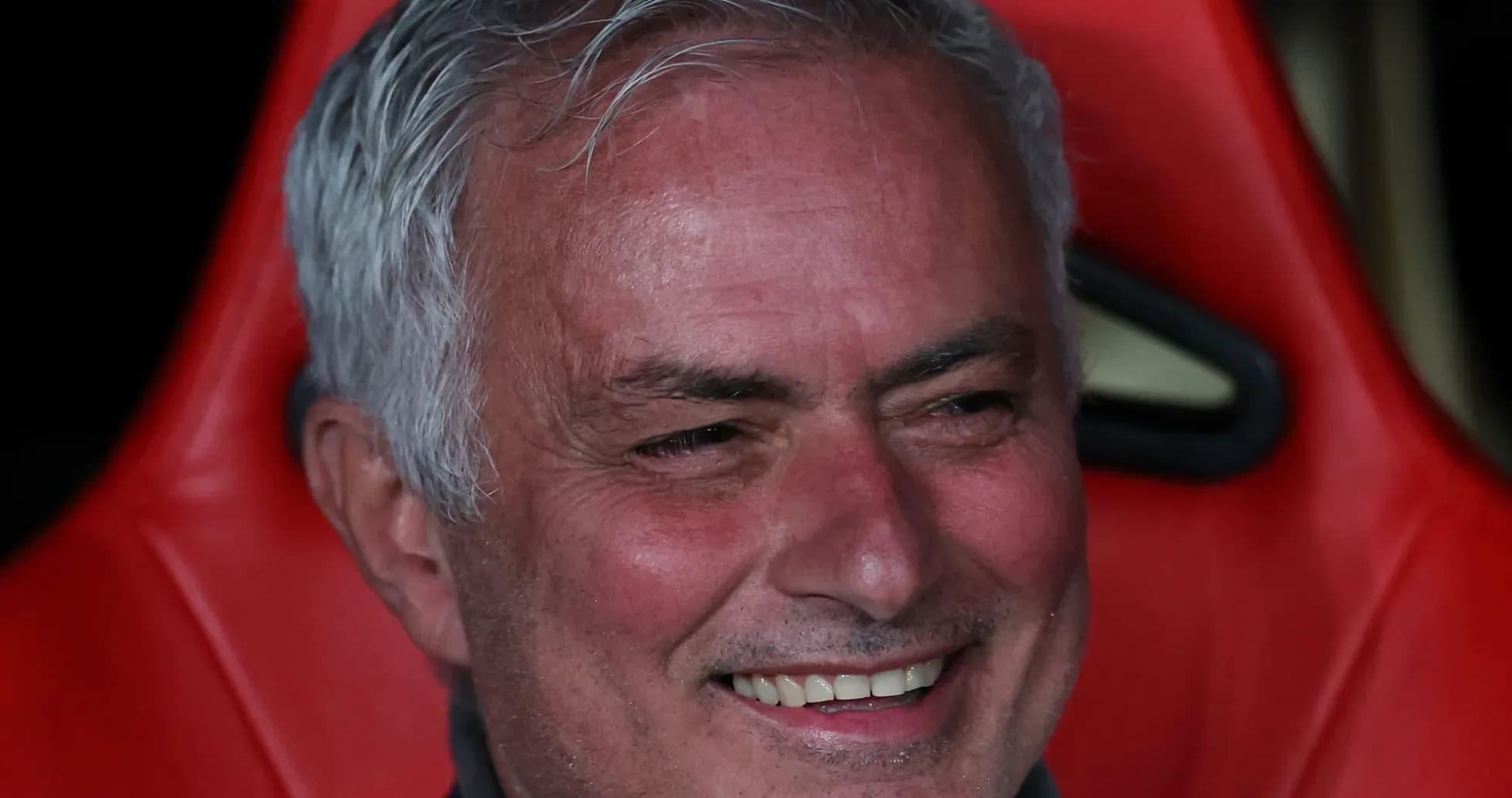
Florentino Pérez Strengthens Control at Real Madrid and Welcomes Mourinho Back
Florentino Pérez walked back into the presidency he has dominated for more than two decades with the kind of authority that still defines his reign. At 79, the architect of the modern Real Madrid won another mandate with ease, taking 65 percent of the vote and brushing aside 37-year-old challenger Enrique Riquelme, the club confirmed on Sunday.
The result does more than extend Pérez’s power. It clears the runway for one of the most dramatic comebacks in recent European football: Jose Mourinho’s return to the Santiago Bernabéu.
A Landslide and a Statement
Pérez, who has now spent 23 years at the helm across two spells, used his victory speech to hammer home a familiar message: Real Madrid exists to win.
“We have won the elections and will continue working to keep winning titles,” he told the club’s members, leaning on the line that has underpinned his presidency since the first Galáctico era.
He spoke with the stadium as his backdrop and as his symbol.
“We will continue to take pride in the Santiago Bernabeu stadium, the best stadium in the world,” Pérez said. “Proud to have the best players in the world, proud to welcome back one of the best coaches in the world, a Madridista like Jose Mourinho.”
It was as close to an official unveiling as protocol allows. The message was clear: the president is staying, and so is his idea of a confrontational, headline-dominating Real Madrid.
Mourinho, Back to the Bernabéu
All that remains is the formal announcement. That could come as early as Monday.
Mourinho, now 63, is set to return to a dugout he last occupied 13 years ago. Madrid will pay Benfica a reported €15 million release fee to free the Portuguese coach from his current contract and pull him back into the spotlight at the club that turned his rivalry with Pep Guardiola into a global spectacle.
His first spell, from 2010 to 2013, delivered one La Liga title, one Copa del Rey and a Spanish Super Cup. Those numbers, on paper, look modest for a club that measures itself in European Cups. On the pitch, though, that team broke records, pushed Guardiola’s Barcelona to the brink and turned every Clásico into a cultural event.
Now, he returns to a very different landscape but to a familiar demand: win, and win fast.
A Gamble After a Barren Era
This is not a nostalgic appointment. It is a risk.
Real Madrid have just completed a second consecutive season without a major trophy in 2025–26. For most clubs, that might be a wobble. For Madrid, it is a crisis. Pérez has chosen to answer that crisis with one of the most divisive figures in modern coaching.
Appointing Mourinho again is a bet that his siege mentality, his taste for conflict, his ability to turn a dressing room into a bunker, can still work at a club where the pressure never dips.
Pérez made his intentions plain.
“We will continue working so that Real Madrid keeps winning titles,” he said. “And we will fight until the end to achieve the 16th European Cup.”
The target is not just domestic dominance. It is Europe, as always. Mourinho’s task will be to drag Madrid back to the summit of the Champions League, a competition he has not won since 2010.
Riquelme’s Defeat and the Haaland Promise
Across from Pérez stood Riquelme, the young challenger who tried to sell a different future.
The 37-year-old businessman framed his campaign around renewal and marquee ambition, pledging to sign Manchester City’s Norwegian striker Erling Haaland if he won the election. It was a bold promise, a classic Madridista dream: a superstar signing as a statement of a new era.
The members did not buy it. They chose continuity over the unknown, the proven powerbroker over the fresh face. Riquelme leaves with a high-profile defeat and an idea of Madrid that will remain hypothetical.
The Tease Before the Return
The Mourinho comeback has not arrived out of nowhere. The campaign warmed the ground for it.
In a brief video posted on the official Instagram account of Pérez’s candidacy last week, Mourinho appeared in a Real Madrid shirt. No long speech, no elaborate pitch. Just a simple word: “Yes.”
It was a calculated tease, a one-word promise to the members that the president and the coach who once turned La Liga into a weekly battleground were ready to reunite.
Power, Identity and the Members’ Club
Beneath the fireworks, one element of Pérez’s message never changes: Real Madrid belongs to its members. In legal and structural terms, it is true. The club is owned entirely by its socios, who alone elect the president and shape the direction of the institution.
Pérez closed the circle by reminding them of that bond.
“Rest assured,” he said, “with me as president, Real Madrid has been, is, and will always remain owned by its members.”
The members have now handed him another term and, with it, the authority to bring back a coach who divides opinion like almost no other. The question is no longer whether Mourinho fits the modern game. It is whether this combustible alliance, rebuilt after 13 years, can still deliver the only currency that counts in Madrid: trophies, and especially that 16th European Cup.