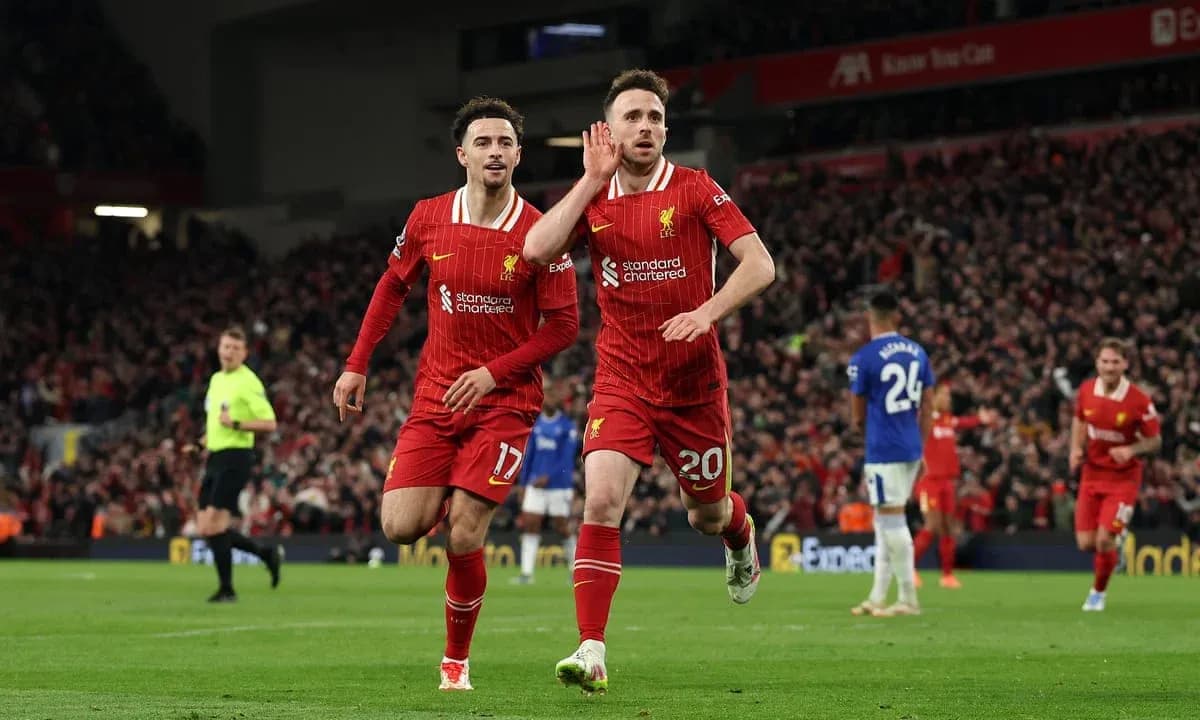
Everton vs Liverpool: Premier League Showdown at Hill Dickinson Stadium
Hill Dickinson Stadium in Liverpool stages one of the season’s standout fixtures in April 2026 as Everton host Liverpool in the Premier League. With the league campaign entering its final stretch (Round 33), the stakes are clear: Liverpool arrive in 5th place on 52 points, chasing Champions League qualification, while Everton sit 8th on 47 points, eyeing a late push towards European places and the chance to derail their rivals’ ambitions.
Both sides have played 32 league matches. In the league, Everton’s record across all phases stands at 13 wins, 8 draws and 11 defeats, with a goal difference of +2 (39 scored, 37 conceded). Liverpool, for their part, have 15 wins, 7 draws and 10 losses, scoring 52 and conceding 42 for a +10 goal difference. The table says Liverpool have been more explosive but also more volatile; Everton have been steadier and more pragmatic.
Form and momentum
Recent form hints at an intriguing balance of confidence and vulnerability.
Everton’s last five league games read: D W L W W. That sequence underlines their capacity to respond well to setbacks and string results together. Across all phases this season, their longest winning streak is two matches, which they have achieved, but they have also never allowed losing runs to extend beyond two games. It paints a picture of a side that rarely collapses, even if they have not produced long surges of victories.
Liverpool’s last five show W L D L W – patchy and inconsistent. Earlier in the campaign they produced a five‑match winning streak, but they have also endured a four‑game losing run. That volatility is reflected in their away record: 6 wins, 3 draws and 7 defeats on the road, with 23 goals scored and 25 conceded. They can dominate or unravel depending on the day.
Tactical landscape: Everton’s structure vs Liverpool’s firepower
The data points strongly towards a tactical duel built around shape and control.
Everton have been heavily wedded to a 4‑2‑3‑1, using it in 21 league matches. That double pivot in midfield has underpinned a compact structure: just 37 goals conceded in 32 games (1.2 per match across all phases), with 11 clean sheets. At home they have 6 wins, 4 draws and 6 defeats, scoring 21 and conceding 19 – almost perfectly balanced.
Their goals-for average in the league is modest but steady: 1.2 per game overall, 1.3 at home. They have failed to score in 9 matches, but when they do click, they are capable of emphatic results – their biggest home win is 3‑0. Defensively, their heaviest home defeat (1‑4) shows what can happen if the structure breaks, but those collapses have been rare.
Discipline could be a subplot. Everton’s yellow cards cluster late in games, with the 76‑90 minute window accounting for 24.56% of their cautions, and they have seen red in multiple time bands. In a derby atmosphere, that tendency to pick up late cards could be crucial, especially if they are chasing the game.
Liverpool, by contrast, are built on attacking variety. They have used 4‑2‑3‑1 in 29 matches, occasionally switching to 4‑3‑3 or other shapes, but the underlying profile is clear: 52 goals in 32 matches (1.6 per game), with 29 at Anfield and 23 away. Their attacking ceiling is high – their biggest home win is 5‑2, and they have scored three away from home in a single game – but the openness comes at a cost. They concede 1.3 goals per game overall, and 1.6 away (25 in 16 matches).
The clean sheet numbers (10 across all phases, split evenly between home and away) show that when the press and structure are right, Liverpool can shut teams down. But their four‑match losing streak earlier in the season underlines how quickly things can unravel when the balance between attack and defence is off.
Key players and attacking threats
From the raw data, one standout figure emerges on the Liverpool side: Hugo Ekitike. The 23‑year‑old forward is Liverpool’s top scorer in the league this season with 11 goals and 4 assists in 28 appearances, 21 of them starts. His output – a direct involvement in 15 goals – has been central to Liverpool’s attacking numbers.
Ekitike’s profile suggests a mobile, all‑round forward: 48 shots with 19 on target, 21 key passes and a dribble success of 38 from 72 attempts. He is involved in duels (239 in total, 92 won) and contributes defensively with tackles and interceptions. Crucially, he has not taken or scored any penalties according to the data, so his tally is built from open play and regular chances rather than set-piece inflation.
For Everton, there is no explicit top-scorer data provided, but their spread of 39 goals across the season suggests a more collective approach. In a 4‑2‑3‑1, the central attacking midfielder and wide players are likely to be key in transitions, especially given Liverpool’s vulnerability away from home when their full-backs push high.
Everton’s penalty record this season is perfect at team level – 2 penalties taken, 2 scored – giving them a small but potentially decisive edge in tight derby margins. Liverpool have also converted their only penalty, but with neither side drawing many spot kicks, this is more a note of composure than a likely recurring theme.
Head-to-head: recent derby history
The last five competitive meetings in the Premier League provide a nuanced picture:
- Liverpool 2-1 Everton (Anfield, September 2025)
- Liverpool 1-0 Everton (Anfield, April 2025)
- Everton 2-2 Liverpool (Goodison Park, February 2025)
- Everton 2-0 Liverpool (Goodison Park, April 2024)
- Liverpool 2-0 Everton (Anfield, October 2023)
Over these five matches, Liverpool have 3 wins, Everton have 1, and there has been 1 draw. Importantly for this fixture, the two most recent derbies at Goodison Park have produced a win for Everton and a draw, which will feed belief that they can disrupt Liverpool on their own turf.
The scorelines also suggest a relatively tight series. Only one of the last five has seen a margin greater than two goals (Everton’s 2-0 win), and both sides have had spells of control. Everton have kept Liverpool out entirely once, Liverpool have shut Everton out twice, and the 2-2 draw in February 2025 showed that when the game opens up, both attacks can punish defensive lapses.
The verdict
On paper, Liverpool’s superior league position, goal difference and attacking numbers make them slight favourites. They score more, create more and have a genuine match-winner in Hugo Ekitike, whose movement and finishing will test Everton’s central defenders and full-backs.
Yet the context tempers that edge. Liverpool’s away record is fragile (7 defeats in 16), and Everton’s home figures, while not spectacular, are underpinned by a solid defensive base and a system that has delivered 11 clean sheets across all phases. The recent Goodison Park head-to-heads show that Everton can both contain and hurt Liverpool in front of their own fans.
Expect Everton to lean on their 4‑2‑3‑1, keeping the double pivot close to the back four, looking to compress space between the lines and spring forward when Liverpool’s full-backs advance. Liverpool will likely seek to impose a high tempo, pressing Everton’s build-up and feeding Ekitike early, with midfield runners joining to overload central areas.
Given the data, a high-scoring rout either way looks less likely than a tense, narrow contest. Liverpool’s higher attacking ceiling gives them the tools to edge it, but Everton’s organisation, home advantage and derby intensity mean a draw – or a one-goal margin either way – feels the most logical outcome. In a season where both clubs are chasing European objectives, this derby shapes up as a finely poised, high-stakes battle rather than a foregone conclusion.