England's World Cup Squad: Tuchel's Final Selection
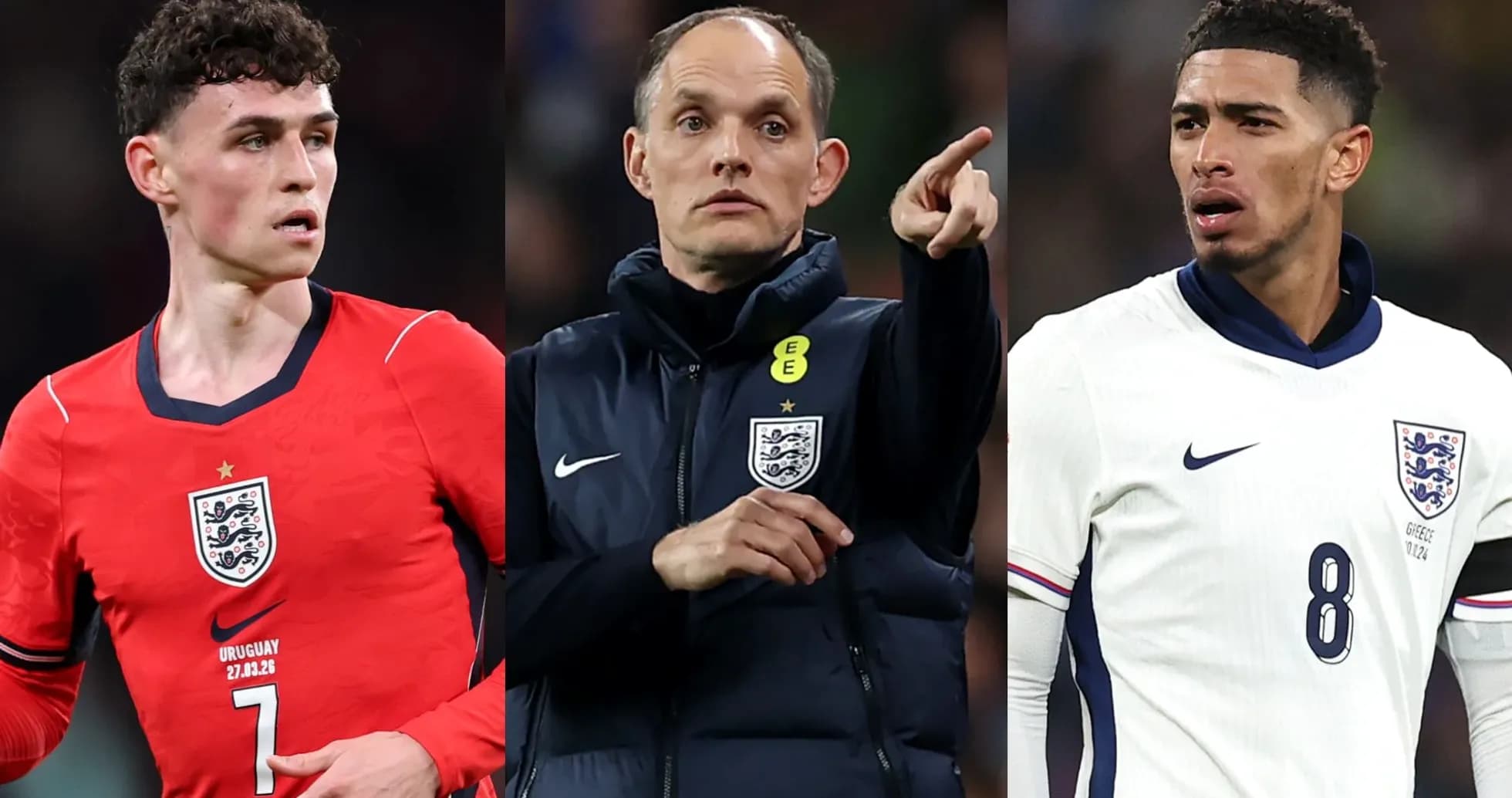
Thomas Tuchel has made his call. Fifty-five hopefuls have been cut to a hardened World Cup squad, and England will cross the Atlantic with a group heavy on medals, reputations and expectation – but light on guarantees.
This is not a team of automatic starters. It is a squad built for competition.
Bellingham at the heart of a loaded midfield
The fiercest debate came in the creative zones. England are overflowing with playmakers, yet only a handful could squeeze into Tuchel’s final list.
At the centre of it all stands Jude Bellingham. The Real Madrid star, already carrying the “Galactico” tag with ease, is set to own the No.10 role. The team will bend around him. When England need a moment, the ball will find his feet.
Behind him, Eberechi Eze arrives as a newly crowned Premier League champion with Arsenal, carrying the swagger of a man who has finally broken through at the very top. He, along with Aston Villa’s Morgan Rogers, offers Tuchel different flavours of creativity: Eze’s glide and guile, Rogers’ drive and directness. If Bellingham is the reference point, those two are the change of pace.
Jordan Henderson survives another cull. The veteran’s presence in the dressing room still matters, and Tuchel has decided that his experience on the biggest stages remains a currency worth banking. At the other end of the spectrum sits Kobbie Mainoo, whose resurgence at Manchester United under Michael Carrick has powered him from the fringes to the World Cup plane. A few months ago, his inclusion looked unlikely. Now he is part of England’s midfield future – and present.
Kane leads, with challengers at his back
Up front, there was never any doubt about the man at the tip of the spear. Harry Kane, England’s record-breaking captain, will lead the line again, chasing more goals and one last, defining trophy.
Behind him, the picture is far more fluid. Ivan Toney, rebuilding his career in the Saudi Pro League, has forced his way back into Tuchel’s thoughts at exactly the right moment. Often overlooked, he now travels as a genuine alternative: a penalty specialist, a physical focal point, a different kind of problem for defences.
Ollie Watkins, meanwhile, will try to bottle that same electricity he produced in the Euro 2024 semi-final against the Netherlands. His season with Aston Villa has kept him in the frame; his knack for big moments keeps him dangerous. Kane is the starter, but the pressure from below is real.
Out wide, Tuchel has sprung at least one surprise. Noni Madueke, not even a guaranteed starter at Arsenal, gets the nod. It is a bet on raw talent and the chaos he can create from the flanks. Alongside him, Barcelona loanee Marcus Rashford and Newcastle’s Anthony Gordon bring power, pace and flexibility. Both can drift inside, both can run in behind, both can play centrally if required. It is a forward line built to be remixed.
Defence shaped by risk and recovery
There are no shocks in goal. Stability wins in that department.
At the back, though, Tuchel has been forced to walk a tighter rope. John Stones, edging towards free agency after an injury-hit season at Manchester City, still makes the cut. His class on the ball and his experience in tournament football have outweighed concerns over his fitness.
On the right, Chelsea captain Reece James has become the standard bearer. When fit, he offers everything Tuchel wants from a modern full-back: aggression, delivery, defensive steel. On the opposite flank, Nico O’Reilly and Djed Spence will scrap for the starting berth, a duel that could define the balance of England’s back line.
Some big names are left watching from home. Harry Maguire, a constant presence at recent tournaments, has already voiced his disappointment at missing out. His omission underlines the shift in defensive thinking: mobility and form have trumped loyalty.
Real Madrid’s Trent Alexander-Arnold and Newcastle’s Lewis Hall also fall short in the full-back race, while an untimely injury has dragged Arsenal’s versatile Ben White out of contention. On another timeline, all three could have been central to the plan. On this one, they are reduced to spectators.
High-profile casualties in attack and midfield
The most eye-catching absences, though, come further forward. Phil Foden’s difficult season at Manchester City has finally caught up with him. His inconsistency has cost him his place at the worst possible moment.
Cole Palmer’s omission feels just as stark. England’s Men’s Player of the Year in 2024, the Chelsea talisman has seen his form fade, his spark dulled by a run of 14 games without a goal for club and country. Tuchel has taken a hard line: past accolades do not outweigh present output.
Morgan Gibbs-White can count himself among the unlucky. Seventeen goals this season – a career-best return for the Nottingham Forest man – still have not been enough to sway the manager. Adam Wharton at Crystal Palace, once a rising option in the deeper midfield slots, has slipped down the pecking order, along with Everton’s James Garner.
Jarrod Bowen, a relentless worker and one of the few bright spots in a struggling West Ham side, also misses out on another major tournament. His numbers and effort could not crack a crowded attacking field.
Up front, experience has not saved Danny Welbeck or Dominic Calvert-Lewin. Between them, the Brighton and Leeds forwards have scored 27 Premier League goals this season, but Tuchel has turned elsewhere. Newcastle winger Harvey Barnes, meanwhile, may privately wonder if his international story would look very different had he chosen Scotland when he had the chance.
Countdown to America
The squad is set; the fine-tuning starts now.
England will use two friendlies on North American soil to adjust to conditions and test combinations. New Zealand await on June 6, Costa Rica on June 10. Tuchel is expected to spread minutes widely, searching for rhythm, sharpness and answers to the last tactical questions before the real pressure arrives.
Then comes the main event.
On June 17, at AT&T Stadium in Arlington, Texas, England begin their World Cup campaign against Croatia – a familiar, awkward opponent on a vast stage. Six days later, they step into Gillette Stadium, home of the New England Patriots, to face Ghana on June 23. The group phase closes at MetLife Stadium on June 27 against Panama, at the very venue that will host the final.
Tuchel has his group. The arguments over who should be in it will rage on, as they always do. The only verdict that will matter now is the one delivered under the lights in the United States.