England vs Panama: Tuchel's Tactical Challenges and Selection Headaches
In Thomas Tuchel’s perfect tournament script, England’s meeting with Panama would already be signed off. Group won, job done, Harry Kane’s biggest decision whether to chase the Golden Boot or put his feet up while the understudies enjoy a stress‑free run-out.
Instead, New Jersey has turned awkward. That goalless grind against Ghana ripped up the rotation plan and left England staring at a brutal schedule: potentially four games in 13 days, with no room for indulgence and very little margin for error.
This was supposed to be Kane’s breather. Ollie Watkins and Ivan Toney will have circled this fixture months ago as their chance to lead the line. Now it is something else entirely. Top spot is still not secured, the route through the last 32 still at risk of being skewed, and Tuchel finds himself juggling risk, rhythm and fatigue before a match that suddenly feels heavier than it should.
Selection headaches pile up
There will be changes against Panama. Some are tactical. Some are simply unavoidable.
Declan Rice is walking a disciplinary tightrope, one booking from a ban and seen with strapping on his left calf after the Ghana game. The bigger blow is at right-back. Reece James’s latest hamstring problem rules him out for at least two matches and strips England of one of their few natural attacking full-backs, exactly the profile Tuchel craves against deep, stubborn defences.
No one can claim this was unforeseeable. James has been dogged by hamstring issues and missed almost two months at the end of the season. Tuchel gambled on him anyway and kept his full-back options light. Only three attacking full-backs made the squad. Tino Livramento, another with fitness concerns, has already departed the camp and was replaced not by another raider from deep but by centre-back Trevoh Chalobah.
The creative burden out wide now leans heavily on Nico O’Reilly’s young shoulders. Behind him, the alternatives on the right – Ezri Konsa, Jarell Quansah and Djed Spence – are all more comfortable defending than marauding. Every minute James spends in the treatment room will sharpen the scrutiny on Tuchel’s call to leave out Trent Alexander-Arnold.
What might have been a gentle tune-up against Panama has been recast as a must-manage occasion. England cannot ease off. They cannot coast.
Kane, Bellingham and the need for momentum
So do Kane and Jude Bellingham go again? Logic says yes. Some of the stars will have to start. Tuchel will not want to risk finishing second in the group and tumbling into a more hazardous knockout path. Just as importantly, England need to feel like themselves again.
The win over Croatia brought swagger and space, but the familiar second-game stumble at a major tournament returned against Ghana. There is no sense of panic from Tuchel, yet he is under no illusions about where England keep stalling. Low blocks remain his unsolved riddle.
Ghana’s compact 4-5-1 turned the match into a slog. Panama, coached by Thomas Christiansen and already eliminated after narrow 1-0 defeats to Ghana and Croatia, will almost certainly attempt something similar. They are a far cry from the naïve side England shredded 6-1 at the 2018 World Cup. They are awkward now, disciplined, and they relish making better-resourced teams suffer.
Tuchel expects a back five that will often resemble a back six or seven. He knows the pattern: England at their most exhilarating when space opens up – as it did against Croatia, Serbia and Wales – but flat and predictable when confronted by deep, organised lines, as seen in laboured qualifiers against Andorra, Albania and Latvia. Ghana followed that script. They were obdurate. They were clever.
Thomas Partey shadowed Kane, suffocating his habit of dropping off to knit play together. The numbers were damning. Kane had only 19 touches. He exchanged just three passes with Bellingham. England hogged 78.8% of the ball and still failed to register a shot on target before half-time.
Tuchel’s unsolved puzzle
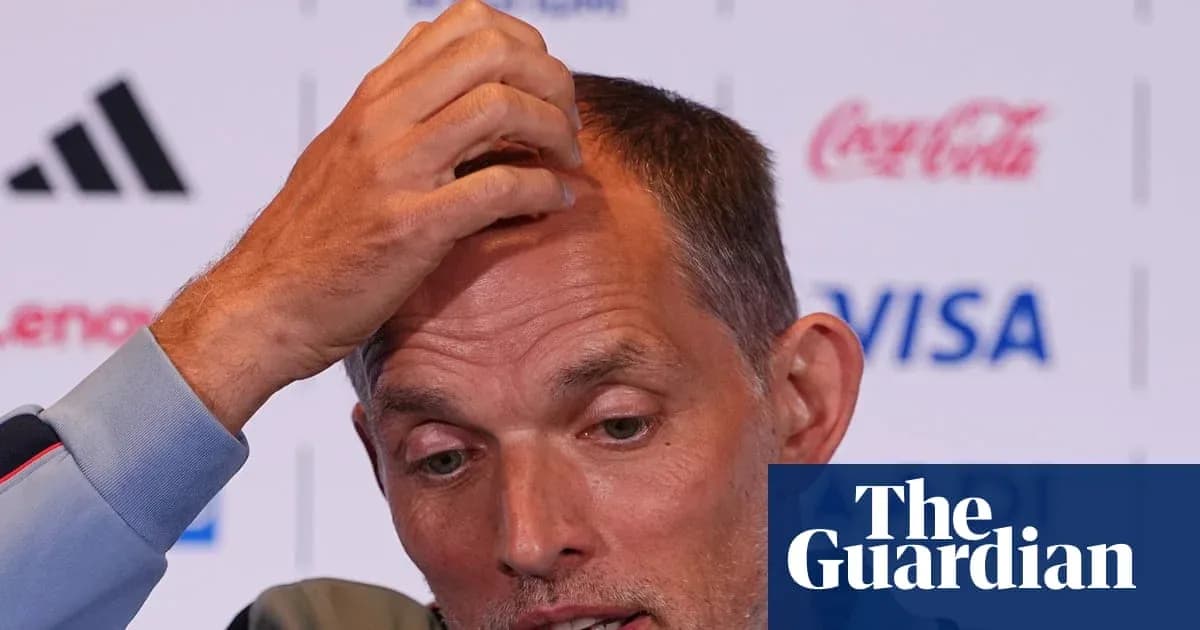
The counter to the low block continues to evade Tuchel. He does not pretend otherwise.
“It is normal that it is difficult for us to overcome these blocks,” he said after Ghana. England, he argued, did enough to win but spent so much energy controlling counterattacks that they nearly paid for the two occasions they slipped. Twice Ghana broke, twice it was dangerous.
“I haven’t found the recipe where: ‘They do this, then we do this and then we are fine,’” Tuchel admitted. He wants England to be “very active and aggressive” against Panama but refuses to be reckless. Seven players on the last line, three left to defend the rest of the pitch? “It’s not serious enough.”
Control is his obsession: possession with purpose, carefully choreographed movements, overloads in key zones before a sudden acceleration. The flaw against Ghana was simple. “There was no overload,” he said. He expects the same problem tonight. “There will very likely be no overload against Panama.”
So the dial must shift. More risk on the ball. More bravery in tight spaces. More willingness to shoot, to take on a man, to accept that not every attack can be scripted.
Bellingham’s frustration in New Jersey told its own story. He kept showing for the ball and was too often ignored or blocked off. When he did see it, he sometimes tried to force the issue, giving away a needless free-kick just before half-time. England cannot afford to let irritation bleed into impatience.
Fixing the flanks
The tweaks almost pick themselves. The centre-backs must step higher and punch passes through the lines. Kobbie Mainoo, with his composure in crowded midfield pockets, could come in for Rice and offer a different rhythm. Out wide, the wingers simply have to be more aggressive.
Tuchel hopes Bukayo Saka is ready to start on the right in place of Noni Madueke. On the left, Anthony Gordon has not carried his club form into this tournament. He has been tidy, not terrifying, and may give way to Marcus Rashford. Another route would be to use Eberechi Eze or Morgan Rogers, asking them to drift inside and combine in central areas where England struggled to find their best player.
What frustrates Tuchel most is that the left side briefly looked solved. In the friendly win over Costa Rica, Gordon dovetailed nicely with Nico O’Reilly. “I thought: ‘OK, left side is solved,’” Tuchel said. Then the tournament started. “We played the first match and they’re not clicking. It was not the same penetration, not the same verticality, and this was the same in the second match.”
Against Ghana, the right-footed Spence offered little going forward after replacing the more adventurous O’Reilly at left-back. Rashford did not appear until the 83rd minute and has yet to convince Tuchel he can dominate a game from the first whistle. “He’s a candidate to start,” the manager said, before making the broader point. “The left side in general needs to provide more threat.”
One-against-one or nothing
Tuchel keeps dragging the conversation back to the collective. He wants his players to relish the “one-against-ones”, to see them not as last resorts but as the key to breaking the lock when the overloads never materialise. Panama will fight to deny England numerical superiority in any area of the pitch. That means someone, somewhere, will have to beat their man.
“It is difficult to accelerate the match against these low blocks,” Tuchel said. So the search is on for that “one moment of quality” – a sharper cross, a cleaner strike from distance, a deflection that finally falls England’s way. “Are we arriving aggressively enough with the cross? How can we shoot more from outside the box, have a deflection and force this goal in?” he asked.
Perspective, though, remains intact. Tuchel insists nobody will enjoy playing Carlos Queiroz’s Ghana. He has seen this type of contest before in the Champions League group stages: opponents who celebrate duels, roar at every counterattack, treat crossing the halfway line as a mini victory. Ghana did exactly that, and they savoured a 0-0 as if it were a famous win.
England live in a different world. Expectations are higher. So are the demands on the eye. Against Panama, they will be asked not just to win but to entertain, to loosen the tension that has crept in since the opening victory and stride into the knockouts with something closer to a swagger.
Tuchel does not need a reinvention. He needs something simpler, and far harder to engineer: for a talented team to trust itself, release the handbrake and finally force open a door that keeps being slammed in its face.