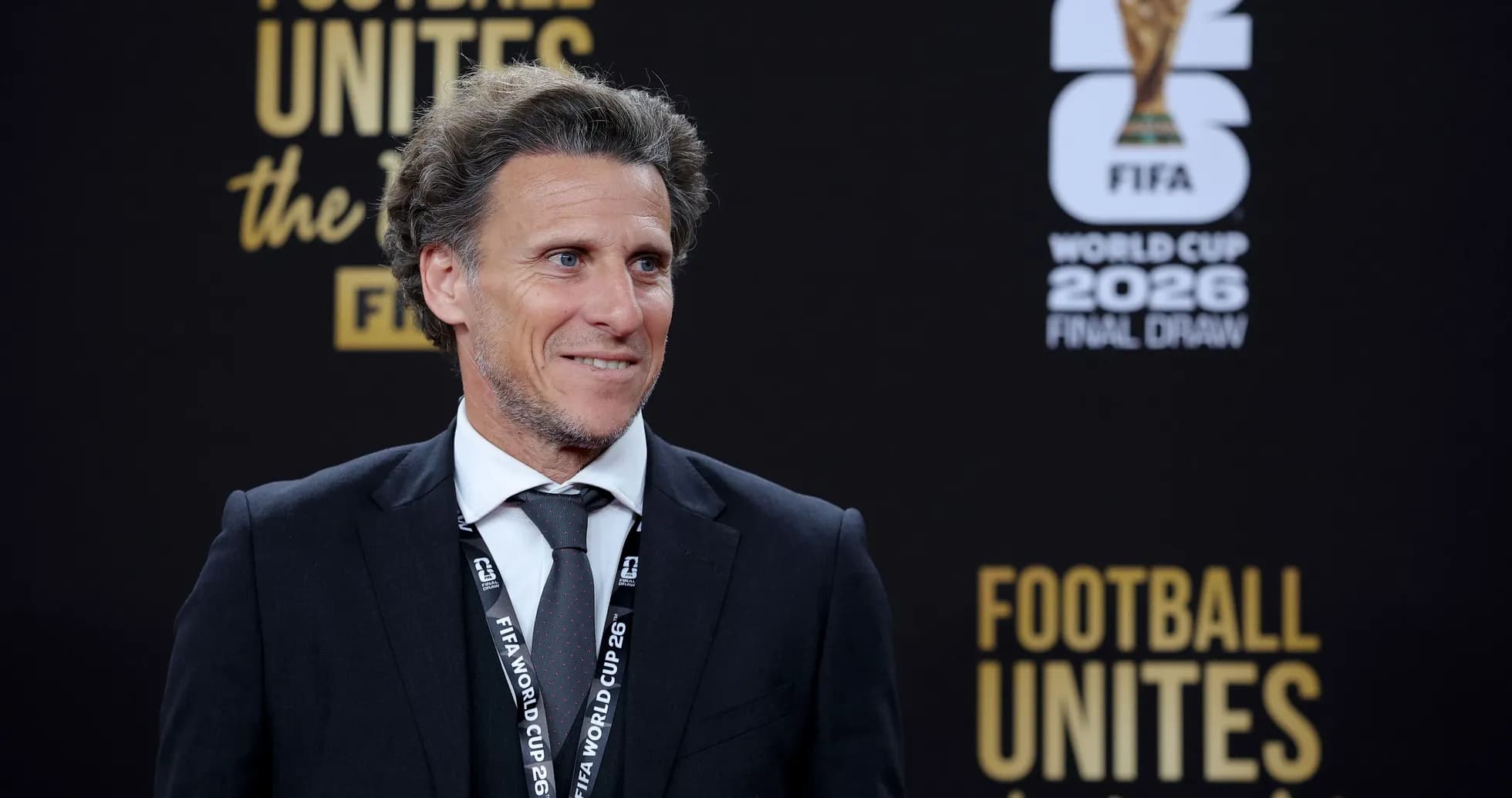
Diego Forlán Takes on Dual Role with Uruguay National Team
The experiment that began with an Argentine coach has ended with a familiar feeling in Montevideo: disappointment, frustration, and a sense that Uruguay had drifted from its identity. The resignation of the Argentine tactician has left the Uruguayan Football Association (AUF) scrambling not just for a coach, but for a figurehead who can reconnect the national team with its roots.
They have turned to a hero.
Diego Forlán, the blond striker who lit up the 2010 World Cup and dragged Uruguay to a Copa America title a year later, is the man chosen to steady a listing ship. Not with a single job, but with two.
A legend handed the keys to the future
AUF president Ignacio Alonso has moved quickly. A meeting with Forlán and the AUF Executive Council has been scheduled to finalise a dual-role agreement that would place the former forward at the heart of Uruguay’s present and future.
The plan is bold. Forlán will take charge of the Under-20 national team for the upcoming World Cup in Azerbaijan and Uzbekistan, while at the same time serving as interim head coach of the senior side until March 2027.
Two dugouts. One figure.
Alonso has been open about the strategy. Speaking on the programme Polideportivo on Teledoce, he underlined why the AUF see this as a rare opportunity to bring Forlán back into the national team structure at a decisive moment.
"We have the opportunity to incorporate him, in this case, into the Under-20 National Team. Having Diego inside the complex, with the experience he has, having played for the best teams in the world, having been exposed to all kinds of methodologies, having his own, being a national team player and with experience as a First Division coach... I think it was a great opportunity. He's excited," Alonso said.
That excitement is shared in the corridors of the AUF. Forlán’s global career — from Manchester United and Villarreal to Atlético Madrid and Inter — is seen as a resource that can shape a generation, not just a squad list.
A trial run with high stakes
On paper, the contract is framed around the Under-20 cycle and a defined interim spell with the senior team. In reality, it is an audition for something bigger.
The AUF has deliberately left the door open for Forlán to take the senior job on a permanent basis, with performances set to dictate how far this story goes. This is not a ceremonial appointment for a national icon; it is a test.
The message from Alonso is clear: this dual role will reveal whether the former striker is ready to live inside the pressure cooker of international football full-time.
"We're hiring a U-20 coach who will manage the senior team's matches. Then, the situation will dictate how the evaluations go," he admitted.
The structure is calculated. By embedding Forlán in the youth setup while giving him control of the senior side’s matches, the AUF can measure his work across two fronts: development and results. It is succession planning with a safety net.
Competition in the shadows
Forlán is not the only name on the table. Marcelo Broli, the coach who led Uruguay’s Under-20s to World Cup glory in 2023, remains a serious candidate and a respected figure in his own right.
Broli’s achievements have not been forgotten inside the AUF, and his profile as a youth specialist fits the federation’s long-term thinking. Yet, for now, the momentum has swung firmly towards Forlán.
The pull of a legend is hard to resist, especially one who has already tasted the chaos of the technical area. Forlán’s previous head coaching experience at Peñarol and Atenas was mixed, but it gave him a grounding that many former stars lack when they step straight into international management.
Echoes of Scaloni
In Montevideo, the comparisons have started already.
Many observers see Forlán’s situation as a mirror of Lionel Scaloni’s rise in Argentina. Scaloni, too, was an interim solution after a bitter World Cup disappointment in 2018. He began quietly, working with youth sides and taking on lesser tournaments such as L’Alcudia, slowly building trust with players and federation officials.
The arc is now well known: interim caretaker to Copa America champion, then World Cup winner.
Uruguay are not Argentina, and Forlán is not Scaloni. But the blueprint is tempting. An internal figure, rooted in the shirt, trusted by a generation of players, allowed to grow into the role rather than parachuted in with grand promises and an expiry date.
Forlán knows what that shirt weighs. He carried it in South Africa, where he became the symbol of a team that punched above its weight and reignited the nation’s belief. He lifted it in Buenos Aires in 2011, when Uruguay conquered South America again.
Now the AUF want him to carry it from the bench.
The question is no longer whether Diego Forlán is a legend. That part of the story is written. The question is whether he can turn that legend into leadership at the highest level — and whether Uruguay are ready to let one of their greatest sons learn on the job with an entire footballing nation watching.