
Curaçao’s Journey to World Cup Glory Against Germany
The road from Curaçao’s sun‑bleached streets to a World Cup opener against Germany is rarely straight. For many in this squad, it has run through Dutch academies, lower-league graft, and the unforgiving churn of European football. For one of them, it has also cut through courtrooms and second chances.
An island’s imprint on a European giant
Curaçao remains part of the Kingdom of the Netherlands, but on the pitch the relationship has flipped. The former colony now quietly underpins the former imperial power. Generations of Curaçaoan families have settled in Dutch cities, and their children have grown into the backbone of the Netherlands’ national team.
FIFA only recognised Curaçao as a national side in 2010. The growth since then has been rapid and oddly symbolic: of the 26 players in this World Cup squad, just one was actually born on the island. That lone native is also their most recognisable name — Tahith Chong.
Chong’s story is well known. He climbed through Manchester United’s system, broke into the first team, and collected 16 competitive appearances before a short, stuttering loan at Werder Bremen in 2021. Now at Sheffield United, he is part of a group with deep German ties. Six members of this Curaçao squad have worn Bundesliga or lower-tier German shirts at some point in their careers.
- Gervane Kastaneer turned out for 1. FC Kaiserslautern.
- Riechedly Bazoer tried to relaunch his promise at VfL Wolfsburg.
- Roshon van Eijma featured for Preußen Münster.
- Jürgen Locadia and Joshua Brenet both passed through TSG Hoffenheim.
Different positions, different paths, one shared thread: all of them have circled back to represent Curaçao on the biggest stage.
Brenet: from Nagelsmann’s project to problem case
Brenet’s journey stands out, not just for the football but for the chaos around it.
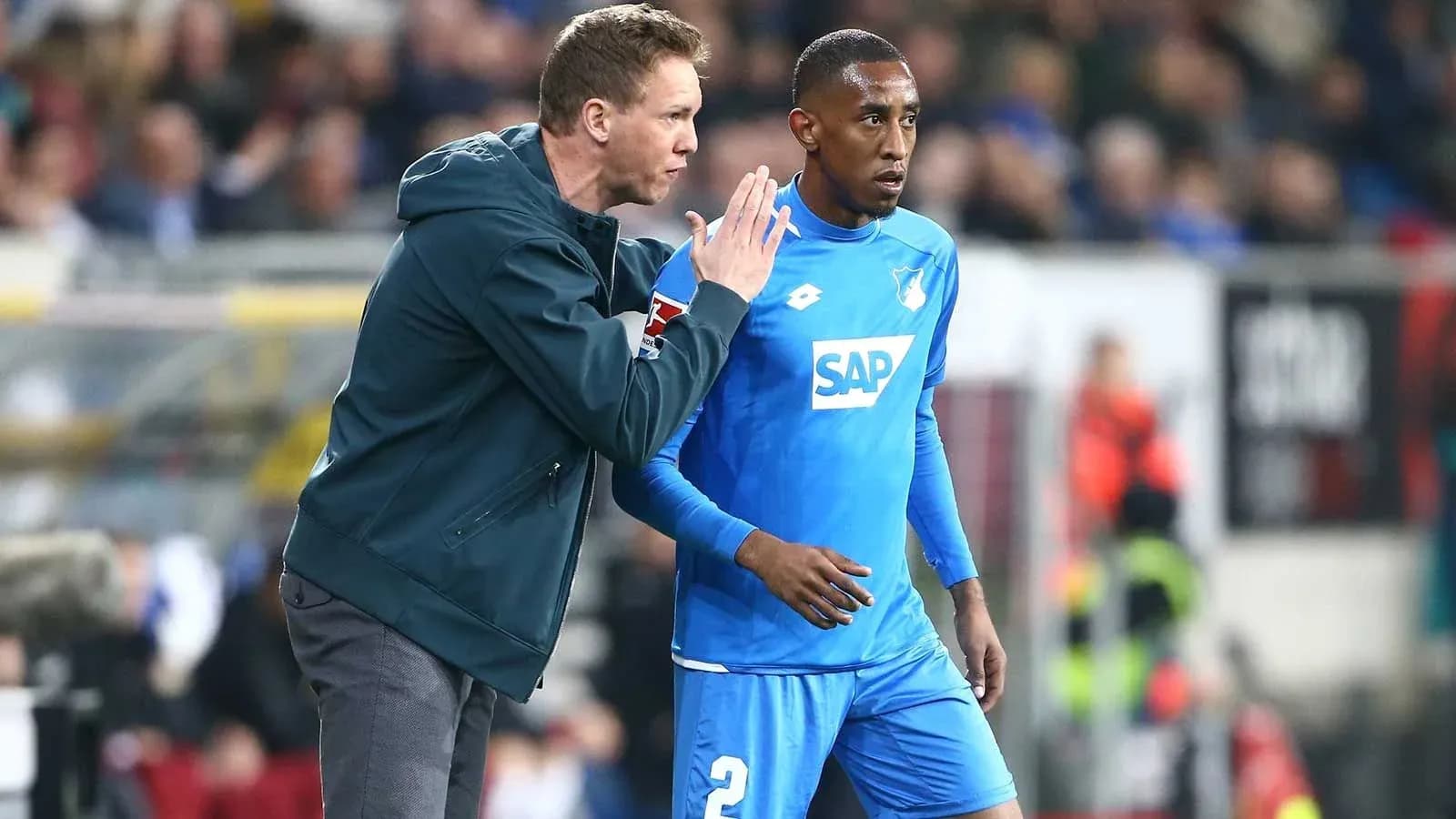
In 2018, Hoffenheim paid €3.5 million to prise the right-back from PSV Eindhoven. Julian Nagelsmann, now Germany’s national coach, pushed for the deal. At the time, it made sense. Brenet was a three-time Eredivisie champion and had already broken into the Netherlands senior team with two caps. He arrived in the Bundesliga as a modern full-back with pedigree and upside.
Then it all began to unravel.
He opened his Hoffenheim career on the bench, watching the early Bundesliga matches rather than shaping them. Tension followed. Ahead of Hoffenheim’s first-ever Champions League match, against Shakhtar Donetsk, Brenet skipped a video session. Nagelsmann’s response was ruthless: he dropped him from the squad for that historic night.
The door was not completely closed. Nagelsmann later brought him back into the fold, but the damage lingered. Brenet’s minutes became sporadic, his influence minimal. When Nagelsmann left, his replacement Alfred Schreuder — now Nagelsmann’s assistant with Germany — froze him out entirely. Under Sebastian Hoeneß, the fall was complete: Brenet was sent to the reserves in the Regionalliga Südwest, Germany’s fourth tier.
On-field inconsistency met off-field indiscipline. Chronic lateness and repeated disciplinary issues eroded his standing at the club. Hoffenheim searched for a buyer and found none. Eventually, in 2022, he walked away on a free transfer to Twente Enschede, his reputation bruised but not broken.
Courtrooms, contracts and consequences
In the Netherlands, Brenet reminded people why clubs had once fought to sign him. His performances picked up; the right flank again felt like a weapon. But the pattern off the pitch refused to change.
In January 2023, he was caught driving without a licence twice in two weeks. He had already lost that licence in 2020 after a drink-driving offence. This time, the justice system bit back.
“He clearly has no regard for authority. It seems to me as though he is continuing to play football after receiving a red card,” the presiding judge said, as Brenet received a one-month prison sentence in 2024. It was not his first conviction. Three years earlier, he had been given a suspended sentence, a fine, and community service for domestic violence.
On appeal, the prison term for driving without a licence was converted to community service. The legal outcome softened. Twente’s stance did not. The club terminated his contract.
From there, his career became nomadic. He joined Al-Rayyan in Qatar and managed only six appearances in the 2024/25 season. By autumn he had moved again, this time to Livingston FC in Scotland. The stay was brief. For the second half of the campaign he switched to Kayserispor in Turkey, another short chapter in a career that has lurched between promise and self-sabotage.
New colours, old ghosts
Now he wears Curaçao’s blue, yellow and green.
Despite multiple caps at youth level for the Netherlands and a senior debut in the 2016 World Cup qualifiers, FIFA granted him a change of association to represent his parents’ homeland. For Curaçao, it is a calculated gamble: elite experience and big-game familiarity, wrapped in a player whose off-field record demands scrutiny.
On the pitch, the return has been clear. Since his debut for Curaçao in 2024, Brenet has scored six goals in 17 appearances — a striking tally for a right-back. In the final warm-up match against Aruba, he started in his usual role on the flank and found the net again, a reminder of the attacking thrust that once made him such an attractive prospect in Eindhoven.
Curaçao lean heavily on players shaped abroad. Their identity is a blend of Caribbean roots and European schooling, their squad list a map of the Dutch diaspora. Chong, once a teenager with the world at his feet at Old Trafford, now shares a dressing room with a defender who has spent years wrestling with his own impulses as much as with opposing wingers.
On Sunday at 7 pm, that story collides with another. Curaçao open their World Cup against Germany — and against Nagelsmann and Schreuder, the two coaches who oversaw Brenet’s rise and fall at Hoffenheim.
For the 32-year-old, it is more than a group-stage fixture. It is a meeting with his past, played out under the harshest floodlights the sport can offer.



