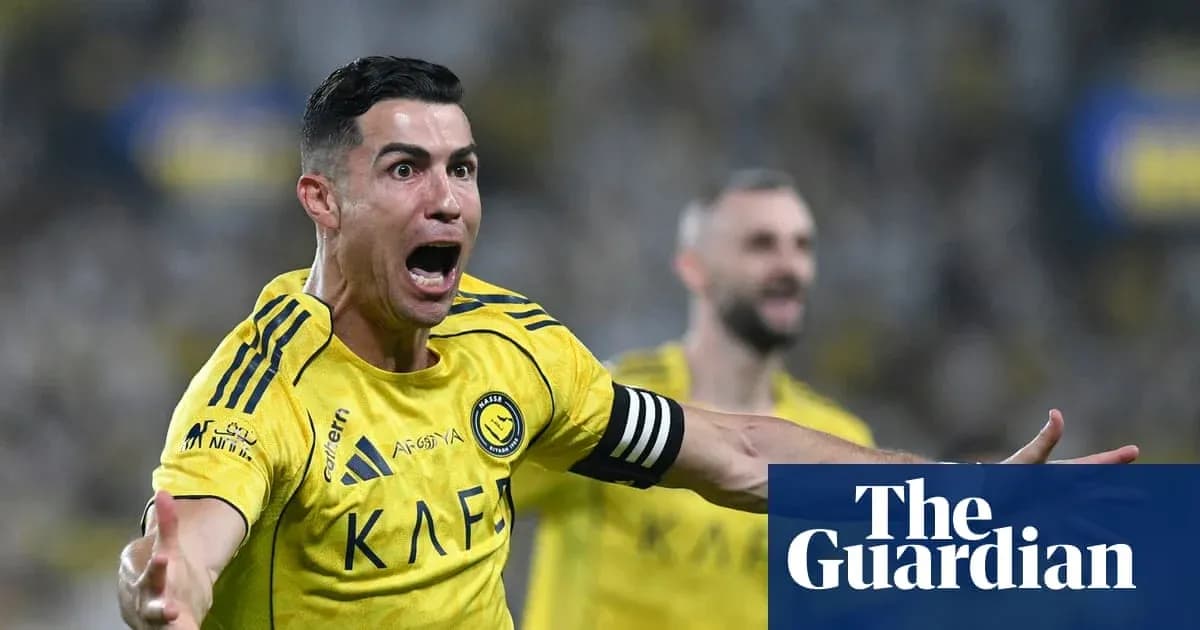
Cristiano Ronaldo's Title Chase with Al-Nassr: A Political Battle in Saudi Arabia
Cristiano Ronaldo came to Saudi Arabia for nights like the one that is fast approaching. Eighteen months after landing in Riyadh, he is three games from his first major trophy with Al-Nassr – and from the image the country’s powerbrokers have always wanted: their global superstar, title in hand, centre stage.
It is anything but straightforward.
With three rounds left in the Saudi Pro League, Al-Nassr sit five points clear of city rivals Al-Hilal. On paper, that sounds comfortable. In reality, it’s a tightrope. Al-Hilal have a game in hand and have not lost a single one of their 30 league matches under Simone Inzaghi. Thirty played, none lost, and still second. In Riyadh, even perfection can come under pressure.
Next Tuesday, the two collide in a derby that could settle everything. It is the kind of fixture that swallows a season whole.
A title race wrapped in politics
This isn’t just a football story. It never was. The Public Investment Fund, the financial engine behind Saudi Arabia’s sporting push, has trimmed parts of its portfolio, but one of its most high-profile acquisitions is edging towards the spotlight again. Ronaldo, still a global headline generator at 41, stands on the brink of another league crown in a country determined to turn sport into soft power.
That is precisely why some inside the league have started to talk. Loudly.
Al-Ahli’s Ivan Toney has plundered 27 league goals this season, yet his club have slipped out of a title race that, until recently, involved four teams. The frustration boiled over in early April after a 1-1 draw with Al-Fayha, when Al-Ahli felt key penalty decisions went missing.
“When we tried to talk to the referee, he told us: ‘Focus on the AFC [Asian Football Confederation Champions League],’” Toney said. “How can the referee say this? … It’s clear what is being influenced here …”
Asked who was benefiting, he didn’t bother with subtlety: “We know who. Who are we chasing?”
Galeno, his teammate, took the anger online. “Hand over the trophy, that’s what they want,” the Brazilian winger wrote on X. “They want to knock us out of the championship by any means necessary, they want to hand the trophy to one person, a total lack of respect for our club.”
The Saudi Arabian federation’s disciplinary and ethics committee fined both players. The message was clear: say what you like in private, but don’t drag the league’s credibility into the public square.
Al-Ahli bite back – then get bitten
Al-Ahli answered on the pitch instead. On 25 April they lifted the AFC Champions League, the continental crown that still eludes Al-Nassr. Four days later they marched into Riyadh, away fans singing about Asia’s biggest prize, determined to rub salt in a local wound.
Merih Demiral took it further. The defender spent the night parading his medal around the pitch, flashing it at home supporters who have never seen Al-Nassr win the continent’s top competition. Al-Nassr, for now, must make do with the second-tier tournament, the AFC Champions League Two, where they will face Gamba Osaka in the final on 16 May.
The response was ruthless. Al-Nassr won 2-0 in a match that simmered from the first whistle. Ronaldo struck his 970th career goal, another absurd milestone in a career built on them, before Kingsley Coman thrashed in a stoppage-time second. Coman celebrated straight in front of Toney, joined by teammates and, inevitably, by Ronaldo. It felt pointed. It was meant to.
Ronaldo did not let it rest there.
“I think this is not good for the league,” he said of the recent criticism. “Everyone complains. This is football, this is not a war. We know we have to fight, everyone wants to win. But not everything is allowed. I am going to speak at the end of the season because I’ve seen many, many bad things.
“Many players have complained, doing posts on Instagram, on Facebook, speaking about the referees, speaking about the league, speaking about the project. This is not good. This is not the goal of the league.”
Even as he condemned the noise, he promised more of it. After the final game, he says, he will talk.
Power, perception and a shifting landscape
The irony is that Ronaldo himself has fed the intrigue. At the start of the year he sat out two league matches, with reports suggesting he believed PIF, then the owner of the “Big Four” clubs, favoured Al-Hilal. The superstar who now bristles at conspiracy talk once seemed to buy into it.
He may feel more at ease with the new order. Last month, PIF sold 70% of Al-Hilal to Kingdom Holding Company, controlled by Prince al-Waleed bin Talal. The fund framed the deal as part of a strategy to “maximise returns and redeploy capital within the domestic economy” while driving “the development and diversification of Saudi Arabia”.
On paper, it’s a corporate reshuffle. In reality, it changes the political map of the league. One giant now sits slightly outside the PIF umbrella, while Ronaldo’s Al-Nassr remain a flagship project. The image of him lifting the trophy, gold confetti raining down, would suit the narrative perfectly.
That script, though, took a twist on Sunday.
Al-Nassr’s 3-1 defeat to Al-Qadsiah, coached by Brendan Rodgers, snapped a 20-game winning run in all competitions. The loss reopened the door for Al-Hilal and injected fresh tension into a title race that had looked like it was easing towards yellow and blue ribbons. Al-Nassr still hold the advantage, but the margin for error has shrunk.
Jesus, structure and a real team at last
If Al-Nassr do get over the line, much of the credit will belong to Jorge Jesus. The Portuguese coach, back in Riyadh, has done what many doubted was possible in a league of stars and egos: he has turned Al-Nassr into a team.
Jesus is no stranger to streaks. Two years ago he led them on a world-record 34-game winning run. This version of Al-Nassr carries the same relentlessness but with a sharper edge and clearer structure. The galácticos still shine, yet they now move inside a defined system rather than orbiting around Ronaldo and hoping for the best.
In attack, João Félix has been outstanding, drifting into pockets, threading passes, scoring when needed. Sadio Mané provides hard running and experience on the opposite flank, while Coman brings a directness and timing that defenders hate. They do not simply decorate games; they decide them.
Behind them, the defensive unit has stiffened. Iñigo Martínez and Mohamed Simakan anchor the back line, blending European nous with physical presence. Around them, Saudi talents such as Nawaf Boushal and Abdulelah al-Amri have grown into their roles, part of a back four that no longer looks like an afterthought to the Ronaldo show.
For the first time since he arrived, Ronaldo is part of a functioning collective rather than a lone star dragging a disjointed cast behind him. His goals still define nights, but they now sit inside a broader story.
That story is heading towards a sharp climax. A title race laced with politics, resentment and global ambition is about to be settled on the pitch, under Riyadh’s floodlights, with a 41-year-old icon chasing one more piece of history. The question is simple: in a league built to showcase power, who gets to hold the trophy when the lights go down?